Every few years someone takes a cost and starts calling it an asset, and an industry rearranges itself around the new sentence. Storage became a service. Bandwidth became a commodity. HPC VAST is betting the next one is compute, and that the right way to think about it is not as infrastructure but as capital.
The firm's founding argument goes like this. A hospital, a law firm, a government department and a fund manager all need completely different professional services. When they reach for AI, they all draw on one resource: computing. The costs underneath are the same in every case, which is equipment wearing out, electricity and running the place. Only the models, the data and the applications are different.
One input, many very different outputs. That is what capital is. And capital is not something you rent by the hour and forget about. It is something you decide where to put.
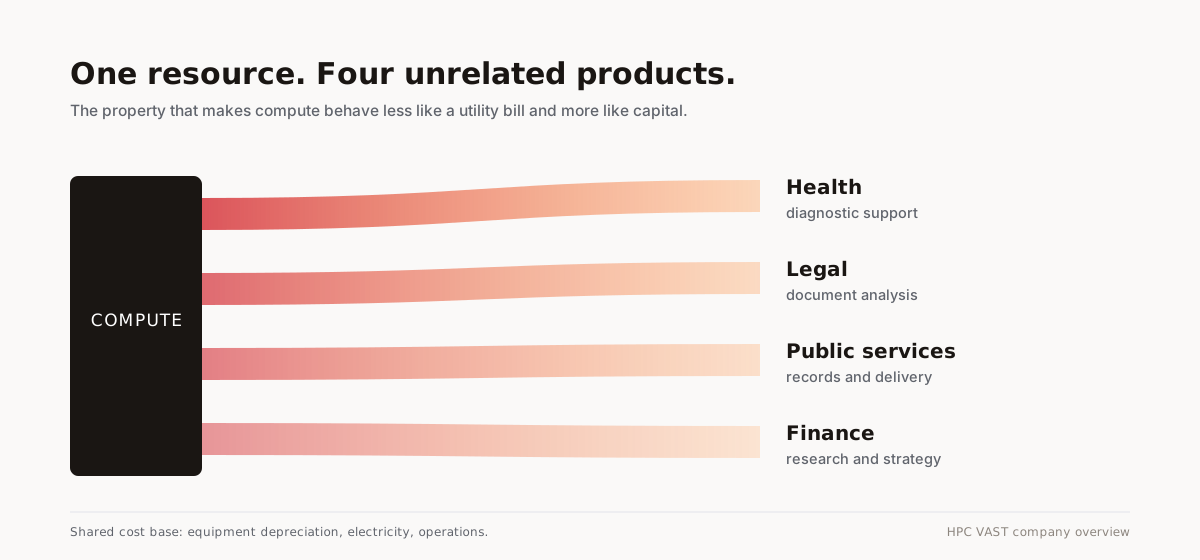
This was already the centre of the firm's thinking in April 2025, which is early for a view that has since become fashionable. What makes HPC VAST worth a file is not getting there first. It is what it did next, which is a good deal more careful than the idea alone would suggest.
Who else is in this field
Owning and renting out AI hardware has become one of the largest businesses of the decade. CoreWeave went from crypto mining to a public company on the back of it. Lambda, Crusoe, Nebius and Voltage Park all buy clusters and sell access. Vast.ai and RunPod built spot markets for spare capacity. SF Compute went furthest toward treating it as something openly traded. Together AI bundles the hardware with the models running on it. And Digital Realty and Equinix are the property trusts that own the buildings all of it sits inside.
Every one of them sells time on a machine for money. What almost nobody does is accept something other than money.
A rule borrowed from property
The founder's route here is unusual, and it explains nearly everything about the strategy.
They started out in Canada as an investment analyst covering residential property trusts, moved into North American data-centre investment and operations, then returned to China to build the firm in the market where their relationships and operating skill counted for most.
From the property years comes the rule the whole company rests on: what an asset is worth depends on the asset itself and on whether the people using it can keep paying for it.
The quality of the building matters. So does whether the tenant can make rent, month after month, through a downturn. Any property analyst has that reflex burned in by their second cycle. Almost nobody currently buying GPUs has it at all.
Applied to compute, the reflex produces a question the market has been oddly reluctant to ask. Not how much demand is there, but who is paying, out of what income, and for how long.
The deal they looked at and turned down
The obvious business here is to buy GPUs and rent them out. HPC VAST modelled it, and its explanation of why it said no is the most useful part of the document.
Buying clusters takes a lot of money up front, at scale, with networking, power, cooling and constant support attached. To make that money come back predictably, suppliers want long contracts with big customers. But customers big enough to sign long contracts have a lot of bargaining power. That creates a squeeze the industry rarely says out loud: the supplier needs reliable orders to justify an expensive asset, and pays for those orders in price.
Borrow money to expand faster and it gets tighter still. Fixed repayments now run into equipment upgrades, falling rental rates, and customers leaving or defaulting. Each of those hits cash flow and asset value at the same time.
Looking at the actual opportunities in front of it, which were five to eight year compute leases to customers including major technology companies and public-sector bodies, the firm modelled annual returns of about 5% to 8%. It is careful to say these came from specific deals it examined rather than from the market as a whole, and that they rest on assumptions about cost, financing and replacing equipment.
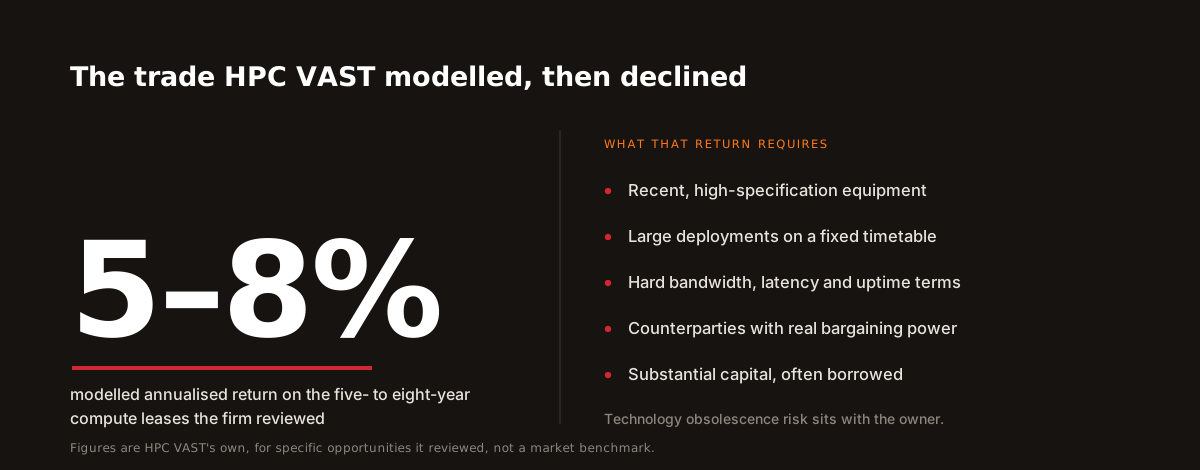
Five to eight per cent, in return for taking on the risk that the kit goes out of date, the risk of leaning on a few big customers, and a balance sheet with debt on it, in a market where supply shifts under your feet. Those returns are there for suppliers with deep pockets and real operating experience. HPC VAST decided it is not one of those yet, and said so.
The conclusion it drew instead is the sentence the firm should probably lead with. Rising demand for compute does not automatically mean good long-term returns for whoever owns the equipment. It depends on the cost of capital, the quality of the customer, the contract terms and how well you run the thing.
That is an unglamorous line to put in a company overview during a compute boom. On the evidence of the last two infrastructure cycles, it is also right.
How it works: pay in compute, keep equity
Having decided not to be a landlord to tenants with more power than it has, HPC VAST turned the structure round.
Early-stage AI companies usually do not earn enough to cover their research and computing bills, so they sell shares to raise cash, then spend a big slice of that cash on compute. Investors put a real value on those shares based on future growth, and the cash turns into work happening today.
Which raises an obvious question almost nobody has acted on. If the money is going to be spent on compute anyway, why not supply the compute directly and take the shares?
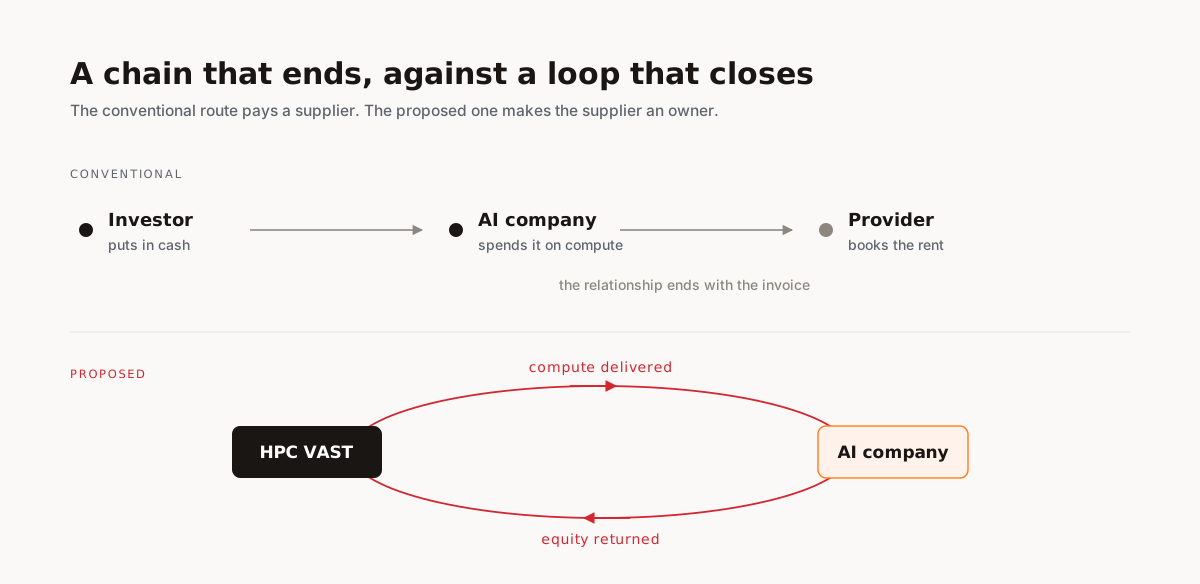
The precedent the firm points to is industrial parks, where the operator provides space for an agreed period in return for a stake in the tenant. Swap floor space for processing power and it is the same arrangement. That is a point in its favour: this is a financing pattern with decades behind it, not a new invention that has to survive first contact.
For the startup, it lowers the cash needed to reach the next milestone. For HPC VAST, it moves part of the return from rent today to an investment that pays later, and the firm is plain that this means accepting business failure, dilution and long waits, in exchange for a resource that costs real money to deliver.
Notice what did not change in that swap. Same product, same customer, same cost to deliver. The only thing that moved is what the supplier agreed to be paid in.
The second idea, which is the better one
Halfway through the document there is a point that deserves more attention than the compute-for-equity headline.
How much compute a company uses is evidence.
Checking up on industrial companies has always meant testing what they say against physical reality: energy used, raw materials bought, goods shipped. A company can describe its production. The electricity meter describes it independently. HPC VAST argues that an AI company's compute use is the same kind of signal, sitting alongside the financial reports rather than replacing them.
The firm is careful about what it wants from that signal. Not the volume, which is easy to inflate. What the resources are being used for, what they produce, and whether any of it reaches a real product and real customers.
It is also honest that compute use on its own does not prove a company is a good investment. But with agreed access to the data, it carries on working after the cheque clears: comparing what the resources are doing against research milestones and commercial results, and spotting the gap between effort and output earlier than a quarterly update would.
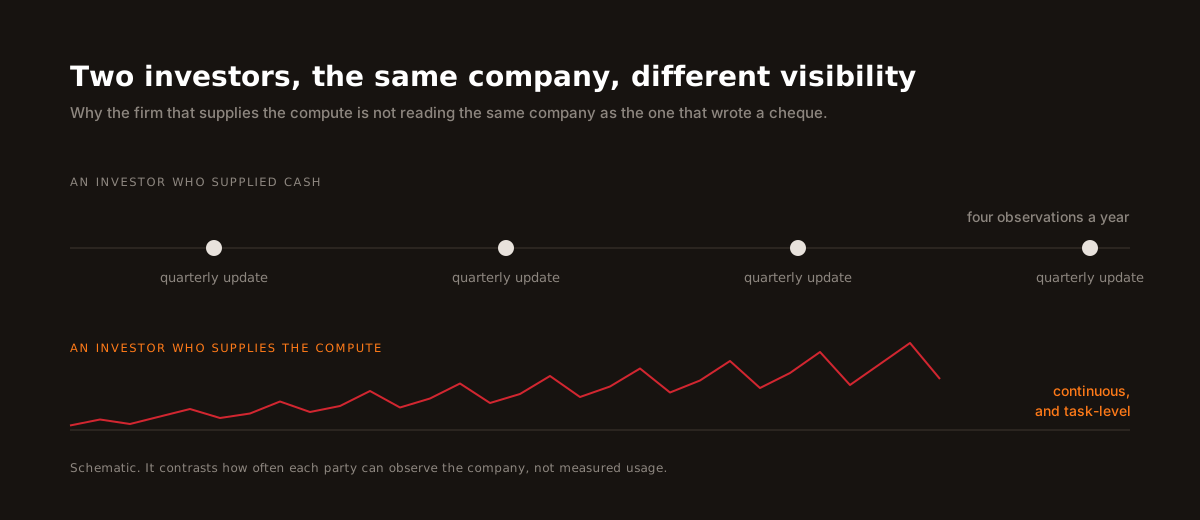
Think about what that means against the competition. An investor who gave cash finds out how the company is doing when the company tells them. An investor who also supplies the compute can see the shape of the work as it happens. In a sector where the distance between a research story and a shipped product has rarely been wider, knowing more than everyone else on the share register is not a small thing to build into the deal.
Two halves, deliberately balanced
What comes out of this is a portfolio rather than a single bet, and it is described by someone who has built portfolios before.
Long leases turn equipment into contracted income over a set period, paying back the capital and the running costs, with the kit itself providing something solid behind it where the firm owns it outright. The firm compares that to the bond half of a portfolio, which is exactly right.
Compute-for-equity is the other half: a share in the value customers build using the resource. Different aim, different risk, different timescale. The plan is to balance the two against how long its own funding lasts, what the business needs to run, and how much risk it can carry.
Neither half is offered as the answer. The firm calls these possible routes to a return rather than fixed weightings or promises, a caveat that costs nothing to write and is left out of most documents like this.
Where it actually starts: quant funds
Here is where the strategy stops being a framework and becomes a business, and where the property rule earns its keep.
Both halves have a timing problem right now. Long leases need capital the firm does not want to commit yet. Early-stage shares take years to turn into anything. So HPC VAST went looking for customers with real compute needs, a clear source of money to pay with, and investments that can be exited on known terms.
It landed on quantitative fund managers, and the fit is close to ideal.
Processing data, training models, researching factors and testing strategies all need steady access to high-performance computing. That is real, repeating demand, not a pilot budget. The firm looks for managers with an established asset base, income you can verify and genuine research needs. Management fees, operating budgets and purchasing plans give a solid basis for judging whether they can pay.
Read that against the property rule and it is the same test. The asset is fine, but can the tenant make rent? A quant manager with money under management and a fee stream is about as close to a reliable tenant as this market offers.
Then the structure does something clever. HPC VAST supplies the compute and invests in the funds those managers run.
These are stakes in the funds themselves, not shares in the management companies, a distinction the firm draws clearly, along with the note that returns and exits follow the fund's own terms and carry the usual risks, and that this means neither quick access to the money nor any guarantee of getting it back.
What the arrangement buys is alignment. The manager gets compute and extra money to manage, which earns fees. HPC VAST gets paid for the service and gets exposure to the results of the very research its hardware is running. The customer's performance now sits on both sides of the ledger, which gives the supplier a real reason to care about service quality well beyond the contract, and the firm backs that with written service commitments and safeguards.
Compared with shares in a young company, fund stakes also come with clearer rules about valuation and getting your money out, which makes commitments easier to plan around. For a young firm watching its own runway, that is the difference between a strategy and a wish.
Why it was missed
This file is written from a company overview, not a pack of metrics. There is no revenue chart, no customer count, no named cheque. On the usual screen it does not get past the first filter. The reasons it would be passed over are worth naming, because none of them are about whether the thinking is any good:
- It is an argument, not a traction story. Six sections of investment reasoning and no numbers to check. Most screens are built to reject exactly this, and most of the time they are right to.
- Its honesty reads as hedging. The document is full of qualification: specific deals rather than market averages, possible routes rather than fixed weightings, no promise of liquidity or of getting your money back. In a category where everyone else is rounding up, being precise looks like a lack of conviction until you notice it is the opposite.
- The category is crowded and the label is wrong. "Compute provider" brings a thousand GPU resellers to mind. The firm is proposing to be an investment manager that happens to pay in hardware. Nothing in the first phrase prepares you for the second.
- The best idea is the least visible. Compute use as evidence is buried in section three of six, written in the flat voice of a diligence memo. It is the kind of insight a fund gets started on, and it is not on the cover.
- It is being built in mainland China by a founder trained in North America. Which is either a filter or, for a foundation that exists to look across markets, exactly the sort of company everyone standing on one side of the ocean fails to see.
What happens next
The aim for this phase is to build up rather than scale up: customers, delivery experience, skill at picking funds, and capital. Where projects qualify under local policy, compute subsidies may improve the economics of the service business, and the firm is clear that subsidies are worked out against the service business alone, separately from fund money and investment returns, and that fund investments still have to stand on their own. Money actually received and kept is what feeds the funding plan.
Over three to five years, if customers, cash flow and capital reach the right level, HPC VAST intends to spread wider: some into long leases for contracted income, some into compute-for-equity stakes in selected AI startups, with its investor network and industry contacts offered alongside the hardware.
The longer ambition is to become a route for overseas money wanting to understand and take part in China's compute market. Investors would take part by owning equipment or holding a stake in an entity that owns it, with the kit re-leased, sold or moved on at the end, subject to ownership rights and local rules. The firm calls this a way of widening the options, and says plainly it is not a guarantee of returns or of getting money back out across the border.
The mission, in the firm's own words, is to put high-performance compute to work and share in the value it creates across a very wide range of industries.
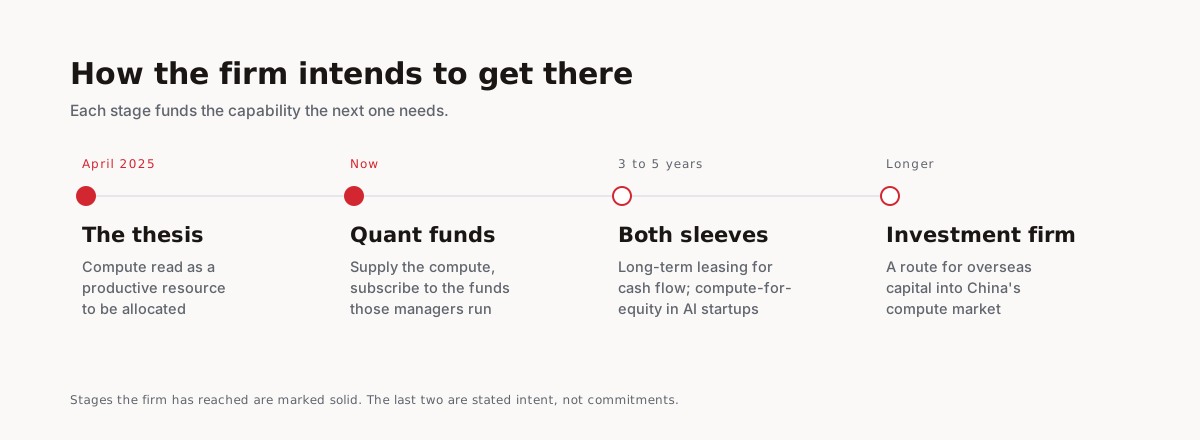
What impresses here is not the ambition, which is common, but the order of operations, which is not. HPC VAST worked out what the biggest prize was, realised that winning it needed capital and operating scale it does not yet have, and deliberately started somewhere smaller, easier to check, and more likely to survive being wrong, with customers whose ability to pay can be verified before the invoice goes out.
That is a firm run by someone who has watched an asset class go through a full cycle. In a market full of people who have not, it is the most valuable qualification going.
What I take from this file
Everything above this line is HPC VAST's argument, reported as fairly as I can manage. What follows is mine, and it is the real reason the company is in the archive.
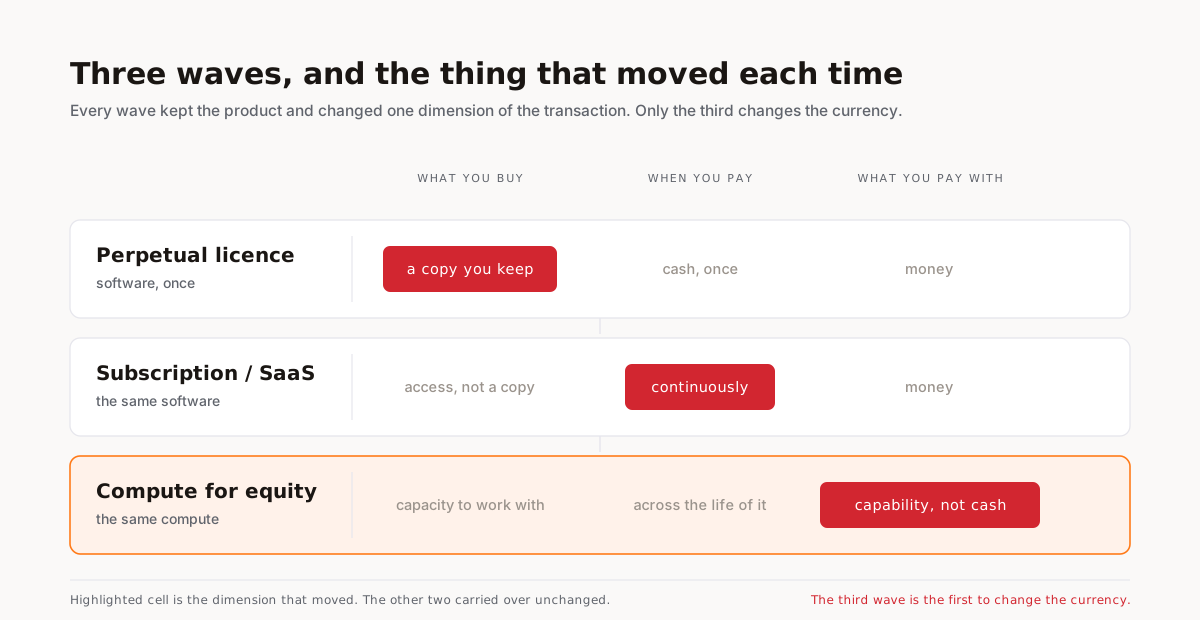
People read compute-for-equity as a financing trick. A clever one, but a trick: a way to fund a startup without cash changing hands. That reading is far too small. What is being changed here is the sales model. HPC VAST has not changed what it sells, or who it sells to, or what it costs to make. It has changed what it is willing to be paid in.
That sounds like a technicality. It is the difference between a business that prices a customer once, on the day of the invoice, and a business that holds a claim on what that customer becomes.
Why this works now and did not before
What makes it possible is AI, and specifically how fast AI is changing what a customer is worth.
A fixed cash price is a snapshot. It captures the customer as they are on the day you invoice, and it gives up, permanently and on purpose, everything they grow into afterwards. In a slow market that is a perfectly good trade, because the customer in three years looks much like the customer today. In a market where a buyer's ability is compounding, it is a bad one. A supplier who insists on cash is choosing to be paid in the currency of the customer's past.
Being flexible about what you accept is how a supplier stops leaving that on the table. It only works if your customers are growing fast enough to make the risk worth taking, and AI has produced a very large number of those customers very quickly.
We have seen this film once already
Software did this before, one step over.
The subscription wave did not change the product. The same software went to the same buyers doing the same work. What changed was when you paid. A one-off licence became a recurring fee, an upfront payment became an income stream, and a whole industry was re-rated on the strength of it. Nothing about the code was different. The shape of the payment was different, and that alone rewrote how software companies were built, sold and valued for twenty years.
What is starting now moves one step further along. Not what you buy. Not when you pay. What you pay with.
Now take it out of compute
The reason this matters is that none of it is really about GPUs.
Picture the same move in ordinary trade. A buyer comes to a seller and offers no money, or not only money. What they offer instead is demand: AI-powered customer-finding, pointed at that seller, bringing in buyers the seller could never have reached alone. The seller ends up making more than the cash sale would ever have paid. The buyer ends up with service, priority and terms that money would not have bought.
Neither side is doing the other a favour. Each is paying with the thing it has spare and the other one lacks. That is just trade, and it is older than money. What has changed is that AI has created new kinds of surplus, and handed them to people who previously had nothing to offer but a payment.
These are not free trades, and it is better to say so plainly. Somebody carries a cost. The supplier takes on delivery expense and risk it would never accept for cash. The buyer gives up some independence, or some freedom to choose later, or a slice of an upside it could have kept. There are real trade-offs running both ways, and some will hurt in the short term. Both sides sign anyway, because both are betting the future AI is building is big enough to cover the sacrifice. Often they will be right. Sometimes they will be badly wrong.
The part of the software story people forget
Here is what I would most want a founder to take from this.
Very few subscription software companies ever became Netflix. The vast majority were ordinary businesses with ordinary outcomes. Subscription did not spread because the people using it were exceptional. It spread because it became the accepted way to show that a business had a future, and a company that adopted it was speaking a language investors and customers had already agreed to treat as proof.
Expect exactly that here. Paying in capability rather than cash will become a way of showing that a business believes in what its customers are turning into, and it will be taken up enthusiastically by plenty of companies with no business doing it. That is not a reason to be cynical. It is what a real shift looks like on the way in. The language arrives before the results do, and it is genuinely useful long before it is evenly deserved.
Which is why the file is worth keeping
HPC VAST is an early and unusually disciplined example of this. Its founder did not set out to change a sales model. They set out to solve a narrower problem: how to share in the value their equipment creates, when they cannot outbid the people with more capital. The answer they reached was to work out what they could pay with that was not money.
That question is going to be asked, over the next few years, by an enormous number of businesses that have never touched a GPU and never will. The ones that answer it early will look, in hindsight, a lot like the software companies that moved to subscription twenty years ago. Not smarter than everyone else. Just quicker to notice which part of the deal had come loose.