Lille did not move. Everything about where it sits on the map is exactly what it was five years ago. What changed is the sentence people use to describe it.
What they do
EuraTechnologies is a startup incubator and accelerator in Lille, in northern France, which describes itself as Europe's startup builder. Emmanuel Durand joined in January 2026 as président du directoire, the chair of its executive board, arriving from Paris after a long career mostly in the creative industries, working alongside artists. He makes the comparison himself: running an incubator is not far from working in creative industries, because the job is supporting talent. Asked to describe his role in one line, he put it this way: to create the context where exceptional talents can thrive.
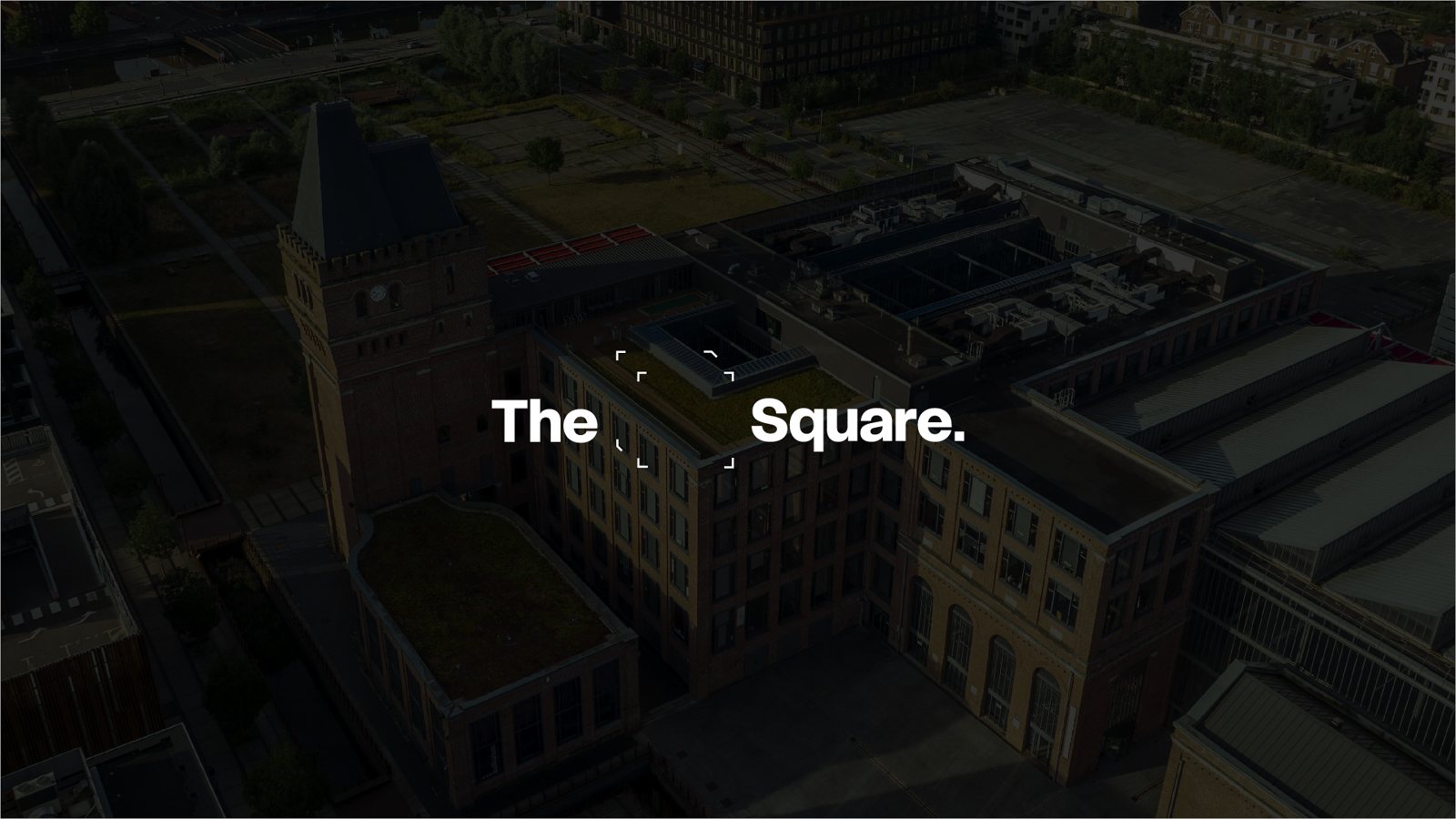
Since arriving he has launched an acceleration programme called The Square. It is deliberately selective. Around a hundred companies applied to the first cohort and eleven were taken, which was meant to be ten until one more proved too good to turn away. Roughly twenty people across those eleven companies started in September 2026.
The programme runs six months and the mentoring is free. Rather than a paid coaching staff, EuraTechnologies has assembled what Durand calls shadow executive committees, made up of people currently working inside companies, who mentor the cohort pro bono. Every company in the cohort also spends a week at Stanford on a course, as part of the programme.
The single condition for entry is that you set up shop in northern France. Durand's remit is to sustain and grow employment in the region, and that requirement is how the programme serves it. Beyond that it is open to anyone, from anywhere: French and foreign startups alike, with no minimum revenue and no minimum company age, judged on the founders rather than the financials. The programme runs from September 2026 to February 2027 around four things, market access, finance, hiring and expansion across Europe, and ends with a demo day. Companies must come to Lille in person at least three times, and the programme is supported by partners including Pasqal, ElevenLabs, EY, Keyman, Anthropic, Microsoft and Google.
The eleven do not share a sector, which is deliberate. The cohort runs from a battery maker to building data software to restaurant tools to Buddies, a social app.
Europe is not short of places doing this. Station F in Paris is the largest startup campus on the continent. Techstars, Antler and Seedstars run programmes across many cities at once. LocalGlobe, now part of Phoenix Court, coined the framing this whole piece turns on. Almost all of them are trying to gather founders who are already nearby. EuraTechnologies is trying to import them.
The point: the map did not change, the description did
Here is the ordinary way to describe Lille. It is a city in the north of France, some distance from Paris, on the periphery. Said that way, the obvious question is why any ambitious founder would go there rather than to the capital.
Here is the other way. Lille sits at the exact centre of the triangle formed by London, Paris and Amsterdam. Each is about an hour away by train. Forty million people live inside that triangle, which holds a large share of Europe's best universities and its most valuable technology companies, and which the investor Saul Klein named the new Palo Alto.
Both sentences are true and describe identical geography. One makes Lille a backwater and the other makes it a gateway, and the only thing separating them is which map you draw the city on.
This is not wordplay, because the second description does work the first cannot. An Indian battery company joined the first cohort. London architects joined it. Neither of them was ever going to relocate to the periphery of France, and both of them can be persuaded to base themselves at the centre of the largest technology cluster in Europe. Nothing about the trains changed.
Durand's own version of the underlying idea is the better sentence, and he says it about people rather than places. Talent is everywhere, he says. It is the context that is rare. And a context can be worked on, built and supplied, which means talent can effectively be made to appear somewhere it was not appearing before. He went looking through history at places where clusters of remarkable people emerged from one small place in a short span of time, and concluded there is no rule saying everything must pass through the biggest cities.
Importing instead of exporting
This is where EuraTechnologies runs against the grain, and it is worth spelling out.
Almost every regional ecosystem builder in the world is in the export business. The goal is to get local founders ready for somewhere else, usually America. Success is measured by who leaves.
EuraTechnologies is doing the opposite. The aim is to attract the best young companies from anywhere and have them use Lille as the base camp from which they enter Europe. Durand is blunt about why this is realistic: Europe is an enormous consumer market, and a European company is often nervous about entering China because of the competition it would meet there, while a Chinese or Indian company wanting a European foothold has every reason to plant it somewhere with support and space.
The three companies he pointed to show the range, and each now has its own file in this archive.
Control Z is from Hyderabad and has patented a battery that runs on zinc rather than lithium, with a water-based electrolyte that cannot catch fire. If it can scale its proof of concept, Durand thinks it can be a unicorn. It is also the clearest evidence for the thesis of this piece. The company has registered a French company in Lille, its team holds French Tech visas and is relocating, and it puts the decision in one line: "For us, Lille isn't simply where we're expanding. It's where we're building."
SnapTwin was founded by two architects, Pierre Saunal and Jaime Ingram, and works from London and from EuraTechnologies in Lille. It turns laser scans of buildings into structured data in minutes rather than hours.
Recepta was started by a twenty-three-year-old with a professional qualification in pâtisserie, who worked in a dozen restaurants and noticed they all had the same problem with margins, purchasing and how both feed into a menu. SnapTwin and Recepta are both raising now.
There is also a great deal of money arriving in the region independently. SoftBank announced in mid 2026 that it would build 5 GW of AI data centre capacity in France, of which a first phase of 45 billion euros covers 3.1 GW in Hauts-de-France, the region Lille sits in. EuraTechnologies is in conversation with them, and Durand is clear about what he wants from it: for SoftBank to be part of the ecosystem rather than a company that arrives, builds the pipes, does the plumbing and leaves.
On AI, and who starts companies now
Durand's view of AI is short. It is going to be like air, he says, and everyone will be drenched in it.
The more useful part is what he expects that to do to founders. Recepta is the example he reaches for: a company founded by a pastry chef by training, with a small team that builds with AI at a pace that would not have been possible a few years ago. His conclusion is that the programme will be looking at much younger founders with very small teams, or barely any team at all, because the agents do the work that used to require hiring.
Why it is bigger than it sounds
The short description is a regional incubator in northern France. The move underneath it is repeatable anywhere.
- Reframing is a real strategy, not marketing. The same city described as the centre of a forty million person triangle can recruit founders that the same city described as the periphery of France never could.
- Context can be manufactured. If talent is everywhere and the conditions are what is scarce, then building the conditions is a way of producing talent rather than competing for it.
- Importing beats exporting. Nearly every regional programme measures success by who leaves. Winning companies from elsewhere is a harder sell and a much better position.
What to watch
The measure is how many of the eleven are still in northern France in two years. The condition of entry gets them there; only the ecosystem keeps them.
The second is where the next cohort comes from. If the share arriving from outside France rises, the reframing is working on the people it was aimed at.
The third is what happens with SoftBank. A data centre that employs a few hundred people and connects to nothing else is plumbing. The same investment wired into a local ecosystem is a different thing entirely, and which one it becomes will be decided in the next year or two.