
Every time a Korean family sends tuition to a child studying abroad, a bank sits in the middle. It buys the dollars at one price, sells them at another, and keeps the gap. At the same time, thousands of Korean YouTubers and freelancers are paid in US dollars and need to turn them into won, and the bank keeps a gap on that trade too.
Min-sung Yun paid that gap for years. Then he built a company to put the two sides in touch with each other instead.
What they built
Cuunit, short for Currency United, calls itself Korea's first person-to-person currency exchange. It matches people and businesses who hold foreign currency with people who want to buy it, inside one app. "Traditional banks and money changers earn profit by applying their own exchange rates and spreads," Yun told us. Cuunit matches buyers and sellers directly, to cut out the middleman's fee.
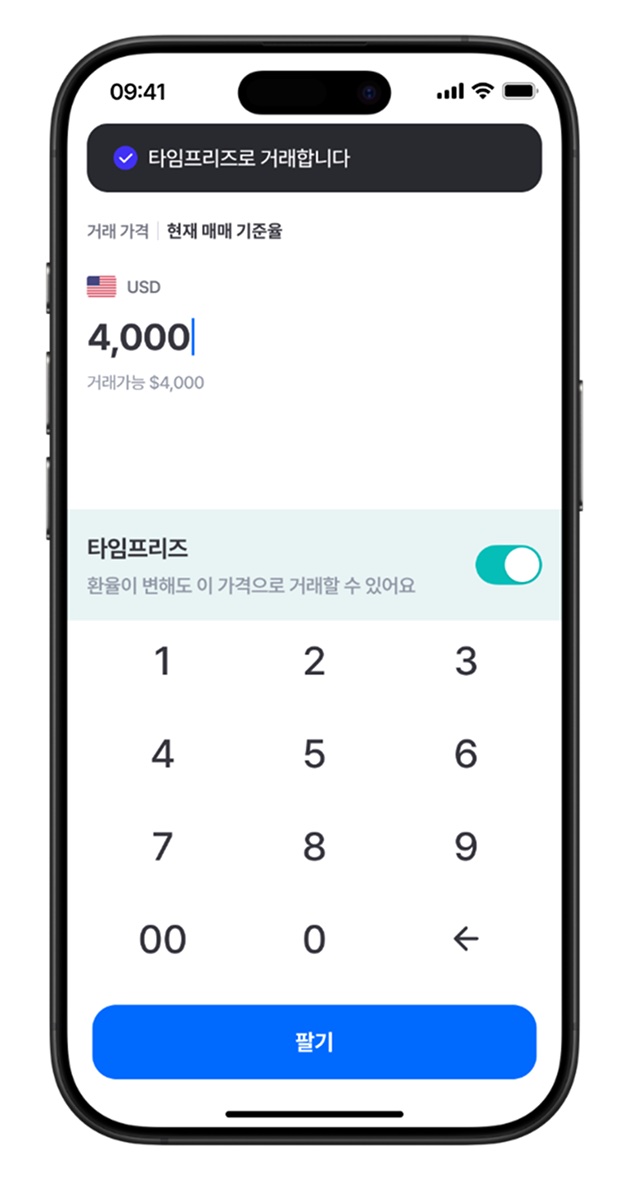
The app looks more like a stock trading app than a bank. Users see live exchange rates, set the price they want, and track what they paid for their dollars and how much they are up or down, the way an investor tracks shares. Cuunit wants people to treat foreign currency as something they invest in, not just a fee they pay. Its website pitches it as low-risk because it is real currency, and as a way to spread savings beyond the won. Today the app trades US dollars, Japanese yen, euros, Chinese yuan and Canadian dollars, and the company says more currencies are coming.

Time Freeze
The feature Cuunit is proudest of is called Time Freeze. It gives a user 180 minutes after a trade to change their mind. Yun gives an example: a customer buys US$10 at 1,400 won per dollar. If the rate falls within the next 180 minutes, the customer can cancel the trade and buy again at the lower price.
Anyone who has bought currency and watched the rate drop an hour later knows the feeling Cuunit is selling against. Its website says it plainly: worried that the price falls as soon as you buy, and rises as soon as you sell? Hold the rate first, and decide within 180 minutes.
Behind the app, Cuunit uses data and AI in two ways. It reads live exchange rate trends and each user's trading patterns to suggest good moments to trade. And it runs an AI fraud detection system that watches every transaction in real time, to stop illegal trades before they happen.
Born from a tuition bill
The idea came from Yun's own bank statements. Every time he sent tuition abroad for his family, he paid what he calls exorbitant exchange fees. Then he noticed the other side of the same trade. Many Korean creators, YouTubers and freelancers earn US dollars, from Google AdSense and from clients abroad, and need won. Many other Koreans need dollars, for study or for travel. Both groups were paying a bank to swap with each other. "I founded Cuunit to bridge these two groups directly," he wrote to us.
Moving money across borders is tightly controlled in Korea. Cuunit holds a licence from Korean customs to run an online currency exchange, which it got in 2022, the same year it filed a patent on its exchange system.
A team of eleven
Yun has 23 years in software. He studied computer science at George Mason University in Virginia, then worked at Samsung, LG Electronics and Coupang, Korea's biggest online retailer. His three co-leads each bring a different half of the business:
- KangHoon Lee, CTO, has ten years in AI and software, and once ran an app with more than 50,000 daily users on his own.
- Marcus Lee, CFO, has more than 25 years in international finance, including at JP Morgan Chase in Seoul and at firms in Hong Kong and Abu Dhabi.
- Jin Hwang, CBO, has 17 years in brand marketing, including at Kakao, the company behind Korea's most popular messaging app, and five years founding and running startups.
The team is eleven people. Its headquarters is in Jeonju, about 200 kilometres south of Seoul. Seoul is a very big city, Yun explains, and the government wants companies to move out to the regions. Most of the team lives in Seoul, so its fintech lab is there.
The bank incubator strategy
Cuunit has been through more startup programmes than almost any company we have met. Its deck lists nearly 30 of them over four years. That was a strategy. Because Cuunit is a fintech, he went after the incubators that Korean banks and financial groups run for startups, to get close to the banks themselves.
In 2024 Cuunit was also picked for TIPS, the Korean government's main programme for tech startups. Yun explained how it works: the idea came from Israel, and private investors choose a startup and invest in it first. Then the government adds more money on top, so they grow together. That same year Cuunit won top prizes at national startup competitions.
His advice to other founders is to join the programmes. Most are similar, he says. They give a startup the chance to present itself and to meet investors, banks and government people. For networking, he calls it "a really good strategy." They also teach founders how to pitch: the coaches watch the presentation and show the team how to make it better.

Where it sits
Cheaper money transfer is a crowded field, but few companies do what Cuunit does. Wise in London sends money abroad at the mid-market rate with a visible fee. Revolut lets its users hold and swap many currencies in one app. Payoneer helps freelancers and online sellers get paid across borders. In Korea, Moin in Seoul sends money overseas, and the finance app Toss offers a foreign currency account. The closest idea is CurrencyFair in Dublin, one of the first marketplaces where people exchanged currency with each other instead of with a bank.
Cuunit's difference is that it treats currency as something to trade, with the tools of a trading app and a safety net for bad timing, and that it is built for Korea's own flows of dollars in and dollars out.
What they are looking for
Cuunit is at an early stage. It has proven its core features, built a base of active users and is improving its mobile app. Yun said we could share the numbers on its fundraising slide.
- Investors. Cuunit is raising KRW 1 billion, about US$700,000, to grow its users and get them trading again and again. The money goes to customers, product and infrastructure, and the terms are open for discussion. It wants venture investors who know fintech and can help it reach North America and other markets.
- Strategic fintech and financial partners.
- Global companies and investors that want to enter Korea's financial market, with a local team that already knows its banks and its rules.
In North America, what would help most is meeting fintech investors and local financial institutions that can guide the company through expansion and compliance. Reach Yun at myun75@cuunit.com.
Why it is bigger than it sounds
This breed of startup finds a market where ordinary people sit on both sides of the trade, and lets them trade with each other instead of paying the bank to stand in the middle.
Korea has both sides in large numbers. Its creators, freelancers and exporters earn dollars. Its families, students and travellers spend them. For years, each side paid a bank's spread to reach the other. Cuunit puts them in the same app. Every match is a trade the bank used to own, and a platform that matches trades can earn on each one while still charging less than the spread. Time Freeze is the clever part. It turns the fear of a bad trade, the main reason people avoid currency, into a reason to come back and trade again. And the licence, the patent and the years spent inside the banks' own incubators are hard for a newcomer to copy.
The formula: wherever money flows into a country and out of it at the same time, through ordinary people, connect the two flows directly, make it feel like investing rather than paying a fee, and take away the fear of getting the timing wrong. The same play fits Japan, with its tourists and its creators paid in dollars, the Philippines and its families living on money sent home, India's millions of freelancers paid by clients abroad, Vietnam, Nigeria and Brazil, where people need dollars and many earn them online, and Turkey, where families save in foreign currency to protect themselves.
The risk in one line: a person-to-person market only works when both sides show up at the same time, and banks and apps like Toss are cutting their own fees to win the same customers. If you invest in fintech and want a way into Korea's money flows, or you run a financial company that wants a Korean partner, this is a team to call.
What to watch
The first thing is the KRW 1 billion round, and who leads it.
The second is trading volume. Repeat trading is the goal of the round, and it will show whether Time Freeze and the trading-app design keep users coming back.
The third is the next market. Cuunit already trades Canadian dollars. A partner in North America, or a foreign company using Cuunit to reach Korean customers, would show the model can travel.