When a big AI training job starts, thousands of chips switch from idle to full power within seconds. The water that cools them takes three to five minutes to notice. By then the chips are already too hot, so they slow themselves down to stay safe. To avoid that, operators cool everything much more than they need to, all the time, and pay for it in power.
Phaidra thinks that waste is avoidable. Its software watches how much power each rack is drawing, sees the heat coming, and moves the cooling before the water warms up. The bigger plan is building an OS for AI factories, a proper ecosystem that touches every part of a facility's lifecycle.
What they built
Phaidra makes AI agents for what the industry now calls AI factories: the huge data centers built to train and run AI. Its flagship product, Prism, reads the data coming off a facility's power, cooling and building systems, along with its manuals and procedures. It ranks the alarms that matter, finds the root cause of a problem, and lets an operator ask questions in plain language. Prism only reads; it does not change anything. Alongside it, Phaidra runs agents that do act: a Liquid Cooling Agent, a Chiller Staging Agent, and a Flex Agent that lets a facility adjust its power use when the grid is under strain.
The company was founded in 2019 by three people. Jim Gao, the chief executive, spent more than a decade designing and running Google's data center infrastructure. Veda Panneershelvam, the chief technology officer, was a key engineer on AlphaGo at Google DeepMind. Katie Hoffman, president and chief operating officer, spent more than a decade building industrial control systems. Before Phaidra, Jim and Veda used AI to run the cooling of Google's data centers through DeepMind Energy, and cut energy use by up to 40% in a facility that was already highly optimised.
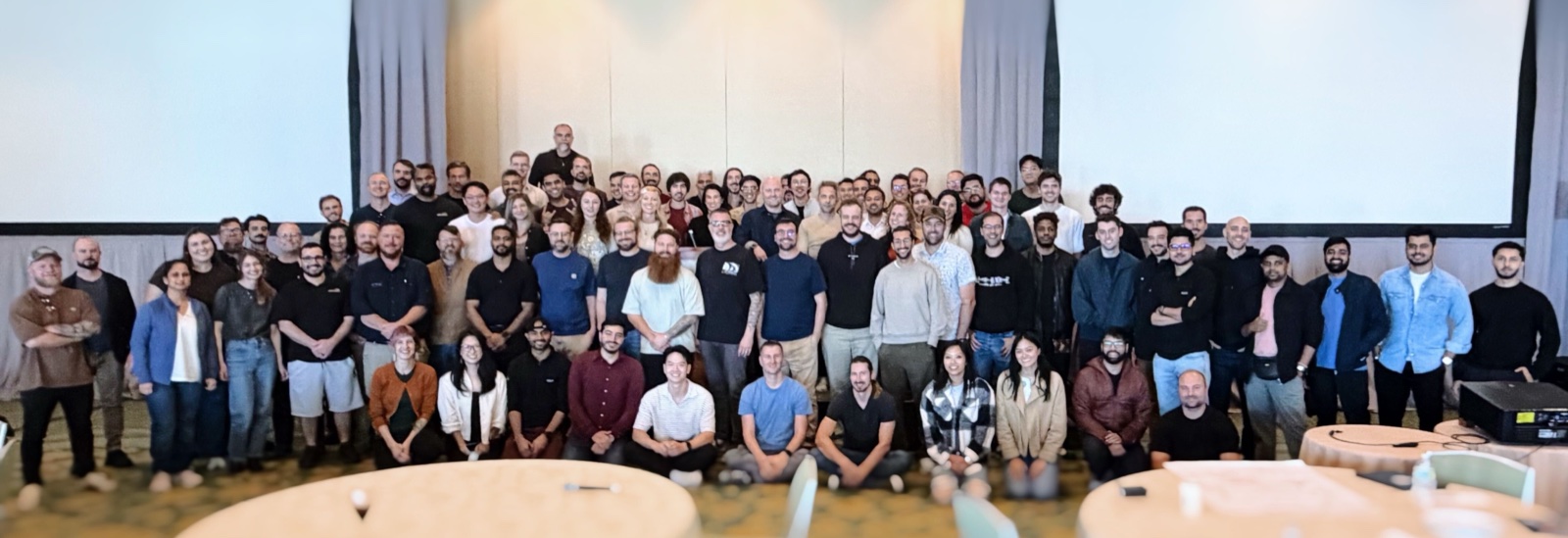
Phaidra is based in Seattle but has no single home. It is remote by design, with people in more than 11 countries and an office in London. Today it has 108 employees, has raised $120 million, and is deployed with customers around the world. Raahul Singh, who leads agents at Phaidra, joined as employee number 7 and works from London. "I've been with the company since the company was a bunch of Google Docs," Raahul says.
From chillers to data hygiene
Phaidra started from an idea Raahul describes as AI for good: use "the cool math" to cut the energy that heavy industry and large facilities waste. The first product was a control agent for chiller plants, the big machines that make cold water for a building. It adjusted their settings to keep everything within limits, and acted as a copilot for the plant's operators.
A few years in, the team realized that most brownfield sites, existing facilities built before AI, were not fully ready to deploy AI control at scale. In the 2000s and 2010s, every facility rushed to add sensors, because data was the new oil. But nobody knew what to do with the data, and much of it was badly set up. "Keeping five cameras on the same thing will give you a lot of data," Raahul says. "It's redundant data. It's not useful." Facilities did not have the clean data that AI needs to work.
So Phaidra went back a step. Before an AI changes anything, the operator needs to know what is going on in the first place. Raahul calls it step zero. Many operators still run on tribal knowledge and rules of thumb, and that works when a facility draws ten to fifty megawatts. AI factories are now heading for 100 megawatts and then gigawatts, many times bigger. At that size, Raahul says, no person and no team can keep up. That is where Prism came from.
Seeing the heat before it arrives
The liquid cooling problem shows why speed matters. Traditional cooling waits for a sensor to register warmer water before it reacts, and because water holds heat for a long time, the reaction comes three to five minutes late. Phaidra's Liquid Cooling Agent reads rack power instead, which rises the moment a job starts, and sends new settings to the cooling units before the heat reaches the water. The company says that cuts the delay from minutes to under ten seconds.
Phaidra tested this with CoreWeave, Applied Digital and NVIDIA, in live production AI clusters. Temperature spikes shrank by 75% to 80%, from 5 or 6°C to about 1°C. CoreWeave is now rolling the agents out across its liquid-cooled fleet. The payoff goes beyond fewer spikes. With the temperature this steady, a facility can safely run its water warmer, so the chillers do less work and more of the available power can go to the chips.
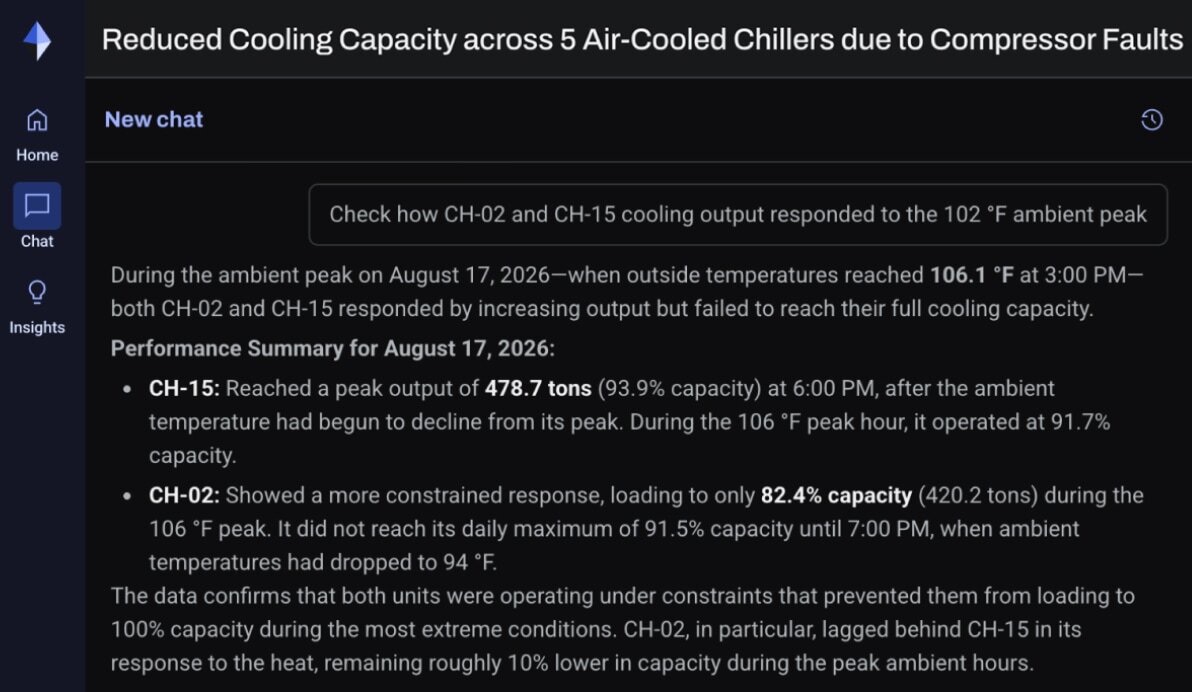
Prism works on the same idea from the other side. At one customer, it spotted early signs that a chiller was wearing out, which led the operators to more than 50 broken fans. Phaidra says catching them early saved the customer more than $700,000 in equipment upgrades it no longer needed.
The engine and the car
Raahul is blunt about what AI can be trusted with today. Right now it is a calculator: it can tell you how things are running and draw you the charts. While AI control can solve problems like liquid cooling and chiller staging, the industry does not yet have the safety rails for end-to-end, fully autonomous control of an entire multibillion-dollar facility. "It's simply not the risk that anyone should be taking at the moment," Raahul says. Hallucinations are not fully solved. So most AI today recommends rather than acts.
Phaidra's job is to build the next layer: the guardrails and checks that let an operator trust an agent to act. Raahul explains it with a car. Foundation models, the large AI models from the big labs, are the engine. A powerful engine is not a car. You still need the suspension, the steering, and a plan for a flat tire, or for the moment the engine chokes and the agent starts doing random things. Building a demo with a foundation model is quick. Running it in production, against everything real users ask for, is hard. "Battle plans rarely survive contact with the enemy," Raahul says. "In this case, the enemy is reality." Phaidra's edge, in Raahul's view, is years of meeting that reality in live facilities.
The long-term aim is an operating system for the AI factory, one that stays with a facility from the day it is planned through every upgrade. This picture, an idea Raahul credits to the company's chief product officer, is about helping people, not replacing them. "If you could do X, now you can do 10 times that," Raahul says.
Lessons from a team spread across the world
Phaidra believes a team spread across the world gives the company a better feel for deploying its agents in many countries. Raahul has two lessons from that work for any founder going global.
The first is data laws. Many countries require certain data to stay inside their borders. A setup optimized for latency and cost has to take into account where the servers and data live, and not accounting for it can "derail your product roadmap," Raahul says. Having colleagues who know how things work where they live helps a lot.
The second is focus. Data centers are being built everywhere, but they are not all the same. Instead of looking for the lowest common denominator that works in every place, Raahul tells the team to pick a niche, get very good at it, and then move to the next one. In AI, Raahul says, building the lowest common denominator does not provide the polish a great user experience needs.
Where it fits
The people who run AI factories already have plenty of tools. Vertiv sells the power and cooling equipment many of these buildings run on, with its own monitoring. Sunbird sells data center management software that tracks assets, space and power. Cognite, from Norway, organises messy industrial data so AI can use it. Augury listens to machines in factories to predict failures before they happen. BrainBox AI, from Montreal, uses AI to run heating and cooling in office buildings and stores. And Emerald AI makes a data center's power demand flexible, so it can fit on a crowded grid. Each is strong in its own piece. Phaidra's corner is the whole AI factory at once: it reads power, cooling and computing together as one system, and moves the cooling before the heat arrives, instead of after.
What they are looking for
With $120 million raised and 108 people, it is in its scale-up phase: taking on more customers and growing revenue.
- Operators of AI factories and large data centers, anywhere in the world, who want to see their facility as one system.
- People who want to work on AI for real infrastructure, from anywhere. The team is fully remote, and openings are on the careers page.
Reach the team at phaidra.ai.
Why it is bigger than it sounds
This breed of startup is very smart: it sells back the safety margin. AI factories over-cool on purpose, because their cooling reacts minutes after the chips heat up and nobody wants a chip to slow down. That buffer is paid for in power, and power is now the thing AI factories are shortest of.
That is where the money comes from. Phaidra's agent reads rack power as an early warning and moves the cooling in seconds, so spikes shrink from 5 or 6°C to about 1°C. With spikes that small, the operator can run its water warmer, the chillers work less, and the saved power can go to chips that earn money. The customer is not really buying software. It is buying back power that less optimal control would consume.
The formula: find where an industry over-does it on purpose because it cannot see fast enough, see faster, and sell the margin you free up. It works for refrigerated trucks that over-chill food, hospitals that stock extra blood and drugs, power grids that keep plants running in reserve, water plants that add more chemicals than they need, airlines that load extra fuel just in case, and farms that over-water to be safe.
The risk in one line: the margin exists because a mistake is expensive, and takes a lot of effort to undo. Look for the buffer in your own industry that everyone pays for and nobody questions, and sell it back.
What to watch
The difference between an application that serves one purpose and an OS that runs a facility's operations will show in the ecosystem Phaidra is building. From liquid cooling to chiller staging, Phaidra is leading the charge in deploying write agents, the kind that act instead of only recommending, and they take on more responsibility day by day. Today, at the scale of a building or a whole fleet, AI agents mostly make recommendations. Phaidra aims to unlock the full potential of AI so that AI factories can run at their maximum capacity.