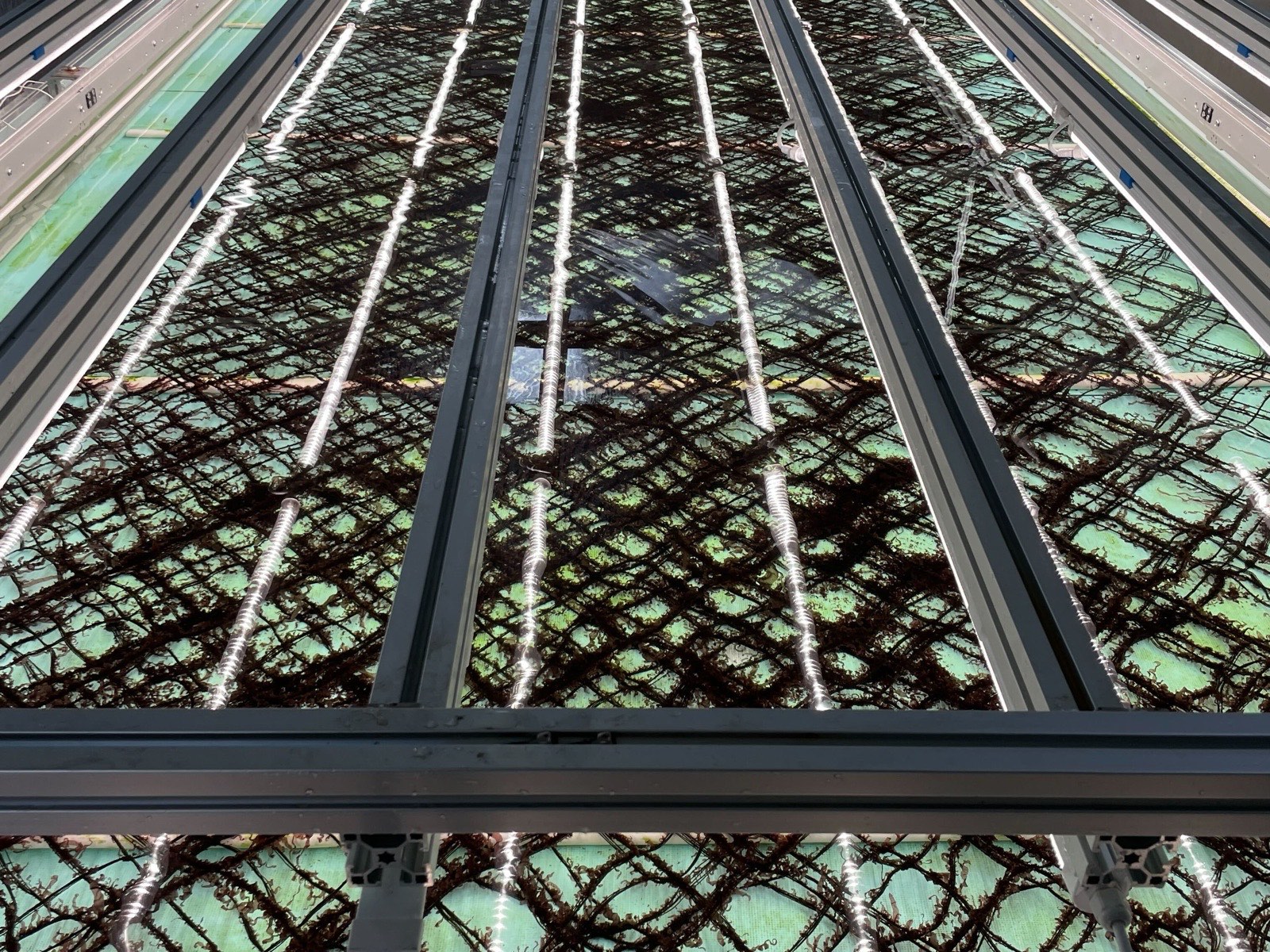
Korea sells most of the world's dried seaweed. The thin black sheets wrapped around kimbap and sushi, sold as crunchy snacks in supermarkets from Seoul to San Francisco, are called gim in Korean and nori in Japanese. Korea's gim exports passed one billion US dollars for the first time in 2025, reaching about US$1.13 billion. And every sheet of it still depends on the weather at sea.
Second Ocean is a young Korean company that wants to take the weather out of it. It grows gim indoors, on land, in stacked towers, with machines and software doing work that farmers used to do by feel.
What they built
Second Ocean was founded in South Korea in June 2024. Its Korean name, 두번째바다, means "the second sea". The idea behind the name is on its website: if the ocean will not give us what we need, we will build a sea of our own.
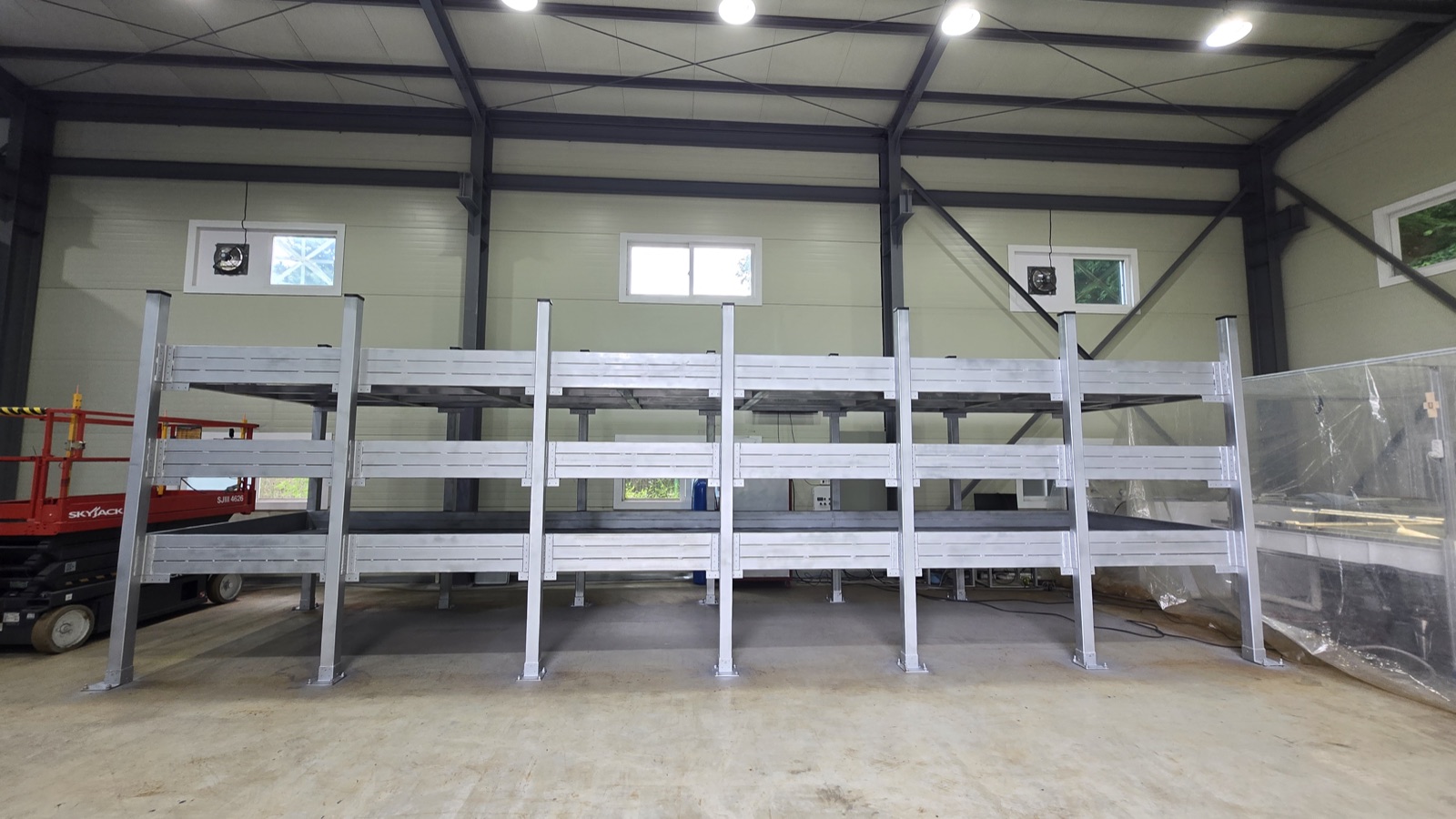
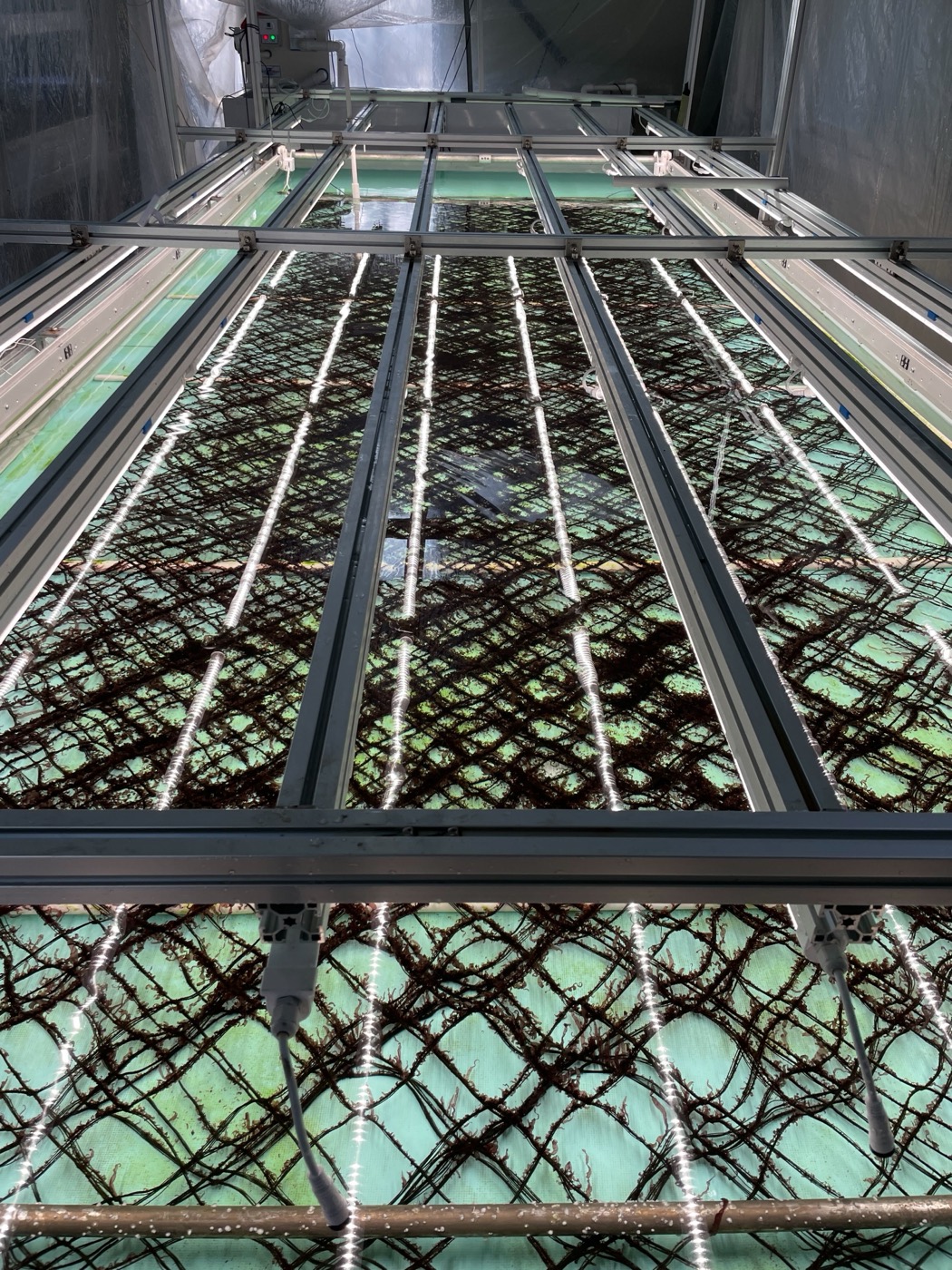
Its core system is called MARINE V-TOWER. It stacks cultivation tanks on top of each other, controls the conditions inside them, and automates the work around them. The system watches and manages water temperature, light, nutrients and water quality, so the seaweed grows the same way every week of the year.
The company wants to do more than grow. Its long-term goal is one company covering the whole chain: cultivation, automation, processing and selling, built into a system that can scale. Today it designs and makes its own core cultivation equipment, and it is developing and testing automation for the work around the tanks, including handling and harvest. It is building its pilot plant in 2026. In 2027 it plans a larger demonstration plant and the first commercial sales of its technology and products.
The team was built for that mix. Second Ocean's website describes it as marine biologists and control system engineers working side by side. Kyoung Hyoun Moon, known as Henney, is the founder and chief product officer, and answered our questions in writing. Lee Hyun-seung is the CEO and Jin Min-su is the CTO.
Why take seaweed out of the sea
Gim is a winter crop. Farmers seed their nets in autumn, when the water cools, and harvest through the cold months. If the sea stays warm too long, seeding is late, the season gets shorter, and the crop is smaller. In bad years whole harvests are lost. That swings both how much seaweed there is and what it costs.
The seas around Korea are getting warmer. In 2024, a warning for high sea temperatures stayed in place for 71 days, the longest since the warnings began. The Korean government has put extra money into protecting the seaweed supply from warming water.
"We believe that the future of aquaculture depends on reducing uncertainty and making production more predictable," Moon writes. Moving the crop onto land means the growing conditions are set by the company, not by the season.
Experience, turned into data
Ask a gim farmer when to change the conditions or when to harvest, and the answer comes from years at sea. Second Ocean wants that answer to come from numbers.
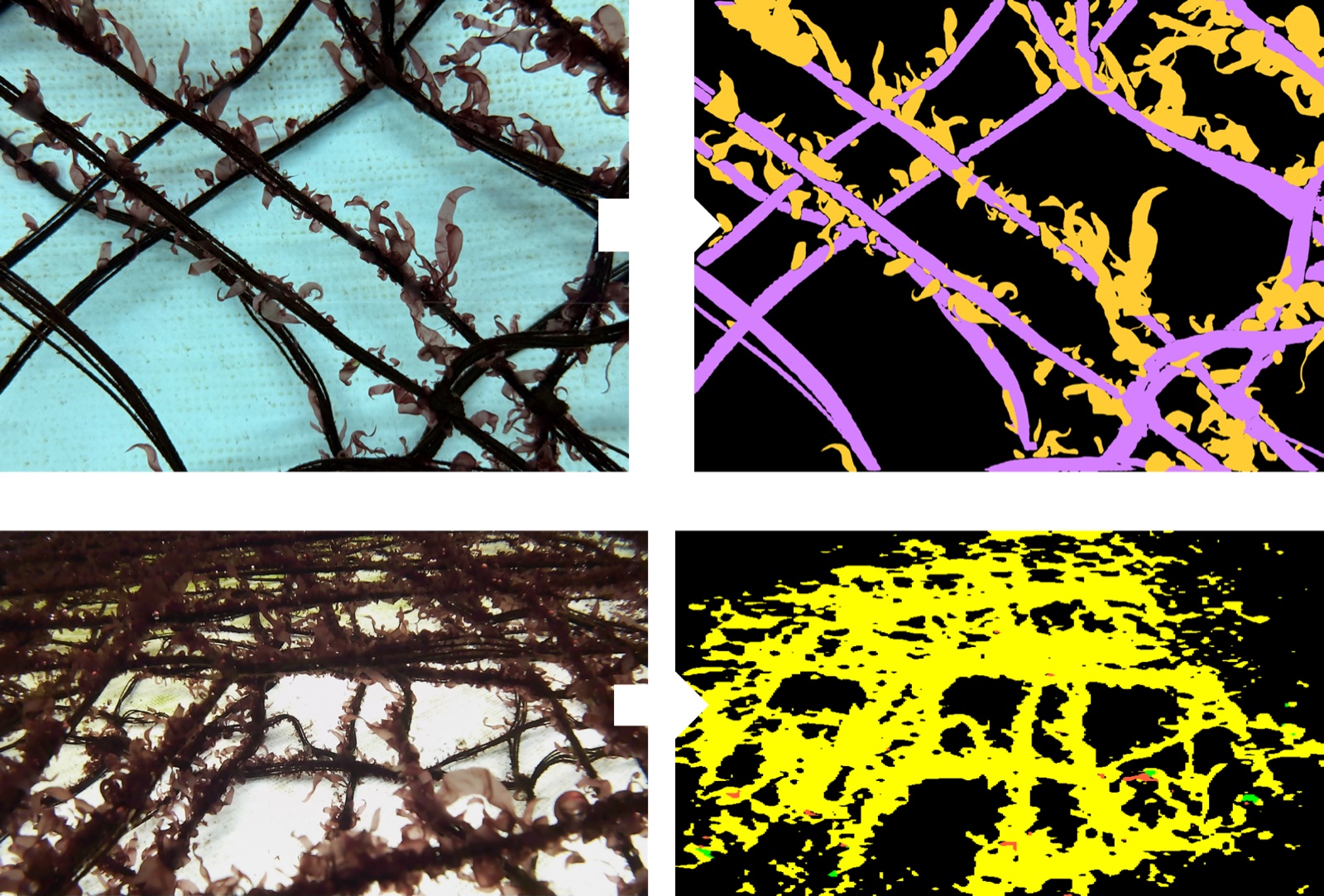
It is building an AI system it calls AI Fisherman. Cameras photograph the seaweed on its lines, and software reads the images together with the sensor data to judge how the crop is doing and guide the next decision. The company is also developing machines to handle the cultivation materials and to harvest, the jobs that take the most hands.
That matters because the people who know how to farm gim are getting older, and fewer young people are taking their place. Second Ocean's aim, in Moon's words, is to turn biological know-how into standard operating procedures, backed by data and automation. When it raised its seed round, the company said it wants the AI to guide the whole process, so that farmers with no seaweed experience could one day grow gim too. It also uses the same nets the existing industry uses, so it works with traditional farming rather than against it.
What the trials show
Second Ocean shared its trial results with us. Its land-grown lines have produced about 0.9 kilograms of wet seaweed per metre of cultivation line.
The company also tested what is in the seaweed. Compared with the reference values for ocean-farmed gim used in its research, its samples showed about 13% more protein, 83% more calcium and 80% more iron. Its water goes through a cleaning process with protein skimmers and microbubbles that lift out floating impurities. According to its internal findings so far, no microplastics have been found in the land-grown samples it has tested.
These are the company's own results from trials, not from a commercial plant yet. That is the next step. Second Ocean is building its pilot plant now, and plans a larger demonstration plant in 2027, when the first phase of selling at commercial scale begins.
Who buys it
The first customers are food companies: manufacturers, seaweed processors, distributors and premium food brands. What they want is a steady supply of good seaweed all year, at a price they can plan for. In September 2026, Second Ocean was selected for a proof of concept with Lotte's central research institute, part of one of Korea's largest food groups. The work began in October and is under way now.
The company is also building its own premium consumer brand, KING'S SEAWEED, to sell land-grown gim straight to shoppers. Later it wants to sell the system itself: the cultivation technology and the automated equipment.
Built in-house to cut the cost
The hardest problem, Moon writes, was getting seaweed to grow reliably outside the sea at all. Seaweed reacts badly to small changes, and stacking the tanks made it harder, because every level has to keep the right conditions while the machines run.
The company solved it with years of trials, redesigned equipment and steady data collection. And it made one choice that shapes everything else: it designs and makes its own core equipment, instead of buying systems built for something else. It is also developing and testing its own LED lighting, to get better performance at a lower cost to make. That work is not finished yet, and it matters: light is one of the biggest costs of any indoor farm.
Second Ocean raised a pre-seed round in June 2024 and a seed round of 500 million won, roughly US$350,000, in November 2024. It was picked for TIPS, the Korean government's main programme for tech startups, in August 2024, and in October 2026 for a further government programme that links small companies with investors.
Where it sits
Other companies are trying to move food out of the weather and onto land. Atlantic Sapphire grows salmon in indoor tanks in Florida instead of ocean pens, and The Kingfish Company farms yellowtail on land in the Netherlands. Oishii grows premium strawberries in vertical farms and charges for the quality. Out at sea, Atlantic Sea Farms works with fishermen in Maine to grow kelp. On the shelf, brands like gimMe have made roasted seaweed a mainstream snack in North America. Second Ocean wants to do the same for gim.
Indoor farming also has a hard history. AeroFarms went through bankruptcy in 2023, and Bowery Farming shut down in 2024, both after struggling with the cost of growing greens indoors. What makes Second Ocean different is the crop. Lettuce is cheap and grows almost anywhere. Gim is a billion-dollar export with a global market, and the sea is making it less reliable every year.
What they are looking for
Second Ocean's first goal is to prove the model at home with working commercial plants in Korea. After that, it sees room in Japan, which already eats a lot of seaweed, and in the United States and Canada, where interest in Asian food, healthy food and sustainable food keeps growing.
- Strategic investors who understand food production and want to back the move from trials to commercial plants.
- Food manufacturers and distributors who want a steady supply of premium gim.
- Research institutions and aquaculture partners, especially those with experience in industrial-scale production and in building international markets.
The plan is to grow through long-term partnerships, not by rushing into many countries at once. Reach the team through second-ocean.com.
Why it is bigger than it sounds
This breed of startup turns a crop the weather controls into a crop a factory controls.
Korea already has the market. Gim sells around the world, and Korea makes most of it. What Korea is losing is the certainty: warm autumns push seeding back, harvests shrink, and prices jump. Second Ocean is not trying to sell more seaweed. It is selling the promise that the seaweed will be there, every month, at the same quality. That is worth more to a food company than one cheap harvest.
The money comes in three layers. First, steady premium supply to food makers, the kind of buyer that just ran a trial with it. Second, its own consumer brand at a higher price. Third, and biggest, the system itself: once the towers work, they can be sold to others. And because Second Ocean makes its own core equipment, and is working on its own lights, every plant it builds should be cheaper than the last. The data it collects makes each one smarter too.
The formula: when the climate makes a famous food unreliable, the value moves from the people who grow it to the people who can promise it. The same play fits Japan's nori farms, Maine and Norway's kelp, the red seaweed farms of the Philippines and Indonesia that supply food thickeners, oysters on North America's Pacific coast after heat waves, and any crop where one bad season can wipe out a year.
The risk in one line: indoor farms live or die on the cost of light and power, and that has killed bigger companies than this one. If you buy seaweed for a food brand, or invest in food that has to survive a warmer world, this is the company to talk to before the next bad harvest.
What to watch
The first thing is the pilot plant. It has to show the trial results hold up when everything runs together, every day.
The second is the 2027 demonstration plant and the cost per kilogram that comes out of it. That number decides whether land-grown gim is a premium niche or the future of the industry.
The third is the first big food customer. A long-term supply contract with a major food company would prove that buyers will pay for certainty.