
Vietnam is one of the fastest-growing travel destinations in the world. Nearly 12.3 million foreign visitors arrived in the first half of 2026, up almost 15% on the year before, and the government is aiming for 25 million by the end of the year. Most of those visitors do not speak Vietnamese. Many will need more than a hotel and a tour: a doctor, a business meeting, a flat, a bank account, a friend who can explain what is going on.
Tubudd is a Hanoi startup that sells exactly that friend.
What they built
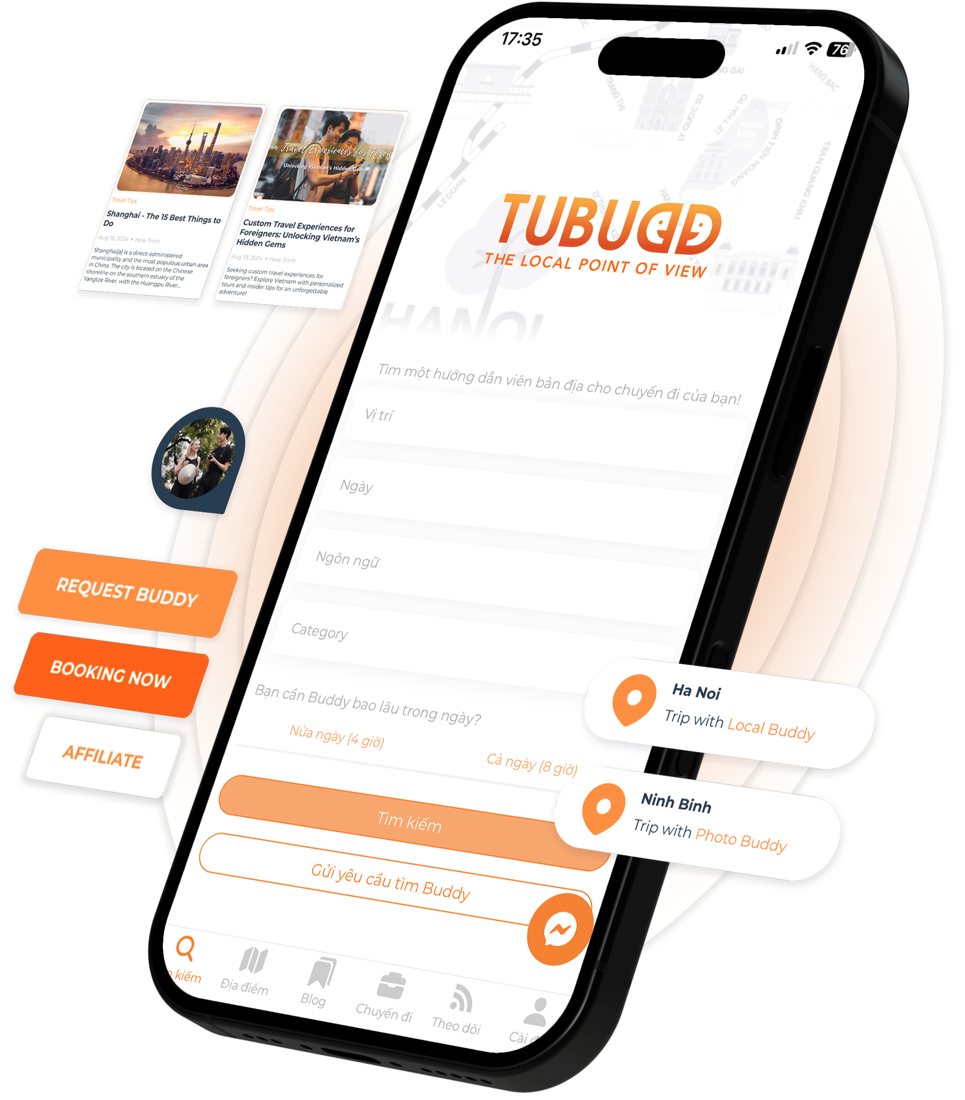
Tubudd is an app and website where foreign visitors book a local "buddy": a Vietnamese person with local knowledge who speaks their language and spends time with them as a guide, helper and friend. It is a paid service.
There are several kinds of buddy. A Local Buddy shows travellers around, takes photos or comes along on an adventure, for US$30 to US$80 a day. A Business Buddy works as a translator, interpreter or personal assistant for people who come to Vietnam to work or invest, for US$80 to US$160 a day. A Health Buddy goes with foreigners to hospitals, clinics and beauty and wellness appointments, for US$80 to US$200 a day.
Around the buddies, Tubudd sells the rest of the trip: visas and fast-track service at the airport, private and custom tours, transport, hotels, luggage handling, VIP pickup and flights. In 2025, visas and fast track brought in 39% of its revenue, private tours 26%, buddy services 22% and add-ons 13%.
Two newer lines go deeper. One is relocation, for people who fall in love with Vietnam and want to move there. The other is medical tourism, for people who come to Vietnam for treatment. "In Vietnam, businesses are not that straightforward like in Canada," Annie Vu, Tubudd's CEO and co-founder, told us. "You have to know the people here, you have to know the culture here." A local buddy closes that gap.
Vu has spent 13 years in sales and marketing in Vietnam and the UK. Her co-founders include Ethan Dang, the chief technology officer, who spent 15 years building e-commerce platforms in Singapore, South Korea and Vietnam, including at Zendesk and Shopee.
"You are my buddy"
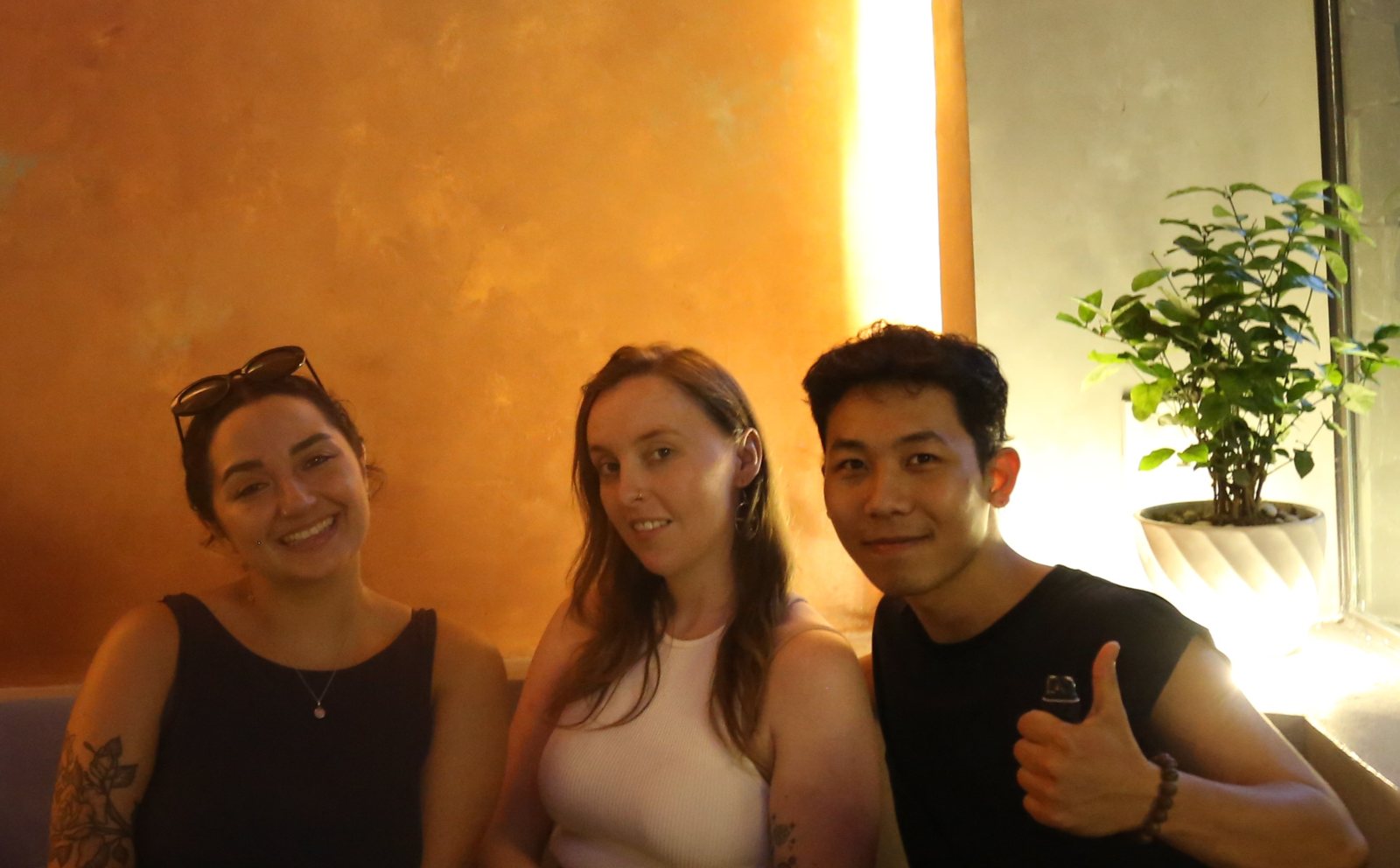
The idea is older than the company. After she graduated, Vu travelled the length of Vietnam, from north to south, for almost two months with two Canadian friends. She translated and explained everything. By the end, they told her that Vietnam had become their second home because of her. They called her their buddy. "I want to have an army of people like me," she remembers thinking.
Later she moved to the UK and travelled around Europe alone. She wanted what she had given her Canadian friends: a local who would show her around. The only option then was Couchsurfing, which she used to find local friends rather than a place to sleep. It was free, and it showed. People agreed to meet her and cancelled at the last minute. She remembers standing alone in the middle of Rome, unable to speak Italian, after someone simply did not turn up.
That is why Tubudd has been a paid service from the start. "The local also need to eat," Vu says. When the buddy is paid, they show up. When the traveller has paid, so do they.
Starting from zero, four times
Tubudd has a long history, and Vu is open about how hard it has been. She counts four fresh starts. The first was in the UK. The second came at the end of 2018, when the team moved the company to Vietnam. In 2019 they spent six months in South Korea trying to open a new market. By then the app had about 3,000 buddies from around 40 countries, and the plan was to raise a large round in 2020 and grow fast.
Then COVID reached Vietnam in March 2020. Tubudd never closed for a single day. It pivoted, adding the Business Buddy and Health Buddy services for people already living in Vietnam, and its revenue grew 77% that year. But the next three years meant changing the product, the customer and the service again and again. A funding round in 2022 was spent quickly as the team rebuilt marketing and hiring after the pandemic. At the end of 2023, after travel came back changed, they started again. That was the fourth time.
Vu counts the real Tubudd from 2024. "We've made all the mistakes in the world," she says. "We know exactly what we're doing."
The numbers
Tubudd's pitch deck shows the whole ride. Revenue was US$98,000 in 2019 and jumped to US$173,000 in 2020, the 77% COVID year. It stayed between US$150,000 and US$175,000 through 2024. That year was hard: Vu put in US$50,000 of her own money to keep the company going.
2025 was the breakthrough. After the team restructured how it sold, revenue reached US$591,000, about 3.7 times the year before, with US$103,000 in gross profit. The company has worked to stay profitable and has paid its own way for the last two years. Over its life, Tubudd has taken money from three angel investors and two venture funds. In 2022 Vu won the Vietnam national final of the Entrepreneurship World Cup, and she has pitched Tubudd at Nasdaq in New York, at MIT, and in Korea, Japan, Singapore, Malaysia, Thailand, the UK and New Zealand.
Most customers find Tubudd on their own. It gets about 1,160 leads a month across its channels, nearly 42,000 followers across TikTok, Instagram and Facebook, and it turns about a quarter of its organic leads into customers. Its 2025 numbers show an average order of US$191 and a cost of about US$3 to win each customer. The biggest group of customers is aged 25 to 34, and 87% of bookings are for one or two people.
The plan was to raise money in 2026. Then Vu gave birth in December 2025 and spent the first half of the year with her baby, so fundraising waited. The company has kept itself profitable in the meantime. Now it is raising again.
Where it sits
The big names in booking local experiences are global. GetYourGuide and Klook sell tours and activities in hundreds of cities. Showaround, Withlocals and ToursByLocals connect travellers with local guides. For relocation, startups like Expatify in Indonesia help foreigners settle in one country. For medical travel, platforms like Bookimed help patients find clinics abroad.
Tubudd's difference, Vu says, is focus. It only does Vietnam. Its buddies are all Vietnamese, and between them they speak 10 to 15 languages, including French, Russian, Chinese, Korean, Japanese and German. Vietnam has a long history with French and other languages, and many young Vietnamese study them. The global platforms mostly sell tourism, and mostly in English. Tubudd also covers business and medical needs. Its customer support runs through chat, with AI translating into the customer's language. Most of its customers still speak English, but it can serve the ones who do not.
Traditional Vietnamese travel agencies treat Tubudd as a rival. Vu sees them as possible partners, who could use its technology or sell its services.
What they are looking for
Tubudd wants to win Vietnam before going anywhere else. The lesson of Korea in 2019, Vu says, is that a new country takes far more time, effort and money than it looks. The next step is Da Nang, the central coast city that Skyscanner's Travel Trends 2027 report lists among the world's fastest-rising destinations.
- Investors for a US$1 million round over 24 months, ideally ones who know travel, marketplaces or Southeast Asia. The plan splits the money between growth and marketing, technology, and the quality and range of its services, 30% each, with 10% for operations.
- Hospitals, clinics and insurers that want foreign patients looked after well.
- Companies and relocation firms sending staff to Vietnam who need someone on the ground.
- Travel agencies that would rather partner than compete.
Reach the team through tubudd.com.
Why it is bigger than it sounds
This breed of startup sells a relationship in a country that runs on relationships.
A tour guide sells a route. Tubudd sells a person you can trust, in a place where getting things done depends on knowing people. That is why the buddy works for so much more than sightseeing. The same buddy who shows you the Old Quarter can sit with you at the hospital, at a business meeting or at the landlord's office. Each of those is worth far more than a walking tour, because the cost of getting it wrong is far higher.
The money follows the trip. Most visitors need a visa before they land, and that is the line that pays most today, 39% of revenue. It reaches travellers before the trip even starts, and Tubudd's whole cost of winning a customer is about US$3. From there Tubudd sells tours, buddies and add-ons. Business, health and relocation bring bigger tickets and repeat customers, people who stay months or years instead of days. And Vietnam is bringing the crowd: arrivals are growing fast, and every new visitor is a possible customer. Owning one country deeply, in many languages, is a better business than being a thin layer in a thousand cities.
The formula: in a market where foreigners arrive fast and the system runs on local knowledge, start with the paperwork every visitor needs, then sell trusted local people, paid for their time, and move them up from tourism into the needs that cost more. The same play fits Japan and Korea for foreign workers and patients, Indonesia and Thailand for long-stay visitors and retirees, Mexico, Colombia and Portugal for remote workers, Turkey and Georgia for medical travel, and any country where newcomers are lost without someone who knows how things really work.
The risk in one line: once a traveller and a buddy trust each other, they can arrange the next meeting without the app. If you invest in travel, or your company sends people or patients to Vietnam, this is the team to call before you land.
What to watch
The first thing is the funding round. With profitable growth already shown, the round decides how fast Tubudd can grow.
The second is Da Nang. A second city will show whether the model can be repeated without Vu and her team in the room.
The third is health and relocation. If those lines become the larger share of revenue, Tubudd stops being a travel app and becomes the service foreigners in Vietnam depend on.