Most students who drop out never tell anyone they are in trouble. They miss a few classes, fail an exam, stop opening the school's emails, and one day they are gone. By the time anyone at the school notices, the decision is already made.
Annie Advisor, a startup from Helsinki, does not wait for students to ask for help. It texts them first.
What they built
Annie Advisor makes Annie, a support bot that sends short messages to students' phones at the moments when they are most likely to fall off the path. "Basically we prevent dropouts," Miska Noponen, its CEO and co-founder, told us. "That's what we do."
Annie connects to a school's student information system, the database that records who is enrolled, who passed what and who has stopped showing up. Something in that data sets off a message. Annie has about 30 of these triggers: absences, falling behind the normal pace, a failed exam, the first weeks as a new student, the last stretch before graduation. Each one starts a message written for that situation. "Hey Miska, you're in the last mile of your degree," is how he describes one. "Do you need help finalizing your courses, or with your well-being, or with picking your future after graduation?"
The messages arrive on the channels students already use every day: SMS, WhatsApp, Signal, Telegram and RCS, the newer version of text messaging. There is no app to install and no account to create. The school gives Annie the phone numbers, and the first message just arrives. Miska says that matters more than anything else, because every sign-up step loses exactly the students who most need help.

Two in three students text back
Every time Annie sends a message, Miska says, about 65% of students reply. That is a very high number for young adults. About one in eight reveals a need for support that the school did not know about. Around three quarters of those needs are about studies: choosing courses, planning, study technique, academic stress. The other quarter is about well-being, such as money and housing.
The surprise was that the channel hardly matters. WhatsApp, which most Europeans use every day, is growing fastest, and conversations on internet-based apps run longer than on SMS. But all the chat channels get about the same reply rate. What does not work is what schools usually use: email, notifications and messages inside the learning platform get only a fraction of the engagement.
Annie is not meant to replace the school's counsellors. It is meant to get students to them. "According to students, we're a little bit annoying in how pushy we are in getting them to a human," Miska says. Most people who need help do not ask a person for it, but a bot feels like a lower step. The student can tell the bot what is wrong, and the bot points them to the right service. When Annie offers to pass a student to a human, about 30% accept. When a student asks for support, the right staff member gets an email with a link to a simple screen where they can follow up.
The text that kept her in school
Annie's first real test came after a hackathon win. It led to a project with Vantaa Vocational College Varia, in a suburban and very multicultural part of the Helsinki region. Its dropout rate was about 17%, when the national average at the time was 11.6%.
At the start, Annie did nothing clever. It sent everyone the same support message five times a year: how are you doing, and do you need help? No triggers and no targeting. After one year, Miska says, dropouts in that group had fallen by 27%, the figure in the impact study Annie Advisor published. That was 182 students who stayed in school.
When the team interviewed students afterwards, one answer stayed with him. A student training to work in elderly care had been struggling with her well-being and felt ashamed of it. She knew she was in trouble but could not take the step of asking. The message from Annie pushed her over the edge. She talked to a person, got help and graduated. In Miska's words, she told them she "wouldn't have graduated without the text message."
Miska knows the other ending to that story. He dropped out of a university degree himself. He was a proud student who tried to push through on his own, and when he left, nobody called. "I just dropped out and didn't get a single call, no messages, no nothing from the university," he says. "But I found my way in the end."
Born from a dashboard nobody used
Miska has two co-founders, Joonas Merikko and Lauri Jokipii. Before the company, they worked together as data consultants for universities, schools and the Finnish government. They built dashboards and prediction models, even some that showed which students were in trouble. Every time, they asked the same question at the end: so what will you change? And every time, the answer was that this was the big question. The data showed the problem, but nobody knew what to do next. That gap became Annie. Joonas Merikko, who runs the R&D team, also holds a PhD in educational psychology.
Two of the founders also worked for the Finnish government on the national registries where Finnish degrees and study records are logged. They know the legacy systems that universities and schools run on, which is exactly where Annie plugs in. Miska uses a Finnish expression for the team: they have good "sitting muscles", meaning they can sit with big, sometimes dull problems for as long as it takes to solve them.
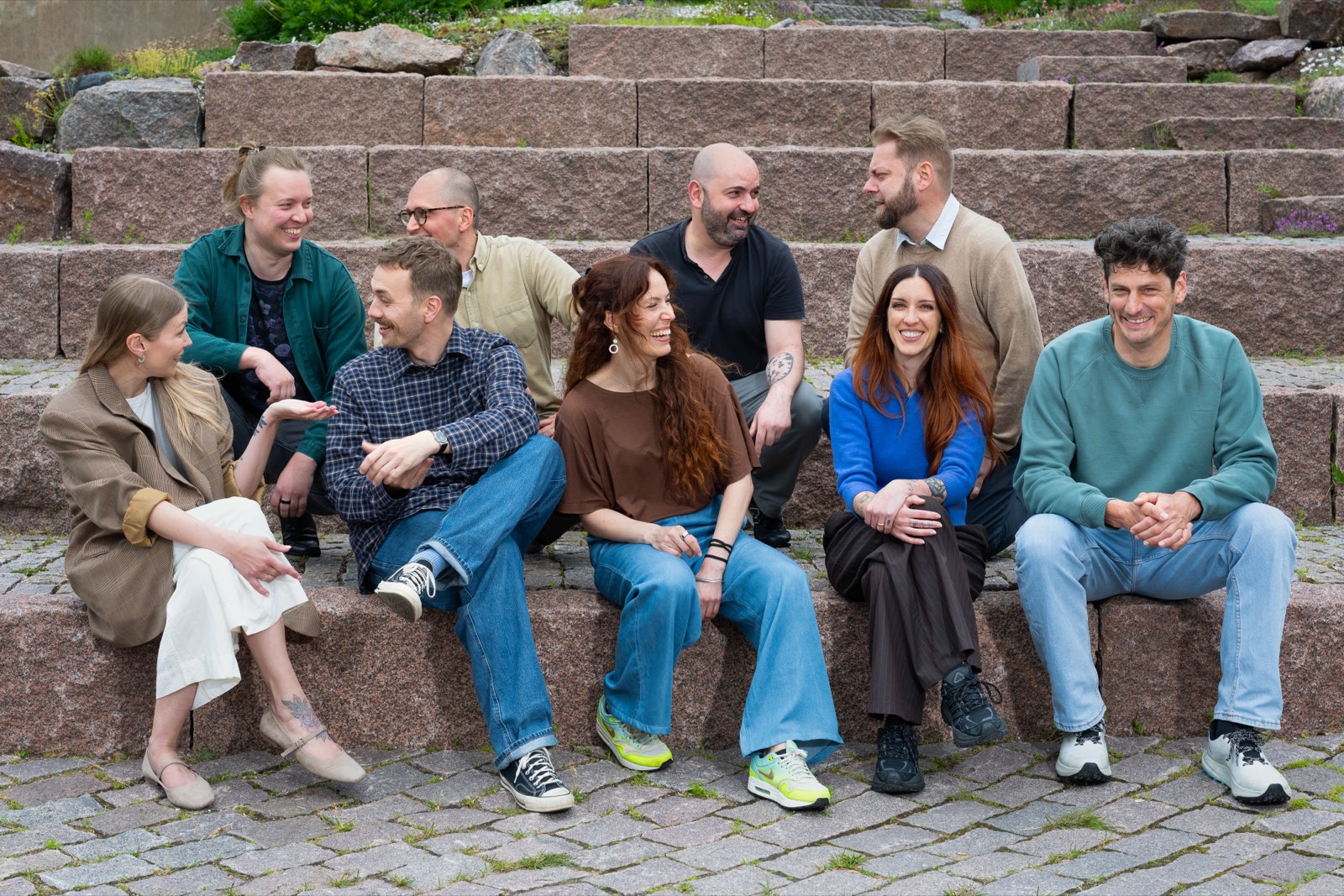
The team is nine people today, with colleagues for the Baltics, Spain and the Netherlands.
The numbers
Annie Advisor is six years old, and Miska says it has only now found its growth path. The numbers he shared with us:
- 35 customers. A little more than half are universities and universities of applied sciences. The rest are vocational schools.
- Four countries. A year ago it worked only in Finland. Since then it has won paying customers in three more European countries. Its case studies include Tallinn University in Estonia and the Scheepvaart en Transport College in Rotterdam.
- Just over €40,000 in monthly recurring revenue, growing about 45% a year, and speeding up.
- About €14,000 a year from the average customer. The price depends on how many bots a school uses and how big it is. Annie has about 25 kinds of bot, from thesis support to new students and workplace learning. The biggest customer pays about €70,000 a year.
- The City of Helsinki, the biggest education provider in Finland, signed this summer.
Schools tend to start small and grow. One new customer began with three bots: one for students who are behind, one for new students a month before their first day, because that is where the first dropouts happen, and one for thesis support. Schools past their pilot year can run 10 or 15.
Outside judges agree with the customers. In the 2023 to 2024 Tools Competition, whose backers include the Bill and Melinda Gates Foundation and OpenAI, Annie won a Transform Award in a track that drew 700 entries and picked 14 winners. It was named to HolonIQ's Nordic-Baltic EdTech 50 in 2024 and 2025, and shortlisted for the BETT Awards 2026.
Where it sits
Helping students stay in school is a busy field in North America. Mainstay sends AI coaching messages to students' phones in the United States. Civitas Learning pulls a college's systems into one model to predict who needs attention. Ivy.ai builds chatbots that answer students' questions from a university's own website. Nectir puts AI assistants inside the learning platform. In Europe, StREAM, now part of Kortext in the UK, flags students whose engagement drops, and Studiosity in Australia gives students feedback on their work.
Most of them wait for the student to come to them, or hand a dashboard to staff and stop there. That is the exact gap Annie was built to close. And in Europe, Miska says, the field is still open. Annie Advisor has taken part in six public procurements since it started, and each time it was the only company to bid.
What they are looking for
Annie Advisor is preparing a funding round for early 2027, and this is the audience Miska wants to reach.
- Investors, including in North America, for the round in early 2027. His pitch is direct. Good European companies are seen by far fewer investors than American ones, so many of them are under-invested. And in Annie's market there is no competition yet. Europe loses about 5 million students before graduation every year, Miska says, and there is plenty to fix there before Annie needs to go anywhere else.
- Universities, colleges and vocational schools in Europe that want to catch students before they leave.
Reach the team through annieadvisor.com.
Why it is bigger than it sounds
This breed of startup is very smart: it asks first. It does not wait for people in trouble to raise their hand, because the ones in the most trouble never do. It finds the moment they start to drift, reaches them on the app they already answer, and walks them to a human before they leave.
The money comes from what a dropout costs. A school loses a student it has already recruited, and in Finland a school's funding depends partly on how many students finish. Annie's own pitch to schools says it plainly: supporting students protects the school's funding. An average customer pays about €14,000 a year. At Varia, the simplest possible version of Annie kept 182 students in one year. A product that pays for itself many times over is easy to buy and hard to cancel, and every new trigger is one more bot to sell to the same school.
The formula: find an institution that loses money when people quietly walk away, connect to the data that shows them drifting, and message them first, on their phone, with no sign-up, then hand them to a person. The same play fits hospitals and patients who skip follow-up appointments, pharmacies and people who stop taking their medicine, companies losing new hires in the first 90 days, apprenticeship programmes, online courses where most learners never finish, language classes for new immigrants, landlords with tenants falling behind on rent, and gyms whose members stop coming in January.
The risk in one line: Annie can find the students who need help, but it cannot help them alone, so if a school's counsellors are already full, the message leads nowhere. If you invest in education or in software that sells to the public sector, and you want a team with no rival at the table in Europe, this is one to meet before its round.
What to watch
The first thing is the round in early 2027, and whether a North American investor leads it.
The second is the three new countries. Finland is close to full now that Helsinki has signed. Repeating that in Estonia, Spain and the Netherlands, with their own languages, systems and tenders, will show whether the model travels.
The third is the data. Every reply tells a school what its students actually need. If Annie turns those answers into the evidence schools use to plan their support, it stops being a messaging tool and becomes part of how schools are run.