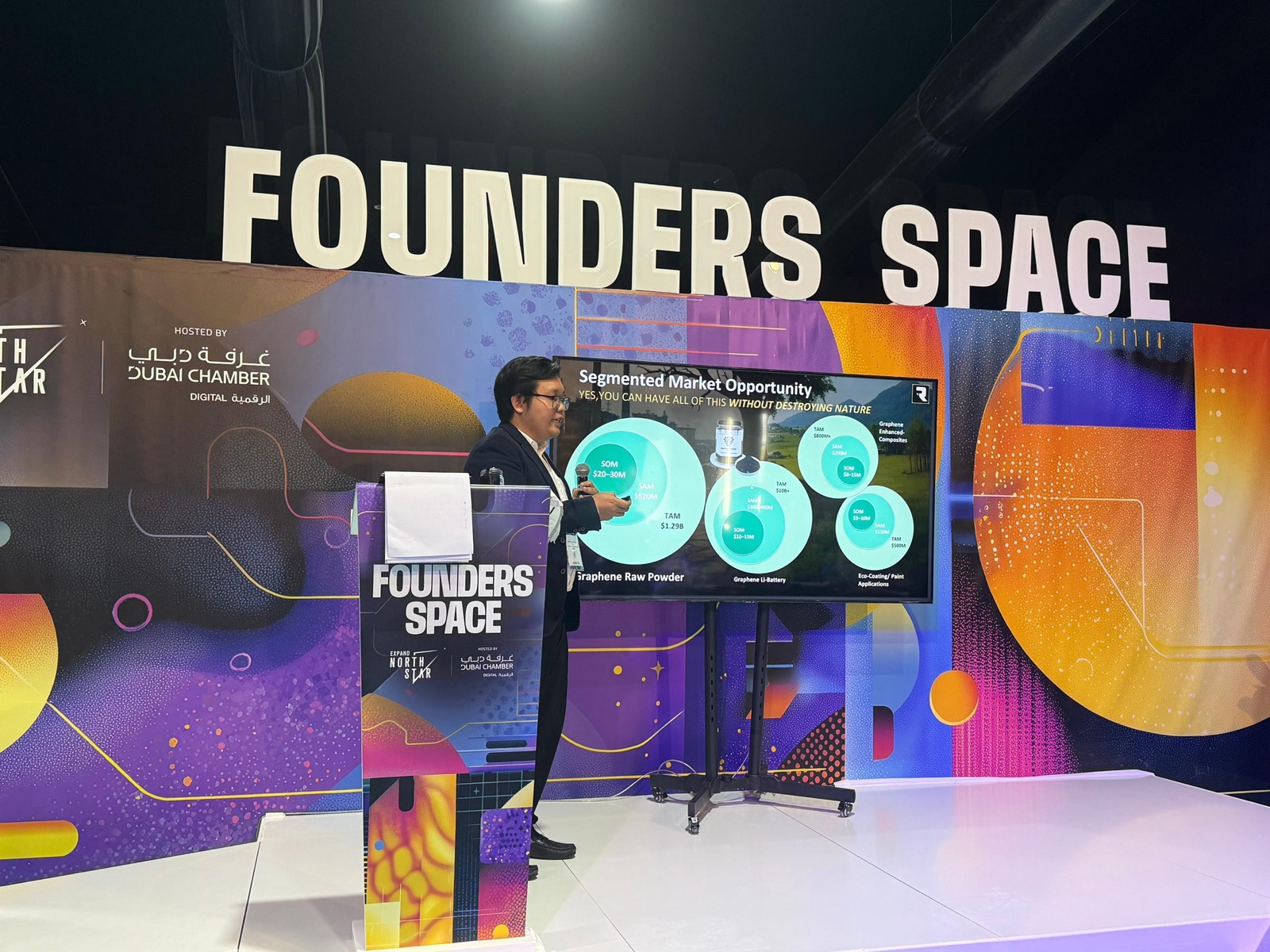
Graphene is a sheet of carbon one atom thick. It is stronger than steel, lighter than almost anything, and carries heat and electricity better than copper. Randy Budi Wicaksono calls it "real-world vibranium", after the metal in the Marvel films.
Randy's company makes it out of plastic rubbish.
What they built
Ravelware Technology is a company in Bekasi, on the edge of Jakarta, Indonesia. It began with sensors. Its first business, which it still runs, is a system of sensors and AI that monitors how productive a factory is, machine by machine, in real time.
Indonesian factories are tough customers. They want top quality at the lowest price. So in 2019 the team went looking for a secret ingredient that would let its sensors beat the competition, and found it in graphene. Graphene made the sensors more sensitive, cheaper to build, and flexible enough to bend.
Then the team noticed something bigger. Graphene is not just good for sensors. It can go into coatings, batteries, concrete and much more. So the secret ingredient became a business of its own, now sold under the name Ravphene.
Garbage in, graphene out
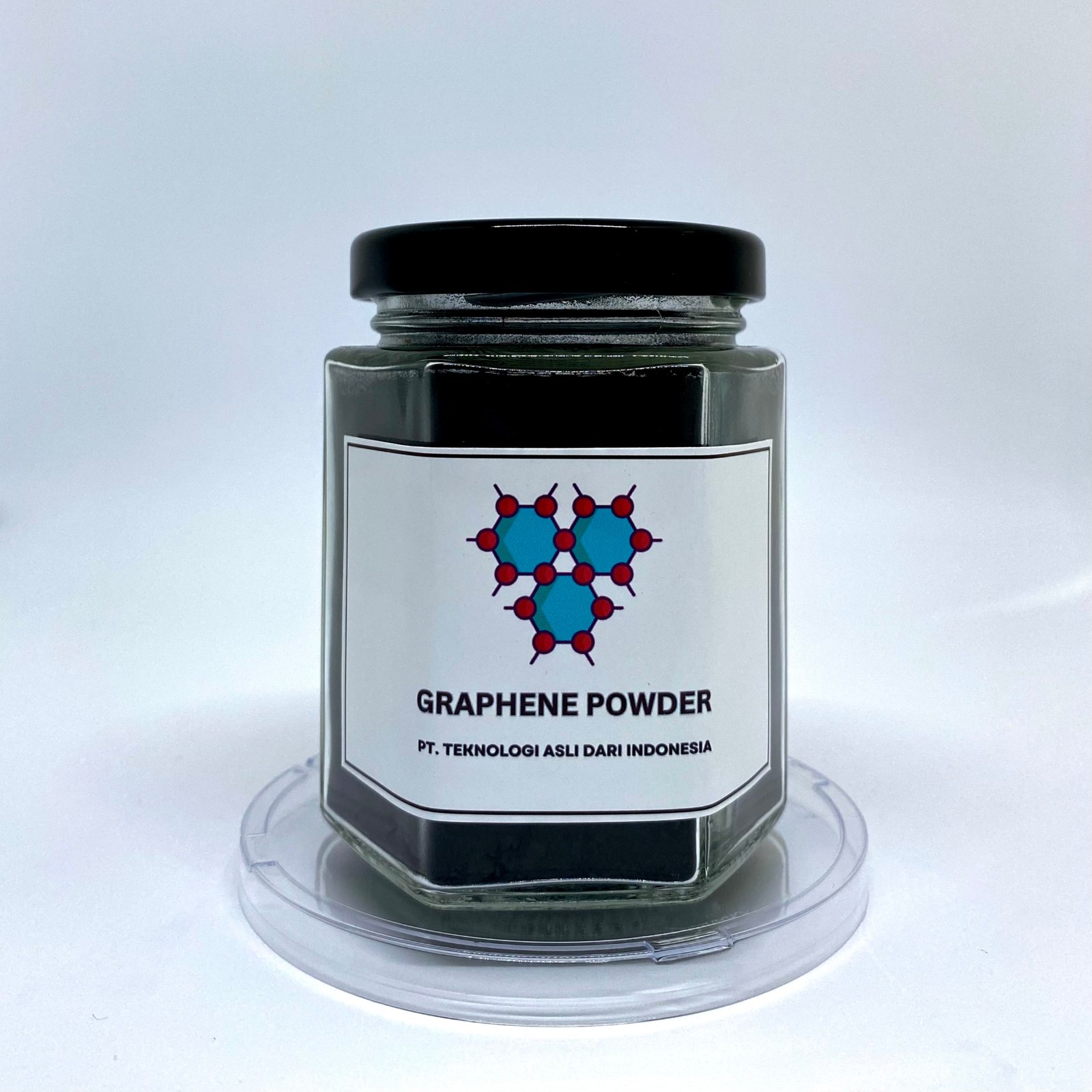
The raw material is plastic waste: drink bottles, food tubs and other everyday plastics. It goes into a machine, and graphene comes out. Randy, a physicist by training, designed and built the machines in-house, drawing on a background in plasma and nanomaterials.
There is no shortage of raw material. Indonesia, Randy points out, is one of the countries that pollutes the world with the most plastic. Ravelware has turned that problem into its supply.
The grade matters too. Graphene comes in about five grades. The top grade, a single layer, sells for around $1,000 a gram and goes into semiconductors. Ravelware makes the second grade, few-layer graphene, which a major lab supplier lists at about $800 a gram. Randy says Ravelware's method cuts the cost of making it by 20 to 30 times. The competitors Randy knows in China mostly make the third and fourth grades, nanoplatelets and reduced graphene oxide, which are different materials. On recent trips to Japan and Korea, Randy did not find anyone making it the way Ravelware does.
Today Ravelware makes about 500 kilograms of graphene a month. A new factory in Indonesia will triple that to about 1.5 tonnes.
Where it goes
The team does not want to sell graphene only as a raw powder. It thinks of graphene as a platform for new products, the next building block for technology. Its work falls into six pillars:
- Advanced protective coatings, which become tougher and last longer.
- Energy storage technologies, such as batteries, where graphene helps move electricity.
- Thermal management. This includes a graphene nano-coolant for data centres. In Ravelware's own lab tests, it brought the temperature down from about 45°C with a normal coolant to about 35°C. Less heat means less money spent on cooling.
- Advanced composites and functional materials, including graphene mixed into asphalt and concrete for roads and paving blocks.
- Industrial fluids, such as grease and drilling mud. Still in testing: a graphene grease that should make the gears inside robots last longer. Grease is something every robot needs replaced regularly, so it is a steady market.
- Aviation and aerospace materials.
Graphene could do much more, water filters among them. For now Ravelware keeps to these six pillars, and it works only with civilian industries.
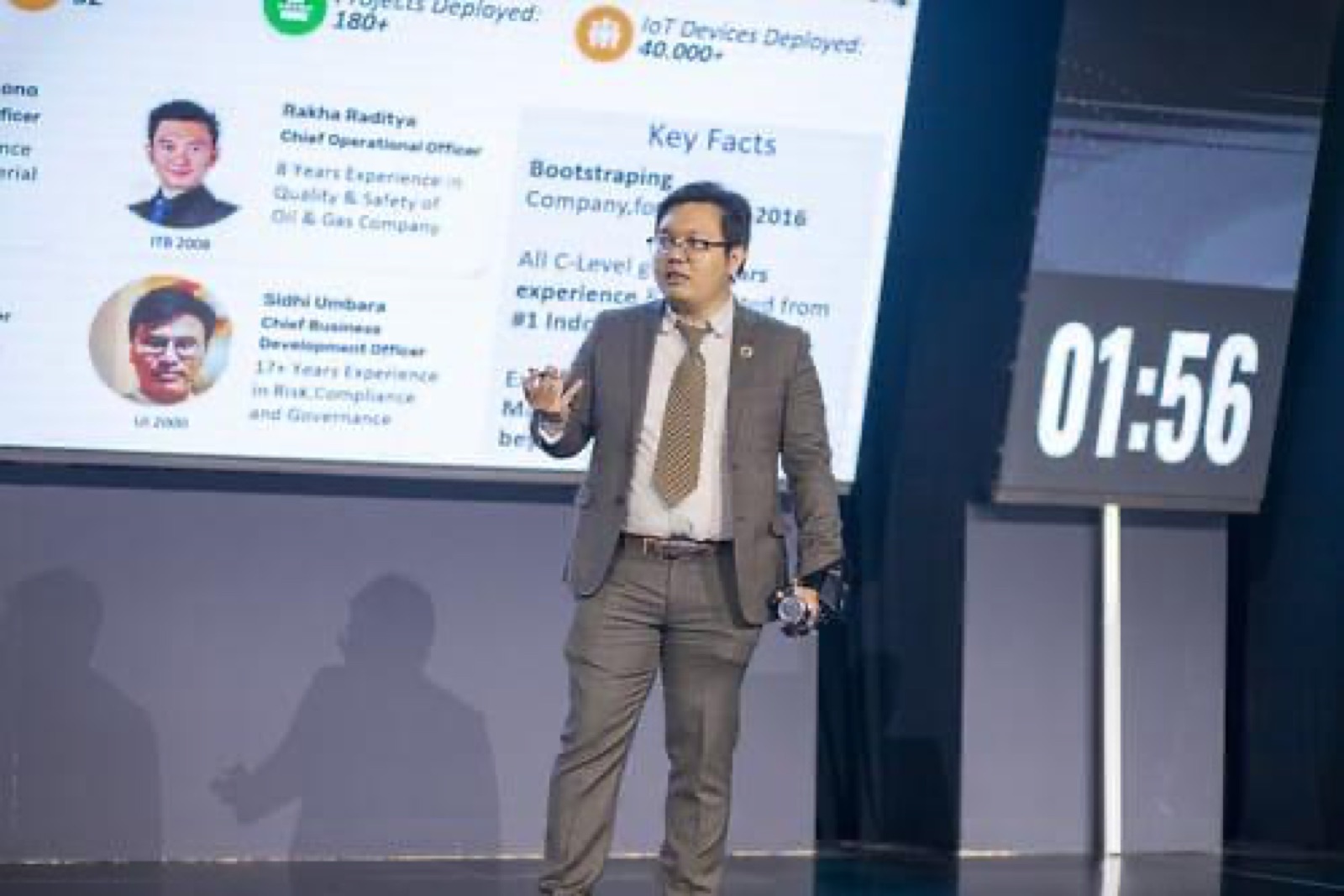
A graphene sensor needs less than a gram. A gram of graphene, Randy explains, takes up about twice the space of a gram of sand.
Ravelware is not alone in betting on the material. NanoXplore in Montreal calls itself the world's largest graphene manufacturer. Black Swan Graphene is also building in Canada. Levidian in the UK makes graphene while cutting carbon emissions, and First Graphene in Australia adds it to cement and concrete. Graphenea in Spain and Paragraf in the UK use it for chips and electronics. None of them starts with a country's plastic waste, and none of them began by making graphene for its own factory sensors.
Proving it batch after batch
Making graphene is only half the job. Big buyers need to know that every batch will be the same as the last one. One of the major graphene companies in Australia is now testing Ravelware's samples for exactly that: consistent quality across batches. A university in Australia has already bought its graphene. Ravelware has no presence in the United States yet.
What they are looking for
Ravelware is raising money and wants strategic investors: people who bring not only money but a network in the industries graphene can serve, such as coatings, shipping, paint and concrete.
Randy also has four specific asks for North America:
- Data centres, and the companies that build their cooling systems. Ravelware's plan is to partner with a cooling company first and then go to the data centres together.
- A research partner in materials science at MIT, to speed up its research and development.
- The space industry, where graphene can coat satellites and help power them.
- Investors with networks in the industries above.
Reach the team through ravelware.co.id.
Why it is bigger than it sounds
This breed of startup made its own secret ingredient to survive a price war, then found out the ingredient was the real business.
Ravelware sold sensors that monitor factories. Indonesian buyers wanted top quality at the lowest price, so in 2019 the team started making graphene for its own sensors. That is where the money is now. Few-layer graphene sells in labs for about $800 a gram, and Randy says Ravelware makes it 20 to 30 times cheaper. The raw material is plastic waste, and Indonesia has more of that than almost any country on earth. Garbage goes in, one of the most valuable materials in the world comes out, and it ends up in coatings, batteries, roads and coolant for data centres.
The formula is worth keeping. When your market forces you to be cheap, the trick you invent to get there may be worth more than the product you sell. Amazon built its computing for itself and it became AWS. Slack began as a game studio's internal chat tool. Shopify was the software behind a snowboard shop.
The bet in one line: making a material is the easy half, and big buyers take years to trust a new supplier batch after batch. That is why the testing in Australia matters. If you are fighting a price war, look hard at what you built to survive it.
What to watch
The first thing is the new factory. Tripling output to 1.5 tonnes a month, at the same quality, is the step from promising supplier to real one.
The second is the Australian test. A clean result on batch-to-batch consistency from a major graphene company would open doors no sales pitch can.
The third is the data centre coolant. Cooling is one of the biggest costs in running a data centre, and a lab result of ten degrees cooler is the kind of number that, proven in the field, sells itself.