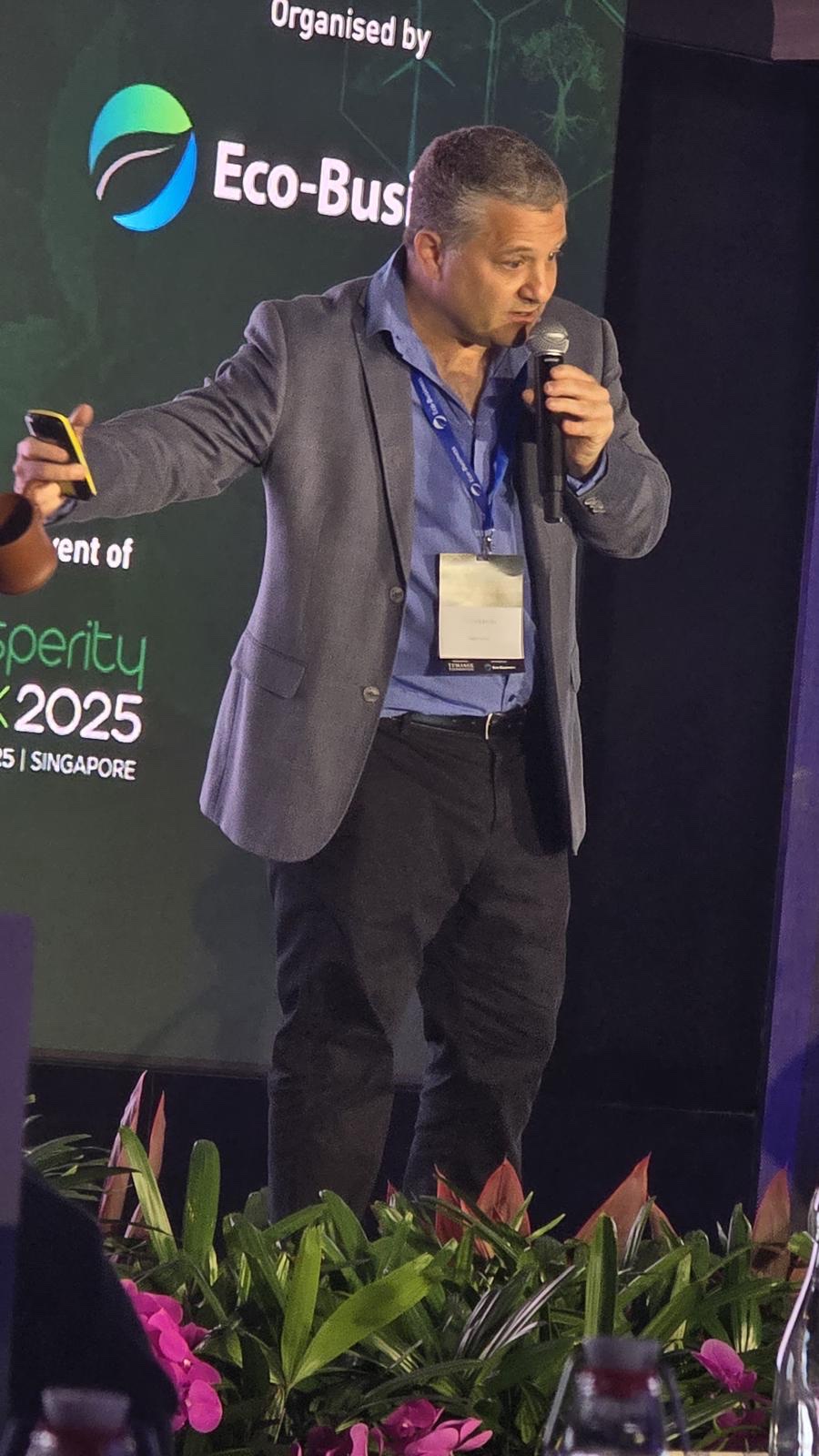
Gilad Lando, Ph.D., the CEO and co-founder of CatAmmon, opens his pitch with two pictures, one of Queen Elizabeth The Queen Mother and one of a used car's catalytic converter, and one question: what connects them? The only answer an audience has ever given him, he told us, is that both are dead. The answer he wants is platinum.
Until the year 2000, he says, most of the world's platinum went into jewellery. The crown made for Britain's Queen Mother in 1937 is platinum. Since 2000, most of it has gone somewhere far less glamorous: the exhaust pipe of your car. Gilad and his team want to take it out again.
What they built
CatAmmon, based near Tel Aviv in Israel, replaces rare metals with ceramics. Its product for cars is called CerAmmon. It is a powder made of nano-ceramics, tiny ceramic particles, and it does a job that today only a handful of very expensive metals can do.
That job happens inside the catalytic converter. A petrol or diesel engine makes carbon monoxide, a gas that can kill a person in minutes. No car can be sold unless it proves it puts out very little of it. So every combustion car, hybrids included, carries a converter: a metal box under the car with a ceramic honeycomb inside. The honeycomb is full of tiny channels, which gives the hot exhaust a huge surface to touch. That surface is coated with a thin layer of platinum, palladium and rhodium, plus a ceramic glue that holds it in place at 400 to 600 degrees Celsius.
Those metals are the catalyst. A catalyst makes a chemical reaction happen fast without being used up itself. Here it turns poisonous carbon monoxide into carbon dioxide before the gas leaves the pipe. Gilad says these precious and rare metals are the only materials that keep working in that heat, wet and dirt, which is why carmakers have used them since 1975. By his count, every combustion car carries between 4 and 7 grams of them.
CatAmmon's website puts the problem in numbers. Platinum costs about $66,000 a kilogram and palladium about $48,000, and both rose by more than 75% in 2025. Gilad adds that rhodium costs three times as much as gold. CatAmmon's ceramic costs about $30 a kilogram in materials, less than a tenth of one percent of the price of platinum. The company says CerAmmon replaces more than half of the precious metal in a converter and cuts the cost of the converter by 35%. That matters, because the converter is 2% to 5% of the cost of building a car, up to 10% for a motorcycle, and the metals are about 70% of the converter's cost.
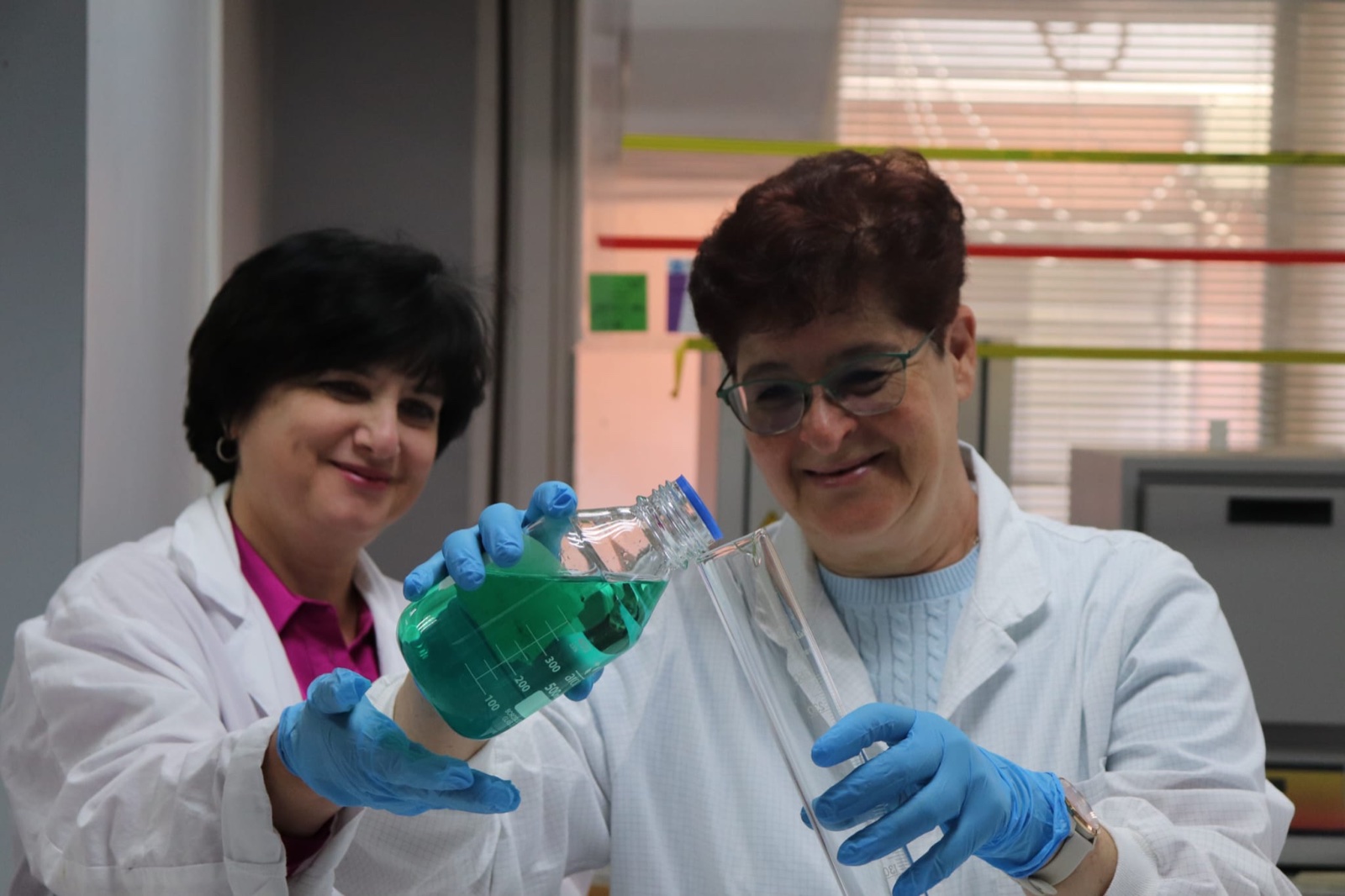
A spoonful from a tonne of rock
The price is only half the problem. Gilad says about 90% of these metals come from just three countries, led by Russia and China. One tonne of ore gives about 3 grams of platinum, palladium and rhodium together, about a spoonful. And by his numbers, making one kilogram of them releases about 40 tonnes of carbon dioxide. "This is not a good place to be for the West," he says.
Most of that metal ends up in cars. Gilad's figures: about 85% of the world's rhodium, 81% of its palladium and 41% of its platinum. Rhodium is so rare, he says, that all of it in the world would fit in a two-room apartment. And the demand only grows, because every few years the rules on exhaust get stricter, and a stricter rule means more metal per car.
It started with ammonia
The name tells the first chapter. CatAmmon is short for catalysis for ammonia. The company was founded at the end of 2024, on five years of academic research, to turn ammonia into hydrogen.
The idea is simple. Hydrogen burns clean but is hard to ship. Ammonia is one nitrogen atom joined to three hydrogen atoms, and it is much easier to move around. The company's website notes it is the world's second most produced chemical. Ship the ammonia, then "crack" it back into hydrogen where you need it. Cracking usually needs high heat and a rare metal such as ruthenium. CatAmmon's ceramic catalyst does it at a lower temperature with no rare metal at all, which is why its 2025 pitch slides carried the line "the coolest ammonia cracking". The company says it can cut the cost of cracking by up to 50%, and it still offers this line under the name CrackAmmon.
Then the hydrogen market stalled. "It's hard to raise money when your only claim is 'I'm in the hydrogen business'," Reef Zalait, CatAmmon's VP of Business Development, told us. The team had to look for a bigger market.
Gilad found it over coffee. He visited a friend, a fellow chemist from his PhD days, and said he wanted to try his ammonia materials in the automotive industry, in place of the rare metals in catalytic converters. The friend asked what was in them and said no, not with this component. Gilad pushed back. They are both chemists, he said, so let us go through the materials again. Then the friend stopped on one part: this one is really interesting. They changed that part to fit what a converter needs. That was about a year ago, and Gilad now calls it one of the most promising technologies for catalytic converters.
Reef insists it was not a flash of luck. "It's not an aha moment," he says. "It's systematic innovative thinking." Take what you already have, and try it somewhere new.
Why the giants missed it
We asked the obvious question. Carmakers and their suppliers have big labs and top researchers, all trying to cut the cost of the converter. Why did none of them get here first?
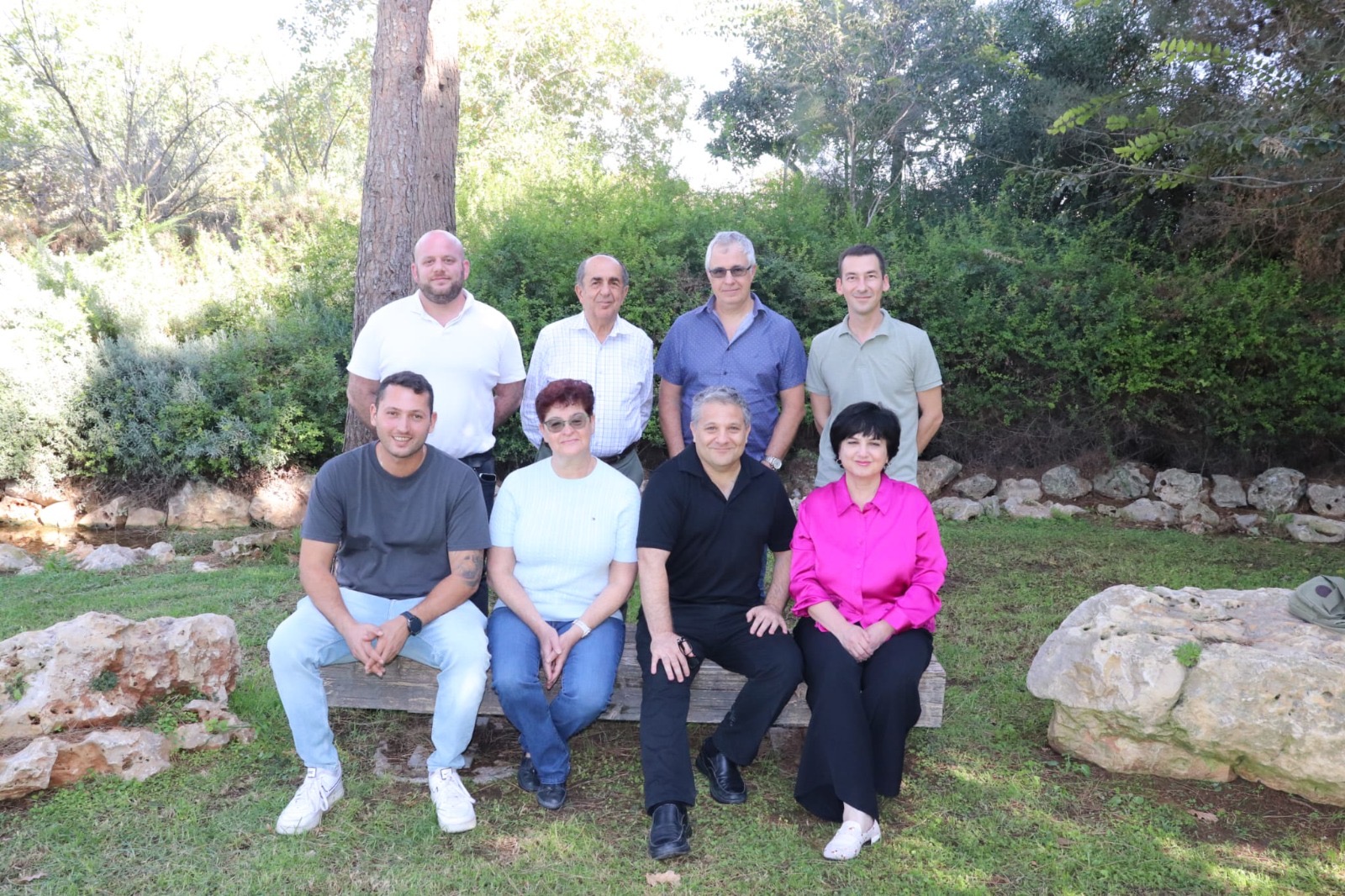
Gilad gave two reasons. The first is the mix of people. The company brings together scientists from ceramics and from the car world, and few labs have both. Its website lists Prof. Michael Zinigrad as chief scientist and co-founder, Gilad as CEO and co-founder, Prof. Alexander Sobolev as lead physicist and co-founder, Ron Loew as CTO, Nino Borchtchoukova as VP of R&D, and Reef on business. The second is that CatAmmon did not look for this either. The material was built for a different job, and putting the two together was a surprise.
The company holds its own intellectual property, and the recipe is hard to copy. "I'm the CEO and I don't understand it enough to copy it," says Gilad, who holds a PhD in chemistry. Reef, who calls himself a pure business guy, is even safer: "Even if you torture him, he won't answer," he jokes about himself. Gilad told us that when the team named one of its ingredients to a large industry supplier that makes this kind of material, the supplier did not recognise it and asked for a sample.
Why Michigan
CatAmmon does not sell to drivers. It sells to carmakers and to the big Tier 1 suppliers that build parts for them. "We are already talking with the industry," Gilad says, naming Ford and GM among others. The most interested, he says, are in the United States.
The reason is the rules. The US is moving to stricter exhaust standards, which the team calls EPA Tier 4. Stricter results mean more precious metal per car, and maybe a bigger converter or two of them. That can mean redesigning the underside of the car and building a new production line. A converter that does more with less metal could save a carmaker all of that, which is why CatAmmon is talking to the carmakers themselves and not only to their suppliers.
Two months before we spoke, Reef says, Ford picked CatAmmon for one of its pitch days for new technologies: 7 companies out of about 400. Gilad flew over to meet senior executives. Reef was in Michigan a couple of months ago and came back with good feedback from carmakers and local industry.
So the plan is to build the company there. Israel makes many things, Gilad says, but not cars. Research and development will stay in Israel, and production will probably be in Michigan. He is honest about the clock: replacing a metal inside a car takes at least two years of testing, so real sales come after that. The companies running the tests today are the customers of tomorrow.
Where it sits
The catalytic converter has been a business for big chemical companies for decades. Umicore in Belgium, Johnson Matthey in Britain and Cataler in Japan make the catalyst coatings that go into car exhausts, and CDTi develops catalysts and coatings to cut engine emissions. CatAmmon's first field, ammonia, is busy too. Amogy makes ammonia cracking catalysts and power systems that run on ammonia, H2SITE in Spain turns carriers like ammonia back into pure hydrogen, Duiker Clean Technologies in the Netherlands builds ammonia-to-hydrogen systems, and GenCell makes fuel cell power that runs on ammonia. At the other end of the chain, Tsubame BHB in Japan uses new catalysts to make ammonia at low heat and pressure, while Atmonia in Iceland and Jupiter Ionics in Australia make it from air, water and electricity. Pajarito Powder in New Mexico works on catalysts for fuel cells and electrolysers.
The big converter makers still build their coatings on platinum, palladium and rhodium, and the ammonia companies are chasing a hydrogen market that has slowed down. What none of them does is take a cheap ceramic built for ammonia and put it into the exhaust of the ordinary petrol and hybrid cars on the road today, to pull out more than half of the precious metal already there.
What they are looking for
CatAmmon is at the seed stage, with no paying customers yet. It has already raised $2 million in a pre-seed round, and its website points to a news story on NetZero Tech Ventures backing the company. Now it is raising a $5 million seed round, but only $3 million of that as equity. The other $2 million is to come from European and international grants, which cost no shares. Gilad says he has won grants about 12 times, more than $10 million in all, without a single miss, and Reef's job at EY was helping companies apply for them. From North American readers, CatAmmon wants:
- Investors for the $3 million of equity, especially in the United States, where Gilad says most of the world's venture money is.
- Carmakers and Tier 1 suppliers ready to test CerAmmon in their converters as stricter US rules arrive.
- Partners in Michigan for the move from Israeli research to American production.
CatAmmon pitched at the finals of the Climate Solutions Prize 2026, and the video of that pitch is on YouTube. Reach Reef at reef@catammon.co.
Why it is bigger than it sounds
This breed of startup is very smart: it goes after the most expensive ingredient in a part the buyer is forced by law to buy.
No carmaker chooses to fit a catalytic converter. The law makes it, and the law keeps getting stricter. The price of the metal inside is set by mines in Russia and China, and in 2025 it went up by more than three quarters. So the carmaker pays more every year for something it cannot leave out. CatAmmon's powder costs about $30 a kilogram to make. The metal it replaces costs $66,000. The money sits in the gap between those two numbers: CatAmmon can charge far less than the metal it replaces and still earn a very good margin on every car. And every new rule that forces more metal into each car makes its offer bigger, not smaller. The regulator is doing its sales work.
The formula: find an ingredient that is rare, mined in a few unstable places and required by law or by physics, and replace it with something cheap and plentiful made in a friendly country. Sell it as a cost cut, not as a green product. The same play fits the rare earth magnets in electric motors and wind turbines, the iridium in hydrogen electrolysers, the platinum in fuel cells, the cobalt in batteries, the gallium and germanium in computer chips, the indium in touchscreens and the helium that cools hospital scanners. Whoever builds the cheap replacement first has a buyer already waiting.
The risk in one line: electric cars carry no converter, so CatAmmon has to win the petrol, diesel and hybrid market through at least two years of carmaker testing before that market starts to shrink. If you build cars or parts for them and the next round of exhaust rules worries you, or you invest in materials that cut the West's dependence on Russian metals, this is a team to call.
What to watch
The first thing is the seed round: who leads the $3 million of equity, and whether the $2 million in grants arrives alongside it.
The second is the first converter test with a US carmaker. Ford has already seen the pitch. A signed test with Ford, GM or a Tier 1 supplier would be the proof the rest of the industry waits for.
The third is Michigan. A CatAmmon production site there would turn an Israeli lab result into an American supply chain, at a time when the West wants to depend less on Russia for its metals.