Building software for healthcare is a slow, careful business. Every screen touches a patient, every database holds private records, and every feature has to pass laws that keep changing, now more than ever with AI. Most software companies treat healthcare as one client industry among many. Light-it decided early that it would be the only one.
The company is based in Montevideo, Uruguay, about 8,500 kilometres from New York, with a second office in Buenos Aires, Argentina. Almost all of its clients are in the United States and Canada.
What they do
Light-it calls itself an end-to-end digital product partner for healthcare. It started, in its CEO's words to Forbes Argentina, as "a generic software development company." Today it works only in health, and it can take a product from an idea to the market.
A typical client is a doctor, a clinician or an entrepreneur with an idea in mental health, chronic pain, cancer or another condition. Light-it helps them work out whether the idea has a market, which technology it needs, and what a first version should look like. It builds that first version, often so the founders can raise money, and stays with them until launch. "We can meet you where you are," says Macarena Balparda, Light-it's head of marketing, who spoke with us. A client can hire it for the whole journey, or only for the engineering, or only for the design.
Its capabilities deck lists the rest: product strategy and advice, engineers placed inside a client's own team, data pipelines for AI, and the hard plumbing of healthcare, such as moving patient records between electronic health record systems and connecting to them. It says it has shipped more than 140 health products and won more than eight industry awards. Its website names clients from Roche and Best Buy to the University of Colorado and the AB InBev Foundation, and digital health startups such as Talkiatry, Metabolic Psychiatry Labs, Mavida Health, Little Otter and Elektra Health.
Macarena says Light-it has watched some of its clients grow from their first seed money to Series B and C rounds. In some cases it goes further and invests its own work in a project it believes in, taking a share of the company instead of cash.
From a garage to four offices
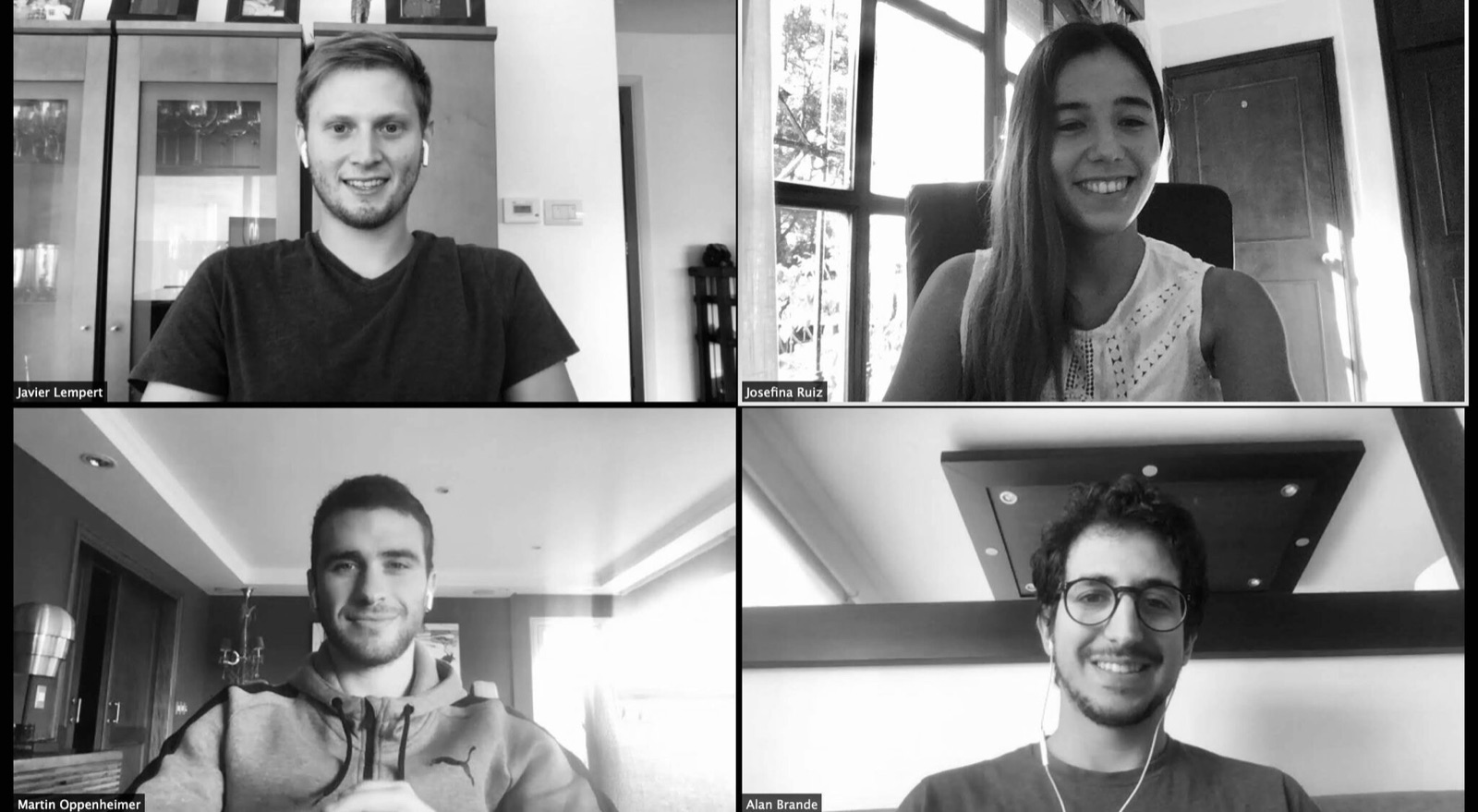
Light-it was founded in 2019 by three close friends from school: Alan Brande, the CEO, Martín Oppenheimer, the COO, and Javier Lempert, the CTO. They were all 24. Macarena tells it as the classic story, in a mom's garage, with the founders just out of university. All three are Uruguayan. They are based in Uruguay and travel constantly to the US.
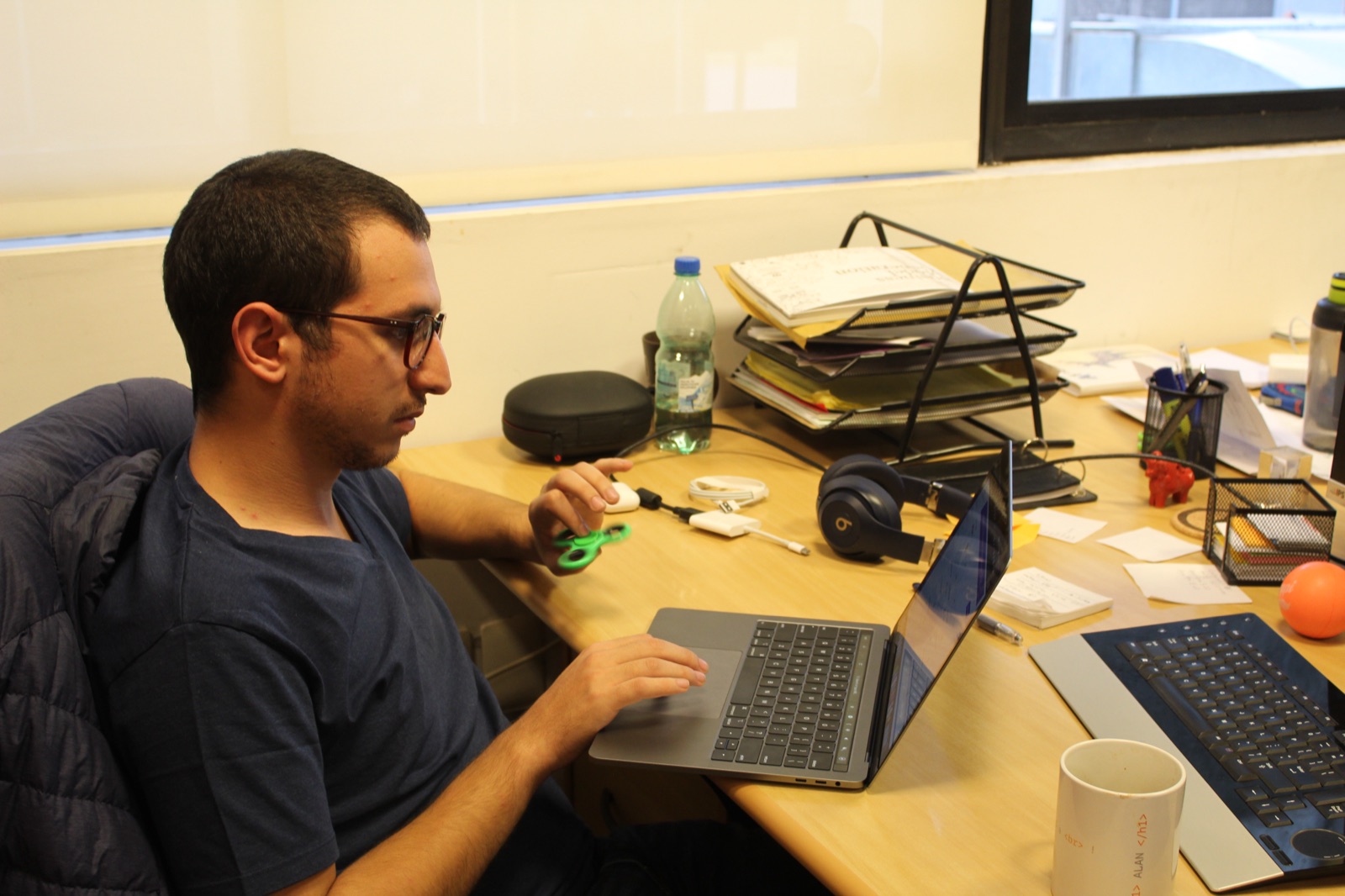
The company grew up in Ingenio, a government-backed incubator in Montevideo supported by Uruguay's National Agency for Research and Innovation. Ingenio gave the founders office space, a place to work and mentors. Once they were ready, they moved into offices of their own.
The company never raised outside money. It grew on what its clients paid. Today it has offices in Montevideo, Buenos Aires, New York and Aventura, Florida, and people in Toronto, where its Managing Director for North America, Dael Stewart, is based. The team is now 180+ people, and it is hiring. Most of the team is in Montevideo and Buenos Aires.
Alan once could not decide between studying medicine and studying technology. By middle school, he was already running his own hardware import business. Healthcare became the way to do both. The founders chose to focus 100% on healthcare and will never let another industry in. "He's really purpose-driven," Macarena says.

Compliance in every job
Asked what makes Light-it different, Macarena does not start with the code. She starts with the rules. Healthcare has "a lot of laws, a lot of certifications," she says, and with AI "everything's changing." So healthcare compliance and governance are part of onboarding for every new hire, from designers to software developers to business developers. Over the years, Light-it has hired clinicians to add a healthcare-native layer to its teams. Many of its clients are clinicians themselves or have clinical teams of their own, and Light-it works hand in hand with them on every project, keeping clinical judgment at the center of every product decision.
The deck makes the same point in its own words: "We're strategic partners, not vendors. We help you decide what to build, not just how." Its engineers, it says, know HIPAA, the US health privacy law, and the data standards HL7 and FHIR from their first day. It has its own building blocks for the hardest parts, such as security set up for HIPAA, moving data between record systems, and patient portals. It also uses AI inside its own work, with what it calls its own agentic harness for building software, with compliance built in from the start.
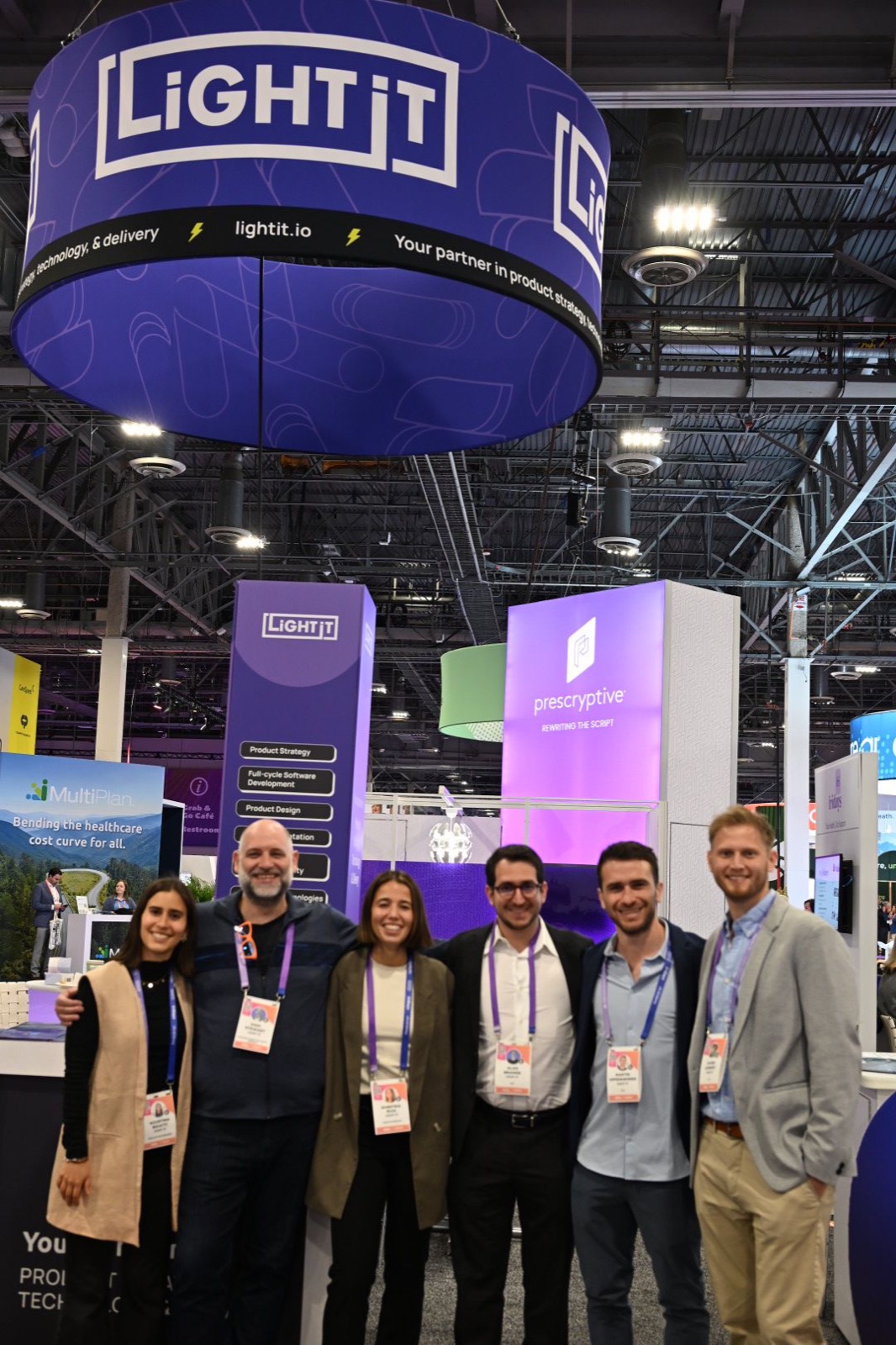
The team goes to every conference it can. Now, Macarena says, the conferences invite it to speak. Last year it hosted a workshop at New York University, and it has mentored startups and run workshops at NYU, Cornell University and in California, among others.
An agency that grew an ecosystem
The agency is now the centre of a small group of companies. In a LinkedIn post in October 2024, Alan described how it happened. Light-it's early success paid for Digital Health Insider, a newsletter and community about digital health. The newsletter drew founders to Enlighten Capital, an early-stage micro-VC that had been running quietly and invests only at the pre-seed stage. Startups that Enlighten backs can use Light-it's engineers. One of them, Puppeteer, an AI platform that lets healthcare companies use patient-facing AI safely, built its first version with Light-it.
The group also builds its own products. CompliantChatGPT is an AI assistant for medical teams that is built for HIPAA. ClinicFrame is an AI medical scribe that writes up clinical notes.
Its newest project, OpenCPR, launched in October 2026. It aims to democratize hands-only CPR training worldwide by releasing, for free, the code behind a CPR training kiosk that connects to a training manikin. The software represents several thousand dollars' worth of development hours. Within days of launch, it had already drawn interest and its first code requests from nationwide training programs.
Macarena knows of health-only software firms, health-only venture funds and health media. She does not know of another company that puts all of them together.
Why Uruguay
Uruguay is a small country of about 3.5 million people between Argentina and Brazil. Macarena describes it as the most trusted democracy in Latin America. "It doesn't matter who will win," she says. "Everything is super stable here." People are moving there from Europe, Argentina and Venezuela because it is safe. It is also, she admits, quite expensive.
For a company that sells to North America, the time zone matters as much as the stability. Montevideo is one or two hours ahead of New York, so a team there can work the same day as its clients, in daily stand-ups and on the same Slack.
Where it sits
Few companies build software only for healthcare, and fewer still combine it with media and investing. The closest peers each cover one piece of the model. Rock Health in San Francisco combines a health-only venture fund with research and a founder community. Out-Of-Pocket grew from a health care newsletter into courses and a community. And Globant, founded in Buenos Aires, showed long ago that a South American software company can build for the biggest names in North America.
What Light-it adds is the combination: the agency, the newsletter, the fund and the products, all in one industry, all fed by the same team.
What they are looking for
Asked what Light-it wants from North American readers, Macarena did not say investors. She said startups.
- Healthcare startups in the United States and Canada that need a team to design, build or scale a product, at any stage.
- Founders who want mentoring. Light-it is happy to mentor health startups and to run workshops with universities, incubators and accelerators, as it has at NYU, Cornell University and in California.
- Health organisations with AI, data or record-system projects that have to meet HIPAA and enterprise security rules.
Reach the team at lightit.io or hello@lightit.io.
Why it is bigger than it sounds
This breed of organisation is a services company that never leaves its industry, and uses that focus to grow a whole ecosystem around itself.
Most software agencies sell hours, so they chase any client who pays. Light-it gave that up. Because it only does healthcare, every project teaches it more about the same laws, the same record systems and the same buyers. That knowledge is what clients pay for, and it gets harder to copy with every product shipped. It is also why the agency could become more than an agency: the newsletter gives it an audience, the audience brings founders, the fund invests in the best of them, and the agency builds what they need.
The money comes in layers. Service fees from US and Canadian clients pay the bills today. A share in some clients, taken for work instead of cash, and the pre-seed stakes through Enlighten could pay much more later. Its own products, such as ClinicFrame and CompliantChatGPT, turn what the team learns into software it owns. And because the team is in Uruguay and Argentina, in nearly the same time zone as its clients, it can do all of this at a cost and a pace that a team in Boston or San Francisco would struggle to match.
The formula: pick one regulated industry and never leave it, teach every hire its rules, sell to the richest market from a stable country in the same time zone, and turn what you learn into media, a fund and products of your own. The same play fits insurance, banking compliance, energy and power grids, legal services, food safety, and medical devices, and it could be run from Costa Rica, Colombia, Chile, Mexico or Canada's own smaller cities for the US market, or from Portugal, Poland or Estonia for Europe.
The risk in one line: AI is making software faster and cheaper to write, which squeezes any company paid for building it, so the fund, the products and the know-how have to carry more of the value over time. If you are building a health startup in North America and need a team that already speaks HIPAA, this is a team to call.
What to watch
The first thing is the products. CompliantChatGPT is already profitable, and its revenue grows month over month, with two people dedicated to it full time and a technical team of more than ten. If it, or ClinicFrame, grows into a business of its own, Light-it becomes much more than an agency.
The second is Enlighten. Its first pre-seed bets will show whether the newsletter, the fund and the agency really feed each other.
The third is AI. Light-it is already building with its own AI tools. How it prices work that takes fewer hours will shape what kind of company it becomes.