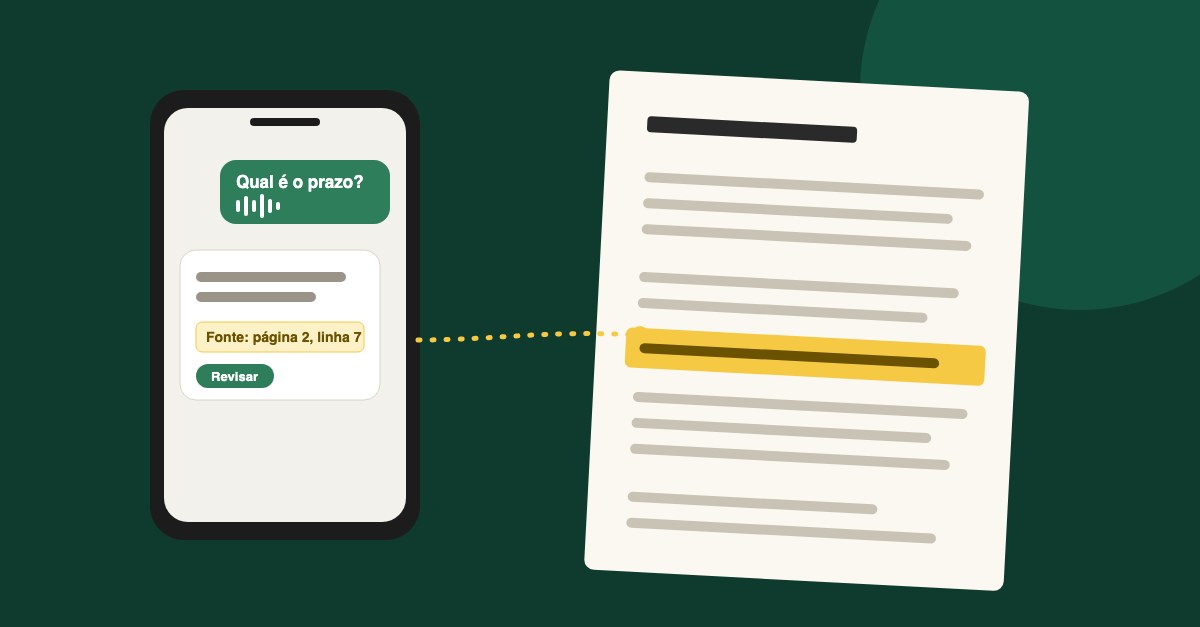
Diego Rocha de Oliveira is building an AI assistant on his own, in Tanhaçu, a small town in the interior of the Brazilian state of Bahia. He has no team, no investors and no customers, and he says so plainly. What he has is a clear idea of the first job his assistant should do, and a rule he will not break: every answer has to point back to where it came from.
His project is called OLIVER AI, under the name DRAGON. It is an experimental assistant for Android phones and Windows computers that you can talk to in natural Brazilian Portuguese. Diego answered our questions in writing, in Portuguese, "to preserve the nuances of the project", he said. The quotes below are our translation.
How it started
OLIVER began as Diego's own project to build an assistant that could hold a natural conversation in Brazilian Portuguese and, with the user's permission, do work on a phone or a computer. He builds it from Tanhaçu with open-source tools and the equipment he already owns.
He is unusually open about where it stands. "Instead of presenting a finished company, I prefer to show the real process of building, including the failures," he wrote. OLIVER is pre-product, pre-MVP and pre-revenue. There are no paying customers. He has not raised any money, and no formal investment round is currently set. He is open to exploratory conversations with investors and partners.
What he has built
There are experimental interfaces for Android and Windows. Diego has tested pieces on their own: speech recognition and speech synthesis in Portuguese, local AI models that run on the device, contextual memory so the assistant remembers what was said, and tools and agents that act only under a person's supervision.
He is just as clear about what does not work yet. "That does not mean everything works together reliably," he wrote. The hardest parts are still ahead: a full voice conversation from start to finish, the delay before an answer, recognising speech in real conditions, handling interruptions, waking the assistant by voice, and making the phone and the computer work together reliably.
Why documents, and why sources
Diego started with a big goal, a general assistant, and then narrowed it. "I realised that promising a general assistant for everything makes it hard to say, in a way anyone can check, what actually works," he wrote.
So the first use case is small. Helping someone find information in a document is a task with edges. He can compare the answer with the original file, show the passage the answer came from, measure the mistakes, and require a person to review the result. "I want to start with a small, testable use before widening the scope."
Document assistance is the first planned use, not the end goal. Diego's long-term vision is a personal AI assistant with natural voice interaction, contextual memory, multiple AI models, supervised autonomous agents, local AI processing where feasible, and Android and Windows integration. He describes these as development goals, not claims of completed functionality.
The first person he wants to test it with is a self-employed worker or micro-entrepreneur in the Brazilian interior who receives documents and needs to find a deadline, a responsibility or one important detail. Today that person searches the file by hand and checks the passage. With OLIVER, the plan is that they ask a question by text or by voice, get an answer linked to the passage in the source, and review everything before anything happens. Diego is careful to call this the planned scenario. It is not a finished feature, and he has no validated users yet. "It would be wrong to present anyone as a current user," he wrote.
Why Brazilian Portuguese, on modest hardware
"I want a person to be able to speak naturally, without changing their accent or depending on an expensive computer," Diego wrote. Privacy matters to him, and so does running on the device where possible, with a weak connection and limited memory. He does not claim the big assistants fail at all of this. He is testing one specific slice: natural Brazilian speech, sources you can see, and actions a person approves.
Building alone outside the big startup cities shapes how he works. There is no engineering team and no budget for paid infrastructure, so he reuses open-source software, logs his tests and moves in small steps. The upside, he says, is that he can stay close to the needs he wants to study, in Brazilian Portuguese.
Where it sits
Several companies are already working on parts of this. Maritaca AI, from Brazil, builds language models for Portuguese and offers them in a chat and through an API. Blip, also from Brazil, sells conversational AI to large brands. Zapia is an assistant you ask "like you'd ask a person", which connects to your apps and acts after you confirm. Humata turns a company's documents into a knowledge base that answers questions, and ChatPDF lets anyone chat with a PDF. For running AI on your own machine, Jan is an open-source alternative to ChatGPT that runs models locally, and Ollama makes it easy to run open models on a computer.
Each of them covers one piece: Portuguese, or documents, or running locally, or acting on your behalf. Most are built for companies, for English first, or for people with a good computer and a good connection. None of them starts from a self-employed worker in the Brazilian interior, talking in their own accent on the phone they already own, and getting an answer that points to the line it came from.
What he is looking for
Success in the next six months, for Diego, is a small flow he can demonstrate and repeat: a question by voice or text, an answer from a document that shows its source, and a person who reviews it, with tests for accuracy, response time and recovery from errors. After that, a supervised trial with volunteers who give clear consent. He does not consider any of this done, and he has no adoption numbers to share.
Diego is open to exploratory conversations with angel investors, pre-seed investors, grant providers, technology sponsors, accelerators and strategic partners, although no formal investment round is currently established. He would also like to hear from international investors, technology companies, accelerators, sponsors, developers and infrastructure partners interested in supporting an independent Brazilian AI project.
From readers, he also wants:
- Self-employed professionals and small service providers in Brazil willing to explain how they deal with documents today.
- Volunteer testers who speak Brazilian Portuguese, to test the voice side.
- Technical reviewers who work on speech recognition, accessibility, privacy or AI that runs on the device, ready to question his technical choices.
- Testing resources or small grants with no financial strings, where he is eligible.
"The most valuable thing is concrete feedback on something small that really works," he wrote.
Why it is bigger than it sounds
This breed of founder is very smart: instead of promising an assistant that does everything, he starts with the one job where every answer can be checked against its source.
Follow the money. The people Diego wants to serve, self-employed workers and micro-entrepreneurs in the interior, lose money on documents: a missed deadline, a clause nobody read, a fine that arrives later. They will not pay for an assistant they cannot trust, and a general assistant that answers everything gives them no way to check it. An answer that points to the exact line in the document can be checked at a glance, and that is what earns trust, one answer at a time. Running on the phone they already own keeps the cost close to zero, with no cloud bill for each question. And the big assistants serve the interior of Brazil last, in a Portuguese that is not quite how people there talk.
The formula: shrink the AI to one task where every answer can be traced to a source, in the user's own language and accent, on the device they already have. The same play works for rental contracts and utility bills in the outskirts of any big city; for school notices that parents have to act on; for the tax and registration letters that small businesses receive across Latin America; for farm loan and insurance terms in rural areas; for the medicine leaflets older people struggle to read; and for Portuguese speakers in Angola and Mozambique, Spanish speakers in rural Latin America, and speakers of regional languages in India and Indonesia, wherever the big assistants arrive late. If you build in one of those places, the lesson is to start with the task you can prove, not the one that sounds biggest. This is our opinion, not a claim Diego makes.
The risk in one line: OLIVER is one person working on modest hardware, voice is the hardest part he has not solved, and the big assistants keep getting better at Portuguese every year.
What to watch
The first thing is the demo. A small, repeatable flow, from a spoken question to an answer with its source and a person's review, would turn OLIVER from a set of experiments into something people can try.
The second is the first volunteers. A supervised trial with real self-employed workers in Bahia, with clear consent, would show whether the answers save them time and whether they trust them.
The third is help. A few experienced reviewers in speech, privacy and on-device AI could save a solo builder months.