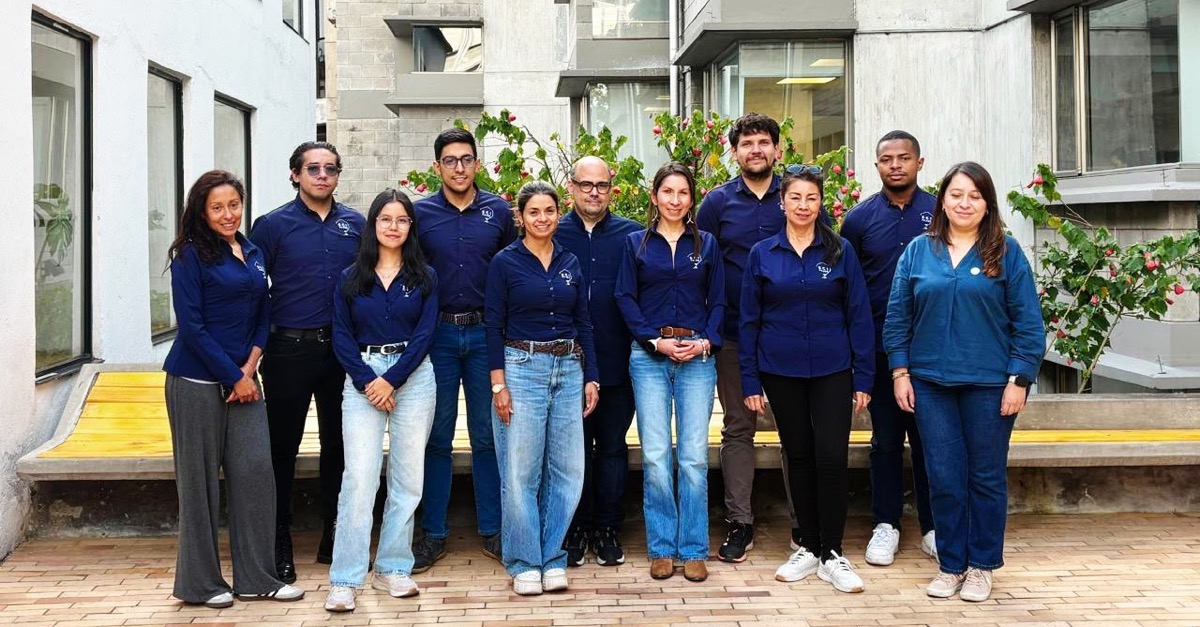
In 2014, a group of master's and PhD students at Universidad de los Andes, in Bogotá, was studying viruses that kill bacteria. They wanted to help people whose infections no longer respond to antibiotics. But regulation for this technology in humans was a major hurdle, so they decided to start with animal health instead. Chickens became the starting point, and ultimately the foundation of the business.
That work became SciPhage. Martha Lucia Cepeda, its technology transfer manager, says its product has now been validated in more than 28 million birds in Colombia over about two years, working with around 15 poultry companies. It is the first startup from Colombia that we have interviewed.
A missile for one bacterium
Bacteriophages, or phages, are the natural enemies of bacteria. "Think of them as biological missiles that pinpoint bacteria specifically," Martha says. Each kind attacks its target and leaves the bacteria around it alone, "like a magic bullet."
The group began with human health and bacteria that resist antibiotics, which Martha calls "the next pandemic." A UK-commissioned review led by the economist Jim O'Neill estimated that drug-resistant infections could kill about 10 million people a year by 2050 if nothing is done.
The moment it worked
They developed a phage cocktail for poultry, patented by the university in Colombia, the United States and Brazil, and licensed to SciPhage, the startup they founded.
The first product aimed to use phages to reduce the Salmonella load that reaches the people who eat the chicken. The team soon realized it worked very well: it also improved production without affecting the chickens' microbiome.
What they built
The poultry product is SalmoFree, a mix of phages aimed at different strains of Salmonella. According to the company's website, it goes into the birds' drinking water and is made for broilers, breeders and laying hens. The site lists two more products: BACTIVE-S, against Salmonella on food and surfaces, and WeisFree, for trout, developed with CORPAVET.
A grant from the Colombian government in 2024 let SciPhage test with producers, Martha says. Three of the roughly 15 poultry companies it works with are among Colombia's top 10 agribusinesses. Producers want Salmonella under control, but Martha says they get something else too: more eggs per hen and more weight gain, so a better return on what they spend.
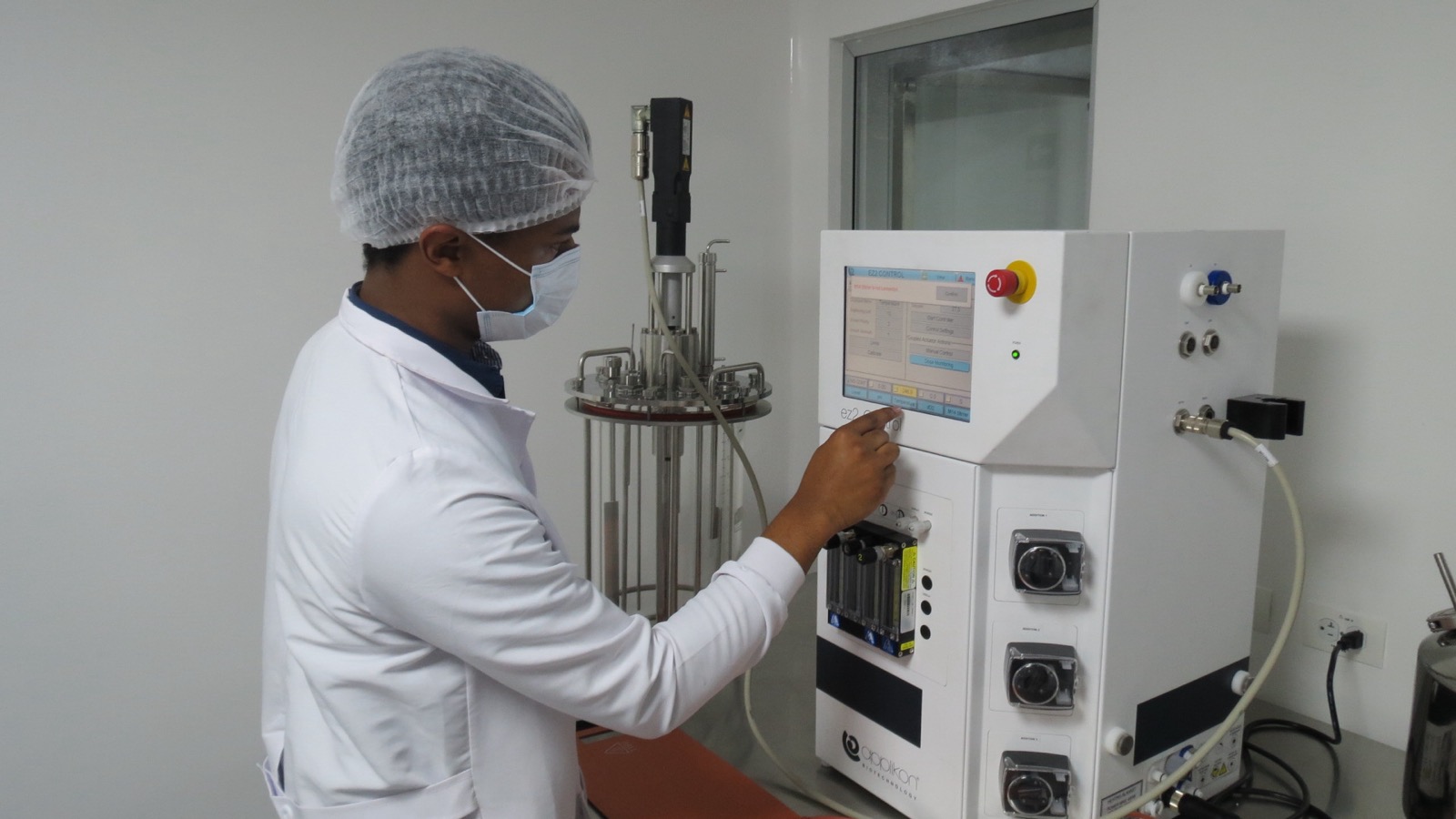
SciPhage also built what Martha describes as Colombia's first phage-producing plant, and perhaps Latin America's biggest. It is in Mosquera, about 20 minutes from Bogotá. The team uses data analytics and an AI chatbot to gather numbers from producers and improve the product.
Why now
Europe is changing what it accepts from abroad. Under EU rules, animals raised for food cannot be given antimicrobials to make them grow faster or yield more, or the ones reserved for treating infections in people. From September 3, 2026, those rules apply to a list of countries allowed to export animal products to the bloc, The Brussels Times reported. "The world has to find alternatives to antibiotics," Martha says. "It's a perfect 'why now', and it's even better when you're improving productivity for the producers."
Regulation is also the hard part. Is Colombia an advantage for a company like this? "I'd say 50/50," Martha says. The whole poultry chain is close by, with small, medium and large producers, but the rules for such a new technology have been a challenge. Brazil is further along. Martha says SciPhage has been granted registration there as an ingredient, which could open a much bigger market.
The team
SciPhage has 15 people. Martha says there are three founders, two women and one man, and that the core team is those three plus two more, among them Viviana Clavijo as executive manager and Santiago Hernandez as scientific and production director, both with PhDs. Recently, Viviana, SciPhage's CEO, was named Woman Entrepreneur in Agribusiness 2026 in Colombia.
In October 2026, SciPhage won the World Food Prize Foundation's Innovate for Impact Challenge, chosen from more than 1,500 applications from over 100 countries. It is also listed first among Colombia's deep science startups in the Global Innovation Index 2026. Martha says it was recognized as the country's most innovative startup of 2025.

Where it sits
Several companies are putting phages to work. PhageLab, with offices in Chile and Brazil, makes "sustainable and tailor-made solutions" to control bacterial outbreaks. Cytophage develops phage products against bacterial infection. Phagos builds "foundation models to end bacterial disease". Unifahs offers phage-based solutions for food, animal and human safety. PhageGuard, from the Netherlands, uses phages to eliminate food pathogens, and Intralytix, from the United States, describes its work as "targeted protection". In people, Micreos, from Switzerland, works on precision elimination of disease-driving pathogens.
So phages are not SciPhage's alone. What it brings is its own plant and a home market where, by its account, the product has already been through more than 28 million birds.
What they are looking for
SciPhage is raising a seed round. Colombia is its first market, and Brazil is the next one it has in sight.
Investors can reach the team at transferencia@sciphage.com.
Why it is bigger than it sounds
This breed of startup is very smart: it set out to solve the hardest problem in medicine, and when the rules for people stood in the way, it found a customer in animal health who could pay much sooner.
Follow the money. Nobody pays a poultry farmer to worry about a pandemic in 2050. The farmer pays for more eggs, heavier birds and fewer problems with Salmonella, and can count all three. So the farm pays for the plant, the production and the data, and the world gets a little less antibiotic use on the side. The public good rides on the private gain, and that is the only way it scales.
The formula: when your science is stuck behind the slowest market, look for the nearest market with lighter rules and ask if it would buy now. The same play works for gene tests built for people and sold first to cattle breeders; for wound care sold to horse clinics; for sensors sold to dairies before hospitals; for microbiome products sold to fish farms; for vaccines sold to pig producers; for cancer tools sold to pet hospitals; for disease models sold to seed companies; and for water tests sold to shrimp ponds before cities. If you have a lab result waiting years for approval in people, your first customer may be one market over. This is our opinion, not a claim SciPhage makes.
The risk in one line: living products need approval country by country, and SciPhage's rivals are after the same farms.
What to watch
The first thing is Brazil. Registration opens the door, and the first large Brazilian producer would show that the results travel.
The second is Colombia's own rules, which Martha says are still on the way.
The third is the way back to people. The science began with human infections, and a farm business that pays its own way could one day help fund that again.