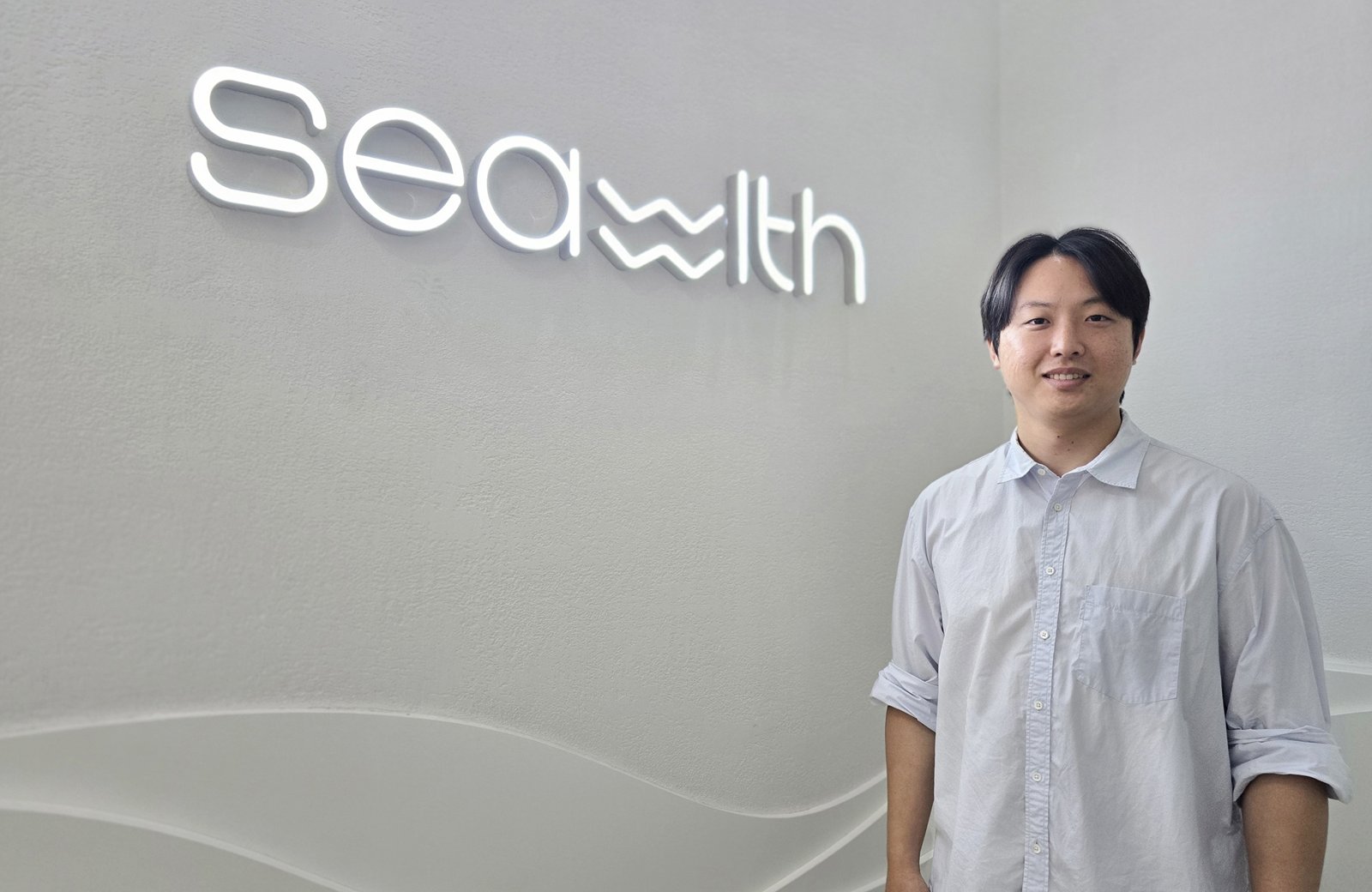
Almost everyone who grows animal cells feeds them the same thing, says Heejae Lee, co-founder and CTO of SeaWith: fetal bovine serum, blood taken from unborn calves. He calls it expensive and unethical, and it is the main reason growing animal cells costs so much.
SeaWith feeds its cells algae instead, and grows them on seaweed. That is where the name comes from. Say it out loud and it sounds like seaweed.
What they built
SeaWith, based in Daegu, South Korea, calls itself a stem cell based protein infrastructure company. In plain words, it grows animal cells in large batches and turns them into protein. Its main cells come from Hanwoo, Korea's native beef cattle. Muscle cells and fat cells grow into cultivated beef, an ingredient for ground meat products such as burgers, meatballs and mandu dumplings. "Cultured meat is real meat," Heejae told us. Same cells, same animal. The only difference is who grows them.
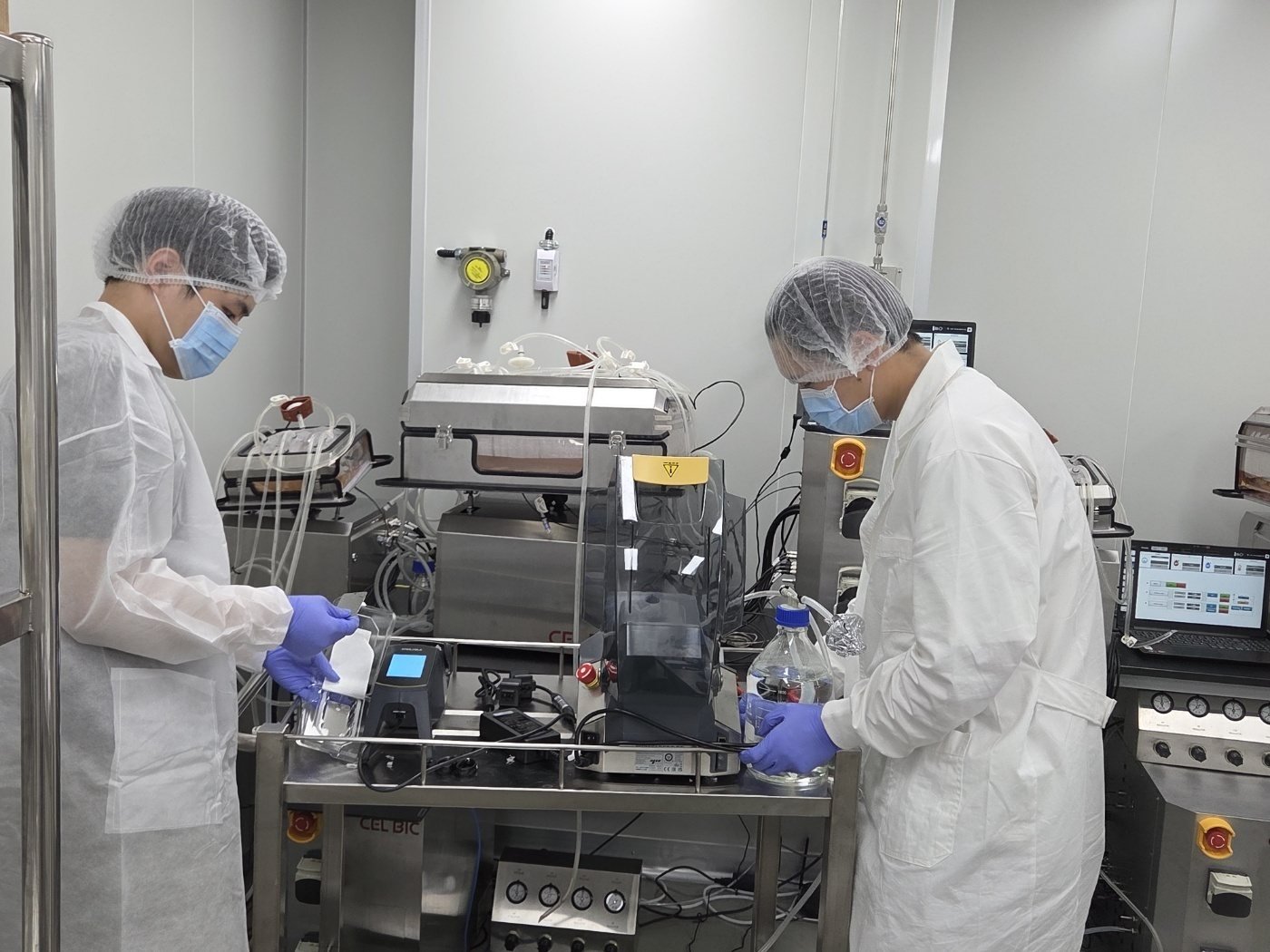
The company has four pieces of technology, and its website lists all of them. A machine that takes cells from Hanwoo tissue by the kilogram, which SeaWith says is the first of its kind in the world, feeding a bank of 6,000 frozen vials. A culture medium, the liquid food the cells live in, made from two microalgae, spirulina and chlorella, with no calf serum at all. A scaffold made from wakame seaweed, small edible beads the cells hold on to while they grow. And its own bioreactor, called CELLBATH, which rocks the cells in single-use plastic bags instead of steel tanks.
Heejae says the result is more than 7 times the efficiency at 95 to 99% lower cost, because the expensive lab ingredients were swapped for food-grade ones. The website puts the medium at 99% cheaper and says the bags grow cells to 7 times the density of the usual method. The cells are not only food. The same cells, medium and scaffolds are sold to universities, research labs and companies. Skin cells become cultivated leather. And the used medium still holds growth factors, so it goes into skin care under SeaWith's own cosmetics brand, MIOK. Heejae says that brand is already sold in the United States, though it is not the main business.
It started with iodine

SeaWith began in March 2019 as a student startup at DGIST, the Daegu Gyeongbuk Institute of Science and Technology, out of a graduate school project. Heejae, who holds a PhD in New Biology from DGIST, was not working on meat at all. He was building a way to take iodine out of seaweed. SeaWith still holds the two Korean patents from that first idea.
Three months in, the team pivoted to cultivated meat, before any other company in Korea did. Heejae says that makes SeaWith Korea's first cultivated meat startup. It kept the seaweed. Seaweed became the scaffold, and algae became the food for the cells. SeaWith started with five co-founders. Heejae and the CEO, Joonho Keum, are the two who still work on it full time. The company now has 25 people.
The ambition has changed too. In 2021 SeaWith told FoodNavigator it was aiming for cultured steak. Today Heejae says plainly that it makes ground meat, not steak. Whole cuts are much harder to build. He gave the same reason for keeping leather in second place: the margin is good, but making leather that is strong enough is very hard. Meat and pet food come first. In September 2026 the company signed an agreement on cultivated protein for pet food.
Algae instead of calf blood
Cells are picky eaters. For decades labs have grown them in calf serum because it works. But for food, Heejae says, nobody needs it, and everybody is trying to get rid of it. "Everyone struggles to replace it," he says. SeaWith did it with microalgae. Its patents cover the spirulina medium, the chlorella medium, the seaweed scaffold and the culture machine. The website counts 8 patents granted and 9 pending, including a United States patent on the scaffold.
But Heejae does not sell the patents as the moat. "A patent isn't magic," he says. In cultivated meat, no single idea or ingredient changes everything. "You have to do A to Z": the technology, the manufacturing and the processing. That is why SeaWith makes its own cells, its own medium, its own scaffold and its own bioreactor, instead of buying any of them from someone else.
A factory the government paid for
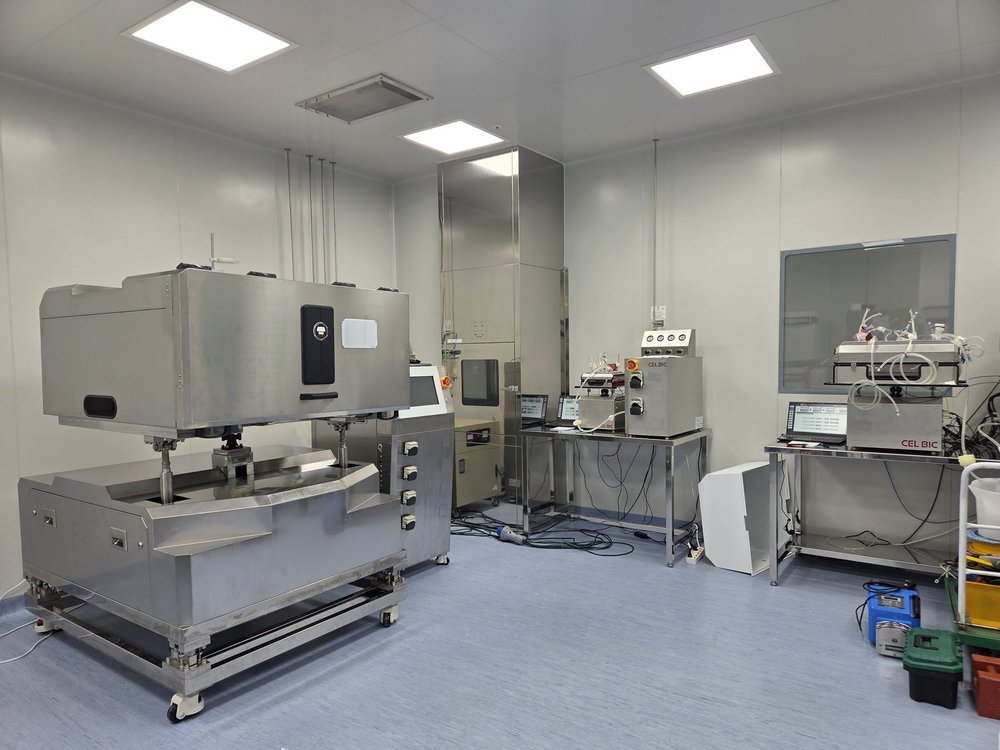
This is the part that surprised us. Most cultivated meat companies spend their money on steel. SeaWith is, by Heejae's account, the only one that does not. In May 2024 Uiseong, a rural county in Gyeongbuk province, was named a regulation-free special zone for cell-cultivated food. SeaWith runs its demonstration there. The government built the production facility, and Heejae says it spent more than $30 million on it. SeaWith did not pay for the building. That money is separate from what investors put in. The website says the facility began operating in November 2025, and Heejae expects to run the whole of it next year.
The facility has a cleanroom on its third floor. Its website says the line holds three 500 litre bags, two of 50 litres and two of 5 litres, 1,500 litres in all, and that one batch gives about 750 kilograms in 12 days, the meat of about two and a half cattle. The bags matter as much as the building. SeaWith says a 500 litre steel tank costs 0.5 to 1 billion won and needs 12 to 18 months to install, while its bag machine costs 200 million won or less and needs no sterilisation plant. The site lists a 6,000 litre commercial facility for 2027.
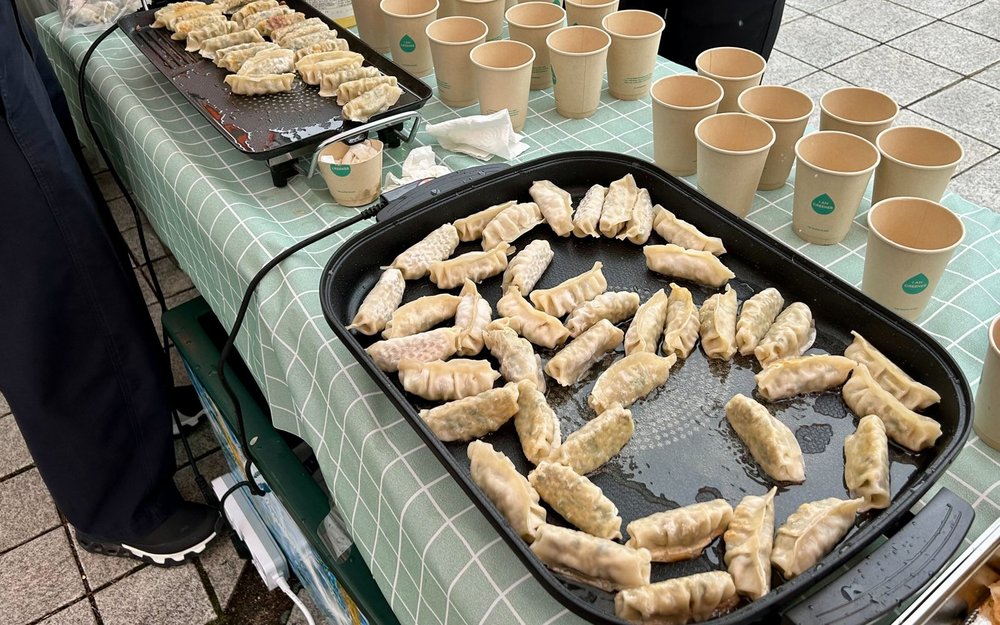
Cultivated meat is a novel food, so it needs approval in every country before it can be sold. SeaWith is a Korean company with a Korean factory, so Korea comes first. After seven years of research, Heejae says, the team will submit its application to the Ministry of Food and Drug Safety (MFDS), the Korean regulator, this December. It expects approval in the second half of 2027, and sales begin after approval. The United States follows right after Korea. Heejae adds that SeaWith is also working to enter the feed market. The company has already served cultivated meat mandu and meatballs at public tastings, including 1,000 servings at a dumpling event with Dongguk University in May 2026.
Real meat, not fake meat
SeaWith is raising in a bad year for its whole field. Heejae says plant-based meat is in decline, and many investors now lump cultivated meat in with it. His view of why plant-based fell is blunt. It is expensive, it is not delicious, some say it is not healthy, and above all it is not real meat. "People don't want fake meat," he says. Cultivated meat is the real thing, grown from the same cells. He thinks approval and a real product on real plates will change investors' minds.
Money is the other gap. SeaWith has raised about $9 million, including about $5 million in its Series A in 2021, when times were good for startups. Its investors include major Korean corporations such as Samsung. "$9 million is big in Korea," he says, but in Silicon Valley that is a seed or pre-Series A round. He says his competitors in the United States raised about ten times as much, and they need it, because factories are expensive.
Where it sits
Cultivated meat is a crowded and well funded field. In the United States, UPSIDE Foods grows chicken from animal cells, GOOD Meat calls its product real meat made without taking a life, Mission Barns mixes cultivated pork fat with plant protein for meatballs, and Wildtype makes cultivated salmon. In Europe, Mosa Meat in the Netherlands is building a cultivated beef burger, Gourmey in France makes cultivated meat delicacies, and Ivy Farm in Britain grows cultivated Wagyu for chefs. Aleph Farms in Israel aims at cultivated steak, Vow in Australia serves cultured Japanese quail in restaurants, and Umami Bioworks in Singapore grows cultivated seafood. Closer to home, TissenBioFarm in Korea is after thick, marbled steak, and IntegriCulture in Japan runs a general cell culture system for uses from cosmetics to food. Some work on the parts: Multus in Britain designs cell culture media with AI and robots. Others aim at pets: Meatly in Britain makes cultivated meat for pet food, and BioCraft Pet Nutrition makes a pet food ingredient as an alternative to traditional meat.
What none of them does is the whole set at once: grow a country's own prized beef from cells fed on algae and held on seaweed, in single-use bags, inside a factory the government paid for, while selling the cells, the medium and the leftovers for money today.
What they are looking for
SeaWith is raising $3 million now to close a Series A bridge round by December. After approval, it plans to open a Series B, and it wants investors from outside Korea for it. Heejae says angel investors are too late for this stage. Investing takes time, he says, so he is happy to start talking a year ahead. From North American readers, SeaWith wants:
- Series B investors, especially venture funds in the United States and Canada, for the round that opens after Korean approval.
- Strategic customers: food makers and restaurant companies that sell ground meat and want a beef ingredient whose price does not follow the price of cattle.
- Buyers and research partners for its cells, culture medium and seaweed scaffolds, which it already supplies.
Its website says it welcomes facility visits from investors, partners and press. Reach Heejae at minion@seawith.net.
Why it is bigger than it sounds
This breed of startup is very smart: it waits for the regulator without waiting for the money. It sells the tools of its own industry today, and lets the government pay for the factory it will need tomorrow.
Follow the money. In cultivated meat, most of the cost of growing cells is the medium, and most of the capital goes into steel tanks and buildings. SeaWith attacked both. Algae cut the medium by up to 99%. The government spent more than $30 million on the plant, so SeaWith's own $9 million goes into the science, not into concrete. Meanwhile the parts that need no approval already earn: cells, medium and scaffolds for labs and companies, testing services, and skin care made from the medium that is left over. When the meat is approved, it is sold as a blend into ground meat, the one product where food makers feel the pain most. SeaWith's website says the price US food makers pay for ground beef rose 72% in five years, and they cannot pass that on to customers. A beef ingredient whose cost follows algae and bags, not feed and calves, is something those companies would pay for.
The formula: when your main product must wait for a regulator, sell the picks and shovels of your own field now, turn your waste into a second product, and build in the place where a government wants your industry badly enough to pay for the building. The same play fits cultivated seafood in Japan and Norway, cell-grown cocoa for the chocolate makers of Switzerland and Belgium, cell-grown coffee, cultivated leather for the fashion houses of Italy and France, and cell-grown milk proteins for baby formula. It fits countries too: Singapore, Japan, Israel and Gulf states such as the UAE and Saudi Arabia all want more of their own food supply. Anyone who can find a government zone like Uiseong can skip the most expensive line in the business plan.
The risk in one line: everything waits on the Korean approval, expected in the second half of 2027, and if it slips, the Series B and the US plan slip with it. If you invest in food or biotech at Series B and can see past the plant-based slump, or you run a food company whose beef bill keeps going up, this is a team to call.
What to watch
The first thing is December, when SeaWith submits its application to the MFDS. It expects a decision in the second half of 2027. A yes would let SeaWith start selling, and give it what most cultivated meat companies in the world still do not have: a product cleared for sale. This is our opinion.
The second is the money. The $3 million bridge is due to close in December, and the Series B opens after approval. Whether a US or Canadian fund joins it will show whether North America sees SeaWith the way Korea does.
The third is the United States. Heejae says US approval comes after Korea, the website already lists an office in Seattle, and MIOK is already on sale there. A first American food company testing SeaWith's beef in its ground meat would be the sign the model travels.