Dr. Cristóbal Langdon was doing a procedure on a child, with the whole family in the room, when he noticed where his eyes were. Not on the child. On the screen. "You have to take notes, you have to watch the screen, and you cannot pay full attention to your patient," he says. "I think that was my aha moment."
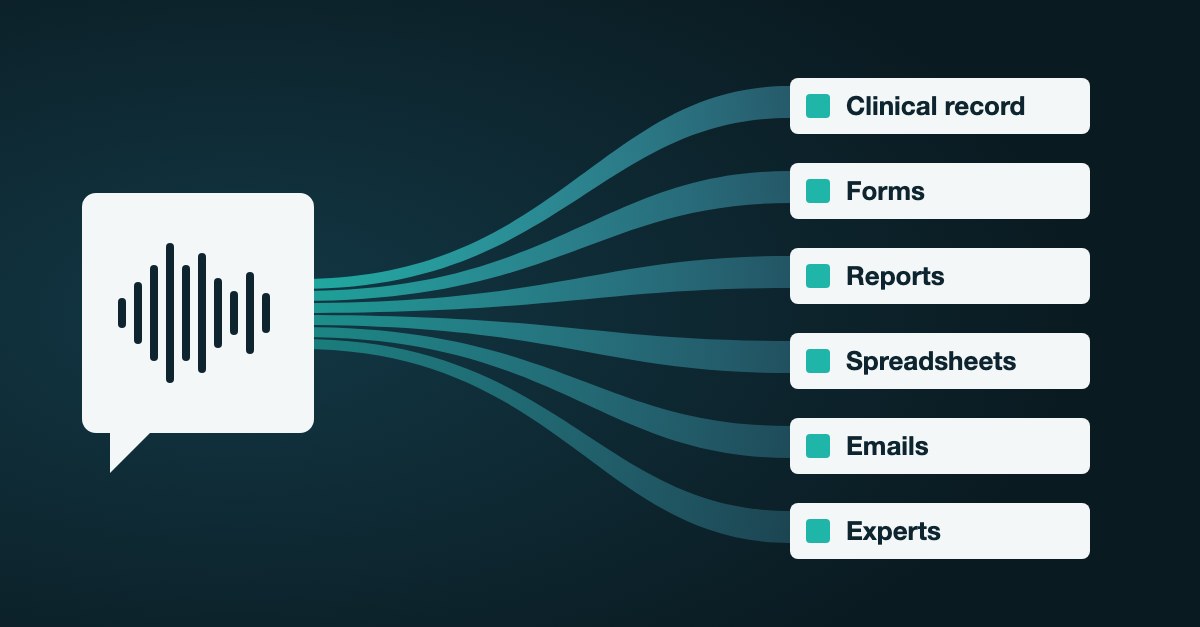
That moment became Speaknosis, a Chilean startup whose AI listens to the doctor and the patient, writes the clinical note, and then types it into whatever record, form or spreadsheet the clinic already uses. That last part is the whole story. In Latin America, there is no single hospital software to plug into. There are as many systems as there are clinics. Speaknosis is built to fill in all of them.
Two friends and a dog app
Cristóbal and his co-founder, Sebastian Miranda, have known each other since they were four years old. Cristóbal became a doctor, an ear, nose and throat surgeon. Sebastian became an engineer.
In late 2022, when the first tools to build on ChatGPT came out, Sebastian made an AI assistant to help people look after their pets, and sent it to his friends. Cristóbal wrote back. It was cool, he said, but he did not have a dog. He did have a problem. He was moving from treating adults to treating children, and the note-taking that had always annoyed him had become unbearable in front of worried families. "Let's try to help me," he told Sebastian.
Sebastian built a first version in a week. "Since then, we haven't stopped," Cristóbal says.
Cristóbal was living in Barcelona at the time, where he worked at Hospital Sant Joan de Déu, so the first pilots ran there. The hospital agreed to a trial, and the result was published in the International Journal of Pediatric Otorhinolaryngology: across 375 consultations with ten children's ear, nose and throat doctors, the notes Speaknosis wrote matched the doctors' own with 96.5 per cent accuracy in meaning, according to the study and the company's website. The company was founded in 2023, with a former Google Chile engineer, Felipe Velásquez, joining as a partner, according to Chile's business paper Diario Financiero. It moved its base to Chile in 2024. Cristóbal has since moved back to Chile too.
From scribe to "fill anything"
Speaknosis started as an AI medical scribe. With the patient's consent, it listens to the visit, writes it up as a structured clinical note in under 30 seconds, and the doctor reviews it, fixes anything, and approves it. The company says it saves about four and a half minutes per visit. In the last 30 days, according to its presentation, more than 1,000 health professionals used it and it wrote more than 15,000 notes, 42 per cent more than the month before.
But the team soon saw that a note is only the start. "Healthcare happens everywhere," Sebastian says: in consultations, surgeries, emergency rooms, ward rounds and case discussions. And most hospital software, he says, is built like "1990s user interfaces", with rigid screens a doctor has to click through. So Speaknosis set out to do two things.
The first is to fill anything. From one conversation, it fills in the medical record, the forms, the reports, the spreadsheets and the emails that follow a visit. That matters more in Latin America than almost anywhere. "In the States, it's like 60 per cent of the market is this super system," Sebastian says, meaning Epic, the giant American health records company. "In Latin America, you have as many systems as clinics you have. So no one has that under control, and being able to connect to all these different systems is something that is a moat." Speaknosis connects directly to local record systems such as Reservo and Integrando Salud, and a browser extension lets it work on top of any record system that runs in a web browser.
The second is to call in experts instead of becoming one. Many AI scribes are trying to grow into an "AI doctor", adding diagnosis help and drug checks of their own. Speaknosis does not build those. It connects to the specialists who already have them: Medical Sapiens for help with diagnosis, and Vidal for drug interactions. "Imagine we are like this assistant that is sitting next to the professional taking notes of everything," Sebastian says. "If the professional has any doubt, he doesn't answer, but he goes and calls the experts."
Put the two together, and Speaknosis stops being a note-taker. "We're not building another isolated healthcare application, nor trying to develop every specialized capability ourselves," Sebastian wrote to us after the call. "We're building a platform that can interact with the entire healthcare ecosystem, regardless of the systems, formats or experts involved." The goal, in his words, is to become "the intelligence and orchestration layer of healthcare", connected to experts through APIs and MCP connectors, the plug-in standard that lets AI tools talk to other software.
Underneath, it runs on Google's Gemini models. It is built for Spanish and for the medical words and regional habits of Latin America. It says it meets the US and European health data rules, HIPAA and GDPR, and it holds a software quality seal from CENS, Chile's national centre for health information systems, valid until 2029.
Six countries, one channel
Speaknosis has paying users in Chile, Spain, Argentina, Mexico, Costa Rica and the Dominican Republic. In Chile, its website lists Clínica Alemana, one of the country's best-known private hospitals, as its first corporate client in 2025. Alemana's own voice tool, built on Speaknosis, recorded more than 21,700 consultations in its first six months, with users rating it 4.52 out of 5, according to a post by the clinic's general manager that the company cites. In 2026 it reached public primary care, in the Santiago district of Renca. The Teletón rehabilitation network is also a user.
Outside Chile, it does not open offices. It sells through partners. Sebastian says Speaknosis works with a company that sells software and support to clinics all around Latin America, and sells through them into the other countries. Its business in Argentina is growing the same way, through a local network. "So we don't have to have operations in those countries," he says.
Doctors in private practice can sign up on their own, from USD 27.90 a month. Clinics and hospital groups get a custom plan with full integration into their records. For them, Speaknosis offers a pilot from day one and a full roll-out within six weeks.
The money
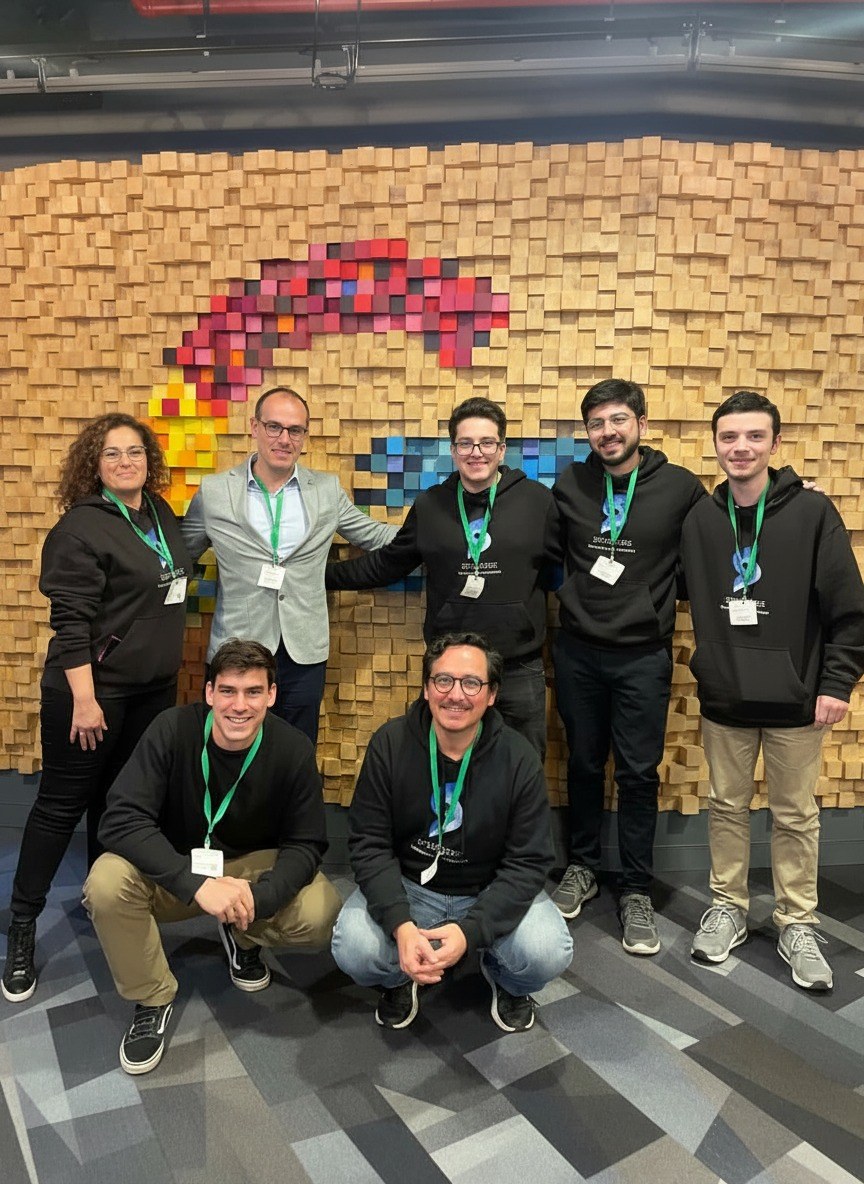
Speaknosis is small on revenue, and Sebastian says so plainly: about USD 60,000 a year in recurring revenue today. The team is seven people. Three are paid. The other four, he says, work "on passion".
It raised about USD 120,000 from angel investors in 2024, and has since won two rounds of non-equity government grants in Chile.
Sebastian says the turning point came this year. "2024 we were building the product, 2025 we started having commercial conversations with different places, but this year was the year when everybody said, okay, I want this, it is helpful." Public and private health providers want to roll it out, and the team needs money to keep up.
Where it sits
AI scribes are one of the busiest corners of health tech, and most of them are American. Abridge sells clinical AI to large health systems. Suki automates clinical documentation. Ambience Healthcare pitches itself as an AI partner for clinicians with a return on investment to match. DeepScribe writes notes for specialists such as oncologists and cardiologists, and Freed sells an ambient scribe to tens of thousands of individual clinicians. In Europe, Nabla brings ambient documentation into Epic and the other major record systems, and Tandem Health prepares notes, documents and codes for review. Heidi, from Australia, supports clinicians from documentation to evidence.
Most of them are built for English first, and for markets where a few big record systems hold most hospitals, so one deep integration opens the door to thousands of doctors. Few of them have had to wire themselves into hundreds of small Latin American clinic systems, in Spanish, with a sales channel that already covers the region. That is the work Speaknosis has been doing.
What they are looking for
Speaknosis is raising a pre-Series A round of USD 250,000 at a USD 3 million valuation, and has USD 35,000 committed so far. "The Latin American reality is different than the North American," Sebastian says. "$250,000 sounds a lot here." The plan for this round has a name: win Chile. The goal is strong recurring revenue, with the main hospitals and clinics in Chile using Speaknosis, before a bigger round to go international.
The founders want investors who know health care. "Still the healthcare industry is slow," Sebastian says. "The sales cycles are longer than in other industries. You have to go through pilots to prove clinical validity." Investors, he says, "have to understand the realities of the health tech industry".
From readers, Speaknosis wants:
- Angel investors and funds for the remaining part of its USD 250,000 round, ideally with health tech experience.
- Hospitals, clinic groups and public health providers in Latin America and Spain that want doctors to spend less time on screens.
- Record system makers and resellers in Latin America that want to add an AI scribe their customers can use in Spanish.
Reach Sebastian at sebastian@speaknosis.com, or the team at descubre@speaknosis.com.
Why it is bigger than it sounds
This breed of startup is very smart: in a market where nobody owns the main software, the winner is not the one that replaces the systems, but the tool that can fill in all of them.
Follow the money. In the US, AI scribes race to plug into Epic, because one integration reaches most of the big hospitals. In Latin America there is no Epic. Every clinic bought its own system, so the money a clinic spends on paperwork is scattered across hundreds of them. The company that can write into all of them collects from every clinic, whatever it runs, and every new connector is one more wall a rival has to climb. There are also fewer sharks. The big American scribes are busy at home, so Speaknosis can build its connections, its data and its experience fast, without the noise.
The formula: where no single system dominates, the layer that fills in all of them becomes the standard. The same play works for dental and veterinary clinics, which run dozens of small practice systems; for small insurers, each with its own claim forms; for customs paperwork across Latin American borders; for court filings in courts that each run their own software; for city permit offices; for schools reporting to education ministries; for property listings spread across many portals; and for accounting, where every country has its own electronic invoice. If you are an investor looking at Latin America, ask who has connected to the most systems, not who has the cleverest AI. If you are a founder, look for a messy market with no Epic, and be the one that fills in everything.
The risk in one line: if one big record system does win the region, the connectors matter less, so Speaknosis has to win Chile fast.
What to watch
The first thing is the round. Closing USD 250,000 would let Speaknosis put its plan to win Chile into action.
The second is the big Chilean hospitals. If the main private and public providers in Chile roll it out, it becomes the default way doctors there write their notes, and the case for the next, bigger round makes itself.
The third is the number of systems it can fill. Every new record system, form and expert it connects to makes it harder to copy, in Chile and in every country its partners reach.