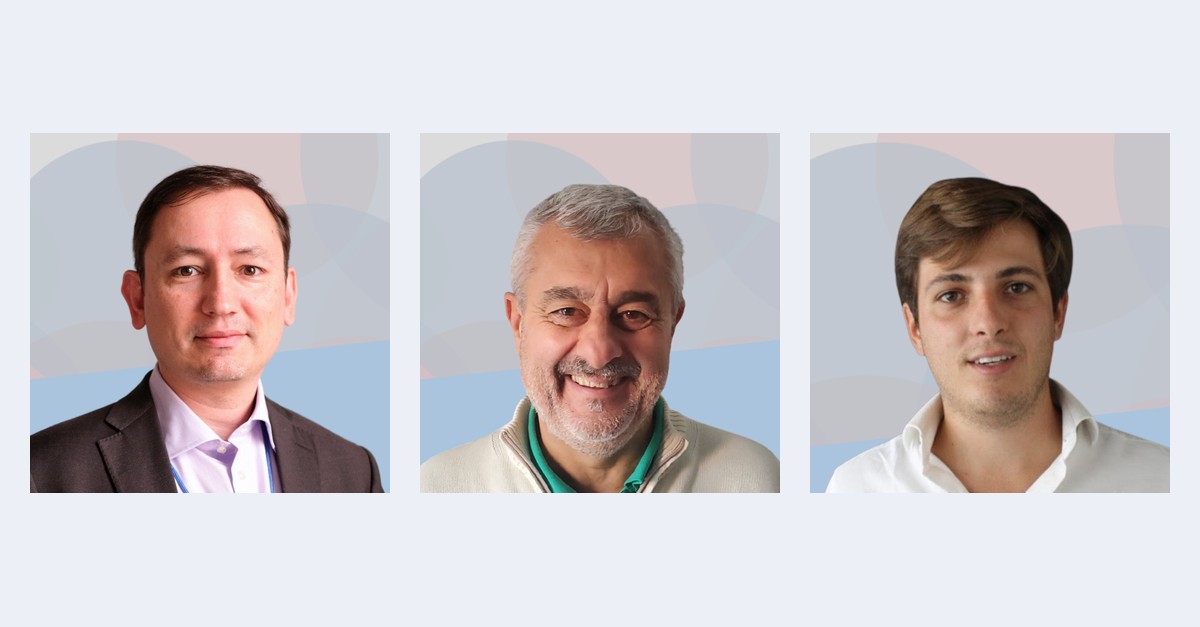
"It's like asking what was the return on investment of discovering the American continent," a hospital client told Ivan Porro. He had asked them a simple question: how much had his software saved them? They could not say, because before it there was nothing to measure against.
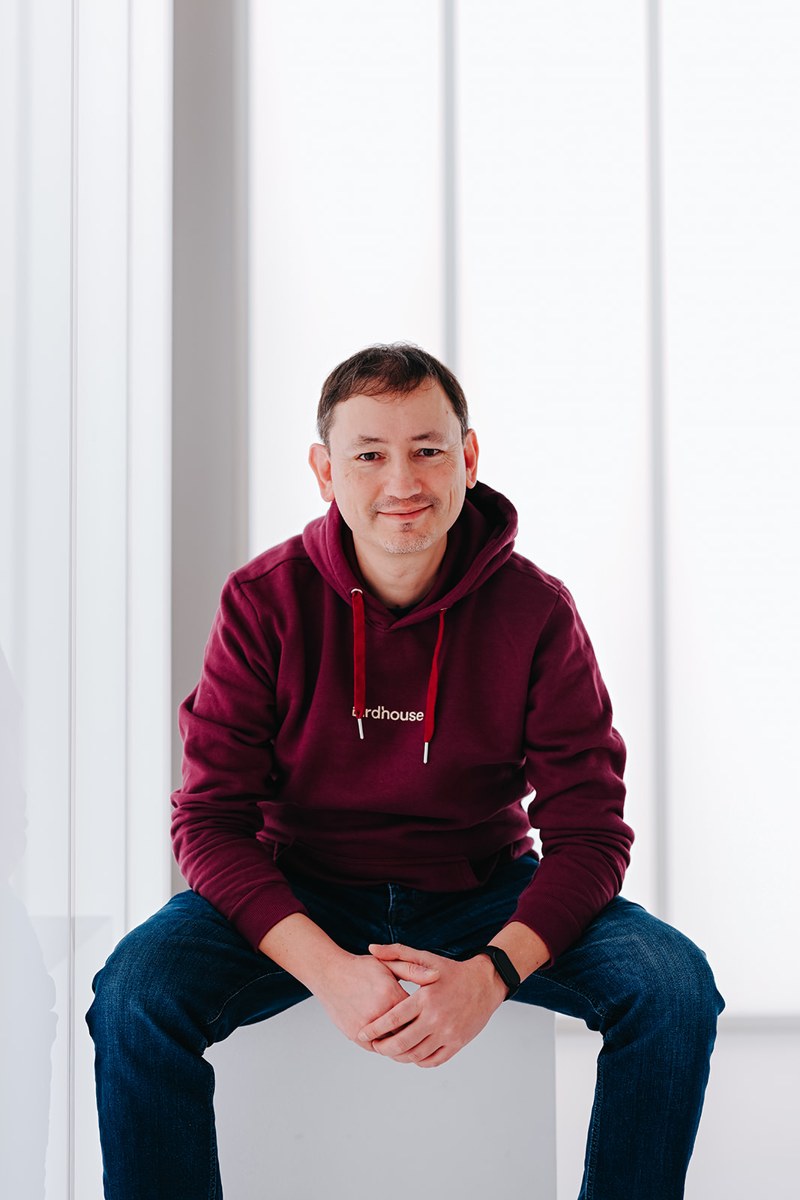
Ivan runs SurgiQ, a small Italian company whose AI plans the hardest timetables in a hospital: operating rooms, rehabilitation gyms and chemotherapy chairs. It is used in 23 hospitals. It plans about 20,000 physiotherapy sessions a month. It makes about half a million dollars a year, and half of that comes back every year. And Ivan is not looking for investors. He is looking for a buyer.
What they built
A hospital is a puzzle that changes every hour. A surgeon calls in sick. A machine breaks. A patient cannot come. Someone has to move everything else around, and in most hospitals that someone does it by hand.
SurgiQ sells three tools for this. The first, also called SurgiQ, runs the surgical waiting list and plans the operating rooms. QRehab plans the timetables of rehabilitation and physiotherapy teams. DHO plans the oncology day hospital, where patients come in for chemotherapy cycles. The company's website says the system plans 300 operations in about 60 seconds, and that its users log in more than 230,000 times a year.
The engine underneath is the unusual part. It is AI, but it is not generative AI, and it is not machine learning. Its roots are in the decision support systems of early AI. SurgiQ improved it with the University of Genoa and the University of Calabria, and holds one patent. What it gives a hospital, Ivan says, is a mathematical guarantee: every plan it returns is a valid one, a plan the hospital can actually carry out.
He explains why that matters with one example. An ideal model would plan for 100 per cent of capacity every week. "But if that week you have less staff, you're going to produce 75 per cent," he says. "It's important that you're going to produce that 75 per cent, not that I plan 100 and then you produce 60 because you have to change everything every day." A plan people can follow beats a perfect plan that falls apart. "That's the trick," he says.
Twenty years of waiting lists
Ivan started as a researcher around 2000. One of the things he studied was how Western Canada handled hospital waiting lists. Canada, the UK and Australia run health systems much like Italy's, so he used Canada and Australia as models for the first version of his algorithm. It was not AI yet, just simple rules to decide which patient goes first.
In 2008 he started his first company, a consultancy and software firm. He wanted to build a product rather than projects, so in 2016 the product side split off and became SurgiQ. Its mission was to help hospitals work better, starting with waiting lists and operating rooms. The first client was Galliera, a hospital in Genoa that the website calls a pioneer of lean surgical pathways in Italy, and it still helps test new features.
Selling to hospitals was hard. "When you work with hospitals, you have to be prepared to understand what they want to do, what they don't want to do," Ivan says. In 2019 he went back to investors for more money to build AI tools for hospital productivity, a need he saw in public and private hospitals alike. The plan was ready to go in early 2020. Then COVID stopped every operating room project.
The pivot COVID forced
A rehabilitation client came in instead. "I don't have operating rooms," it told SurgiQ, "but I have people." It had coordinators who spent half their day moving physiotherapists and patients around every last-minute change. In Italy, rehabilitation means mostly physiotherapy, for a broken bone or a stroke, plus speech therapy, occupational therapy and more, often for the same patient. So SurgiQ pointed its operating room engine at the rehabilitation gym.
SurgiQ's website names that client as ICS Maugeri, a national hospital group in rehabilitation and research. It started with one hospital at the end of 2020. Today, Ivan says, almost the whole network uses QRehab, and it plans more than 20,000 sessions there every month. The group was built through a series of acquisitions, Ivan explains, and each new hospital brought its own way of planning. SurgiQ let them run one method across the network. That is when he asked about return on investment, and got the answer about Columbus.
After COVID, hospitals came back to the operating room. Italy, like many Western countries, had a staff crisis before the pandemic, and it got worse after. Managers started looking for ways to plan better with the people they had. At a hospital with 17 operating rooms, Ivan says, SurgiQ cut the number of patients treated in overtime. At a large private hospital, it reorganised how cancer patients are booked into infusion rooms, and the hospital can now treat 20 per cent more of them.
The website names more users. At Humanitas Research Hospital in Rozzano, near Milan, one of Italy's largest oncology and haematology day hospitals with more than 7,000 patients a year, DHO plans therapy cycles in under 15 seconds. Bambino Gesù, the children's hospital in Rome, used SurgiQ to bring its waiting lists across several sites into line. The university hospital in Alessandria uses it for its operating rooms and to handle, fully on screen, the requests to pass patients on to care outside the hospital, and two public health authorities in Lombardy use QRehab for outpatient rehabilitation.
The money
SurgiQ makes about USD 0.5 million a year, and about half of that is recurring revenue. It earns money in three ways: software licences, yearly maintenance, and change requests. The last one is a mixed blessing. "My process is slightly different, I want this customized," a hospital says, and SurgiQ bills for the time. That is good upselling, Ivan says, "but it's bad because it's time and material. It doesn't scale very, very well."
The business is almost profitable and growing, with recurring contracts. The team is seven people, all full time. "When you have seven people, almost all of them are key people because they do everything," he says. The company holds ISO 27001 and ISO 9001 certificates, has its office in Genoa and a branch in the UK, and Ivan joined our call from near Turin.
Where it sits
Hospital operations software is a busy field, and most of it is American. LeanTaaS sells AI and predictive analytics to unlock hospital capacity. Qventus sells AI teammates to automate hospital operations. Opmed uses agentic AI to forecast demand and allocate rooms, staff and equipment. Apella puts ambient AI in the operating room, and TeleTracking orchestrates patient flow across health systems. Lumeon automates the clinical work around care pathways. For rehabilitation, WebPT and Raintree sell therapy software for clinics, from records to billing. In the UK, Lantum and Patchwork Health sell workforce and rota software to the NHS. Behind them all stand the big health software groups, such as Dedalus, which sell the hospital systems everything else plugs into.
Most of these tools predict. They forecast demand and suggest what to do. Few of them sit inside the gym timetable of a rehabilitation group, and few promise that every schedule they return can actually be run. SurgiQ does both, from one engine that is not machine learning, in Italian public and private hospitals that took years to win.
What they are looking for
SurgiQ is not raising money. Its priority is a sale. Ivan wants an industrial partner to buy half or all of the company and take the product further. "It could sound counterintuitive," he says. The reason is what investors call the valley of death. SurgiQ does not grow like a hockey stick, so venture funds pass. Funds, private equity firms and possible buyers from northern Europe, and one from the US, have told him it is too small. "You are too small for getting interest from large funds or large financial bodies," he says. "You are too small to get interesting for banking delivering big loans. You are too big and too late to get interest from early-stage investors."
From readers, SurgiQ wants:
- A buyer or industrial partner for 50 to 100 per cent of the company: a health software company, a hospital group, or an investor who wants a working product with real hospital customers.
- Buyers outside Italy. The algorithm started from Canadian and Australian models, and Ivan is open to a buyer from North America that takes the technology and the people.
- Hospitals and health systems that plan operating rooms, rehabilitation or chemotherapy by hand today.
Reach Ivan at ivan.porro@surgiq.com.
Why it is bigger than it sounds
This breed of company is very smart and very underrated: the small vertical software company that has already got inside a slow, hard market, and is set up to be bought. SurgiQ is set up to be bought, and that is a good thing to be.
Follow the money. Hospitals take years to say yes. Every one of SurgiQ's 23 hospitals took meetings, pilots, approvals and integrations with the systems it already runs. A bigger company that wants to sell into Italian or European hospitals faces those same years, hospital by hospital. Buying SurgiQ buys them back: the contracts, the half of revenue that recurs, and a patented engine that plans timetables a hospital can keep. Measured by revenue, it is small. Measured by the time it would take to rebuild, it is not. The change requests that worry investors look different to a buyer too. They are proof that hospitals pay to bend the product to their own way of working.
The formula: in any market where selling takes years, the installed base is the asset, and a small company that is already inside is worth more to a bigger one than its revenue says. The same play fits school and university timetabling, court and hearing schedules, airport gate and stand planning, train crew rostering, nursing home staffing, home care visit routes, prison health services, waste collection routes and public transport duty planning. Each has slow public buyers, long contracts and a few small specialists who already got in. If you are a post-exit founder with money and time, or a health software company that wants a foothold in Europe, the cheapest way into a slow market is to buy the company that already waited.
The risk in one line: half the revenue is custom work, and a buyer has to be ready to keep it or turn it into product. If you run a health software company, a hospital group or a fund that buys small, profitable software businesses, this is a founder to call.
What to watch
The first thing is the deal. A buyer for half or all of SurgiQ would show that a small, almost profitable hospital software company can find a home outside venture capital.
The second is the first hospital outside Italy. SurgiQ already has a UK branch, and its algorithm began with Canadian and Australian models. A foreign hospital would show the engine travels.
The third is the share of recurring revenue. Half of SurgiQ's revenue recurs today. If more of the custom work turns into standard product, the company gets easier to buy and easier to grow.