Ask people who wear a bra what they do the moment they get home, and many give the same answer: take it off. Edgar Rodriguez, Xuxu Amoozegar-Montero and their team in Wellington, New Zealand, want to make the bra people keep on.
They are starting with people who have had breast surgery. That is where bras are worst, and it is what Xuxu's research found. Post-surgery bras come in fewer sizes than ordinary ones, at the very moment a body has changed the most. "Funnily, post-surgery bras have fewer sizes when the need is bigger," Edgar told us.
What they built
UunaFit, a university spin-out based in Wellington, is building custom bras made from a 3D scan, under the name Uuna. It is not selling them yet. There is no size chart. Each bra is made for one body.
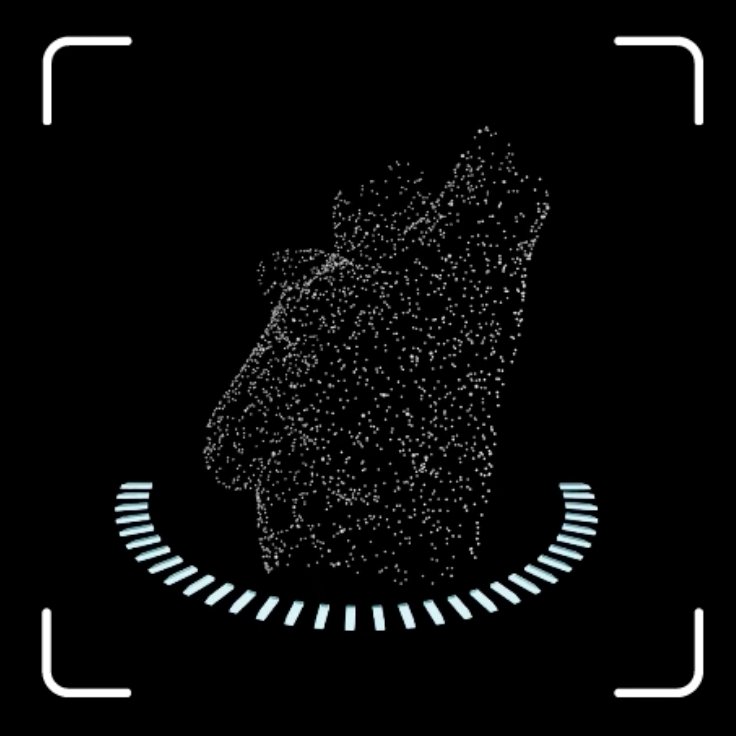
Here is how it will work. The customer's body is scanned with a handheld 3D scanner, which Edgar says is much more accurate and more secure. Scanning with a phone works too: the team has tested it, and it is planned for UunaFit's second release, in mid to late 2027, once the security and the experience for the user are ready. The company's website says the scan is quick and picks out the key points that set the shape and size of the bra. Software then turns the scan into a digital pattern. That pattern becomes instructions for a 3D knitting machine, a computer-controlled machine that knits a whole garment in one piece. The bra is knitted on demand from a merino-based yarn, with no seams, and sent to the customer's door. Edgar says AI helps in a few of the steps between the scan and the machine, the ones that work as a black box.
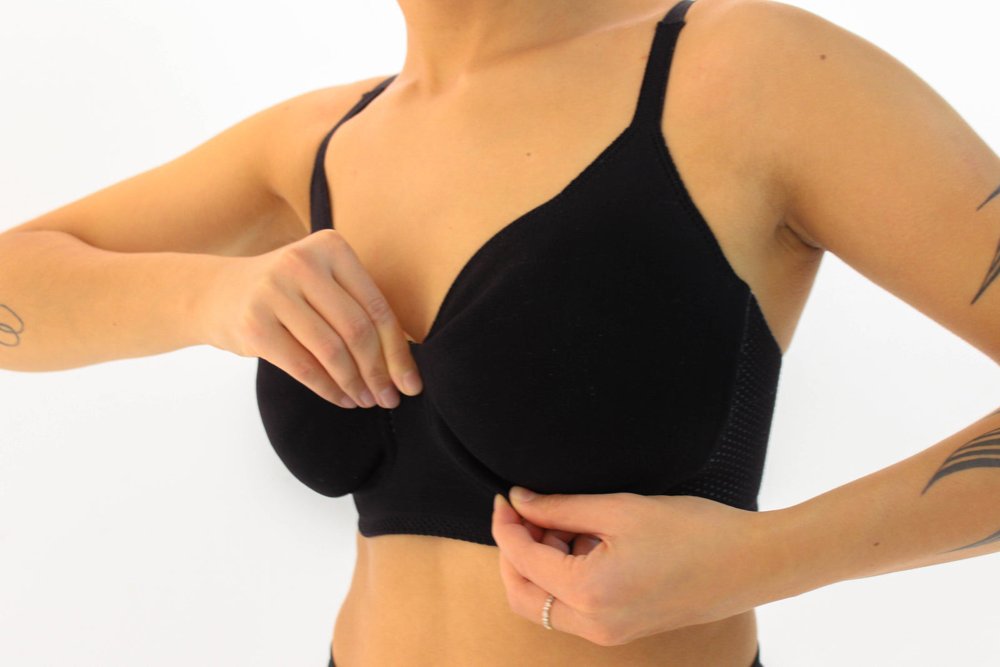
The website describes the result as soft and wireless, breathable, supportive and machine washable, with cups that can be shaped and pockets on both sides. Its first model, The Classic, is a full-coverage wireless knitted bra in black, brown and grey.
The website also lays out the problem it is solving. It says 85% of bra wearers wear the wrong size, 68% are uncomfortable in their bra, and 64% received bras that did not fit even though they ordered the correct size. A third throw away a bra that does not fit straight away, and the website says 60% of bras end up in landfill, where they shed microplastics.
UunaFit is not selling bras yet. It is running a pilot. People have been scanned and their bras are now being made. Edgar says the pilot follows a strict protocol for fit, comfort and safety, and will show how reliable the technology is. The website says the Uuna app is launching soon.
A student whose bras never fit
The idea came from one of Edgar's students, Xuxu Amoozegar-Montero. Edgar's lab has always worked on 3D scanning bodies to make products that fit one person, made by digital manufacturing. First that meant 3D printing. Later it meant 3D knitting machines too.
Xuxu told him she hated her bras. They never fit. Could the lab make her a custom one? Edgar saw great potential in it for the lab's technology. Xuxu took it on for her master's degree and built the proof of concept. She went on to do a PhD in industrial design on the same project, at Te Herenga Waka, Victoria University of Wellington, and has now completed it. Her sister, Aida, worked with her on the early stages. Aida's PhD project, in sociology, started by assessing the experience after surgery from a social sciences perspective.
The sisters' research set the company's direction. Most bras are sized by two numbers, bust girth and cup size. Their first system used 12 measurements of one body, with 3D knitting to make the more complex shapes a better fit needs. They found that after a mastectomy or reconstruction, many women rely on a bra to feel confident and to restore symmetry, yet few styles and sizes are made for the body they now have. Edgar says everything he told us about what wearers go through comes from Xuxu's research.
The work turned into a company. UunaFit now has four co-founders, Viv Baartman among them, and about six advisors.
It has done well in competitions. Last year it took third place in the New Zealand round of the Startup World Cup. It also won first place in the innovation category at the Wellington Gold Awards, the region's business awards. "Very good reception," Edgar says.
Fewer sizes where the need is biggest
Custom bras could be for anyone. So why start with breast surgery? Edgar gives three reasons.
The first is need. Xuxu's research found the need is greatest here, and the bras on offer are badly made. The second is advice. "Our advisors and investors want us to go as niche as possible," he says. The third is money. New Zealand has a subsidy for breast prosthetics, and it also covers post-surgery bras. UunaFit is now an officially approved supplier under that subsidy.
The team has done its homework. Edgar says it has talked to more than 2,000 bra wearers. It also knows what it is avoiding. The wider bra market is bigger, but it is crowded, and the brands in it pay heavily to be seen. Edgar says some of them spend 40% of their income on advertising. A niche where the bras are badly made, and where the customers are reached through patient groups, avoids most of that.
The plan is to grow out from there. After post-surgery bras come sports bras, then other kinds of bras, taking what the team learns in the medical market into everyday ones. "Expansion to other bra applications is always in the back of our minds," Edgar says. That is where the bigger growth is.
Send the file, not the bra
The way UunaFit makes its bras is as new as the bras. It does not run a factory and it does not keep a warehouse.
Everything from the scan to the machine instructions is done by UunaFit itself. Only the last step, the knitting, is done by partners. Because 3D knitting machines are computer-controlled, the company only has to send a file. It has partners in Germany, Hong Kong, mainland China and Auckland. Once a machine is set up, the file goes to the nearest one.
Edgar gives an example. North Carolina is a big manufacturing centre with these machines. So an order from New York would go to a partner in North Carolina, and an order from Germany to the German one. That means less shipping and fewer emissions. The website adds that knitting each bra to order leaves no scraps, no waste and no overstock.
Where it sits
Better bras are a busy field, but almost all of it still sells standard sizes. ThirdLove, designed in San Francisco, says it invented half cup sizes and runs a virtual Fitting Room to find the right one. Knix makes wireless bras designed for comfort, Evelyn & Bobbie makes wirefree smoothing bras and seamless underwear, and Harper Wilde sells everyday bras it says are "designed to be forgotten". SHEFIT makes sports bras you can adjust in seconds. In the post-surgery market, AnaOno was started by Dana Donofree after her own breast surgery, when she could not find a bra that fit, and Wear Ease makes ready to wear post-surgical bras, camisoles and compression garments. On the scanning side, 3DLOOK takes more than 80 body measurements from a phone in under 45 seconds, Nettelo turns a full-length selfie into a 3D body model for made-to-measure clothing, and Bold Metrics runs an AI fit and sizing platform for clothing brands. Volumental does the same for feet, with 3D foot scanning for shoe shops. On the making side, unspun automates 3D weaving from yarn to garment, local and on demand, and Kniterate sells a compact digital knitting machine to small fashion businesses.
The bra brands still make a set of sizes and hope one fits. The post-surgery brands design for a changed body but still sell from a size chart. The scanning companies sell measurements and stop there, and the machine makers sell machines. What none of them is building is a way to take one person's 3D scan, turn it into knitting instructions in-house, and send a single bra to the machine closest to her, starting with the patients a public subsidy already pays for.
What they are looking for
So far UunaFit has had funding and support from CoRE MedTech, Te Titoki Mataora, KiwiNet and UniVentures, and the team thanks them for it. It has already engaged some investors, local ones in New Zealand and one from abroad. It has also been invited to apply for a competitive research grant for medical technologies, and Edgar says it looks promising. The grant would remove a few technical risks and put the company in a much better position to raise a seed round next year. Its first targets abroad are Manitoba and Nova Scotia in Canada, provinces with subsidies for post-surgery support, where Edgar says the team would start looking at the North American market. From North American readers, UunaFit wants:
- Investors and strategic partners ahead of next year's seed round. Edgar is open to investors from Canada and beyond.
- People on the clinical side of breast surgery, and in the industry around it. Edgar says these have helped the most: they bring knowledge and connections, they help recruit people for trials, and they know the local subsidies and insurance.
- Breast cancer associations and the bodies that fund post-surgery care, in Manitoba and Nova Scotia first. Edgar says each region has its own, and its own way of paying. In the UK, for example, it is trusts that manage post-surgery support and care. These groups already have the audience.
Edgar puts his approach this way: "If you ask for investment you get advice, if you ask for advice you get investment." Reach him at edgar@uunafit.com.
Why it is bigger than it sounds
This breed of startup is very smart: it starts where someone else already pays the bill. UunaFit did not pick the biggest bra market. It picked the one where the need is greatest, the bras are worst and the government already covers the purchase.
Follow the money. In New Zealand the subsidy for breast prosthetics also covers post-surgery bras, and UunaFit is an approved supplier, so once it starts selling, the subsidy can pay for the bra. The customers come through breast cancer associations, which already hold the audience, so UunaFit does not have to buy them with advertising, the cost Edgar says takes 40% of income at some bra brands. And because each bra is knitted only after it is ordered, from a file sent to the nearest machine, there is no stock to sit in a warehouse and no sale rack. The subsidised niche pays the company to learn. Then the same scan, the same files and the same machines move into sports bras and everyday bras, where the volume is.
The formula: find a product that bodies need in one exact shape but shops sell in standard sizes, start with the patients whose care is already paid for, and make each piece on demand near the buyer. The same play fits compression sleeves and stockings for people with lymphoedema, insoles and shoes for people with diabetes, liners for prosthetic limbs, back and knee braces, garments for burn recovery, and nursing bras after childbirth. It travels from country to country the same way. Find who pays for post-surgery care, subsidies in New Zealand, Manitoba and Nova Scotia, trusts in the UK, and the patient groups that already hold the audience. Whoever builds the custom version for the covered patient first gets paid to learn, and ends up with the body data the mass market will want.
The risk in one line: a medical bra has to fit every time, and the pilot still has to prove that a body scan and a knitting file can do that, before each new country's subsidy is won one at a time. If you are a breast surgeon, a breast care nurse, a breast cancer association or a programme that pays for post-surgery care in Manitoba, Nova Scotia or anywhere else in North America, or an investor in women's health looking ahead to next year's seed round, this is a team to call.
What to watch
The first thing is the pilot. If the scanned, knitted bras pass UunaFit's own protocol for fit, comfort and safety, the company has its proof.
The second is the money. A win on the medical technology grant would clear the technical risks before the seed round next year.
The third is Canada. A first approved-supplier deal or partnership with a breast cancer association in Manitoba or Nova Scotia would show the New Zealand model can travel.
The fourth is the phone. UunaFit's second release, planned for mid to late 2027, adds scanning with a phone, once the security and the experience for the user are ready.